
Harivar Vipra is an Assamese writer of the ancient age. He translated the Asvamedha Parva of the Mahabharata, and he may rightly be regarded as the precursor of the Vaishnava literary dawn that followed subsequently. His Vabruvakanaryuddha is a poem of war and adventure, of local colour and tender emotions, that is woven round the mythological theme of Arjuna`s encounter with his own son, born of Chitrangada of Manipur. The dialogues of fearlessness not only brings alive the epic processes of the Kavya, but also intensifies its dramatic incidents and situation.
The appeal of scenes like Arjuna calling himself a "tiger" and his contestant a mere "goat" in the tiger`s grip, and Vabruvahana twitting at Arjuna and belittling the latter`s bravery displayed against the Kauravas (Kapasa Katiya Sasa Diwaya Lawara) is intensely popular. The fighting scene is described with gusto and the style displayed throughout show the poet at his exuberant best. The pangs of Chitrangada at the slaughter of her husband in the battlefield, is beautifully enunciated as condemns her son Vabruvahana as "far worse than Parasurama" who is guilty of matricide. The Kavya presents a contrast between youth and age, pride and prejudice, passion and war and, above all, between Arjuna`s past achievements and heroism in battle and present predicament at the hands of his own son. This lyrical re-appraisal is one of the best parts of the poem. In contrast to these scenes of failure and futility are presented scenes of music and great festivity when Arjuna is revived to life, and the two combatants, father and son, are united into understanding and affection once again.
Lava-Kusaryuddha is another noted work of Harivar Vipra. It is the story of Lord Rama and his two sons in exile and the fight that ensued between the father and his sons. The emphasis is less on episodes like the abduction of Sita by Ravana or her ordeal of fire and more on events that followed as a sequel to these. The author shows his poetic qualities at their best when he describes Rama`s crisis of conscience on the one hand and the compelling force of an ideal on the other. Though Rama`s loyalty to an ideal ultimately proved stronger than his own personal emotions, the latter, however, proved stronger when he started weeping desperately like a child over Sita`s banishment to the forest. The poet portrays with skill and craftsmanship the forest scene with different varieties of trees, at least seventy, laden with fruits and flowers.
Harivar Vipra
Harivar Vipra is one of the Assamese literary figures from the ancient era. He is known for having translated the Asvamedha Parva of the Mahabharata into Assamese.
Recently updated articles in Indian Literature
Gadyakarnamrita
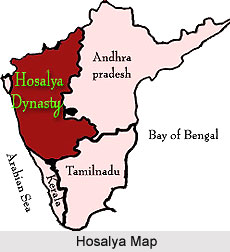
Gadyakarnamrita is a 13th-century Sanskrit literary work written mainly in prose. It describes the ninety-day battle at Srirangam between the Hoysala...
Women Writers in Malayalam Literature
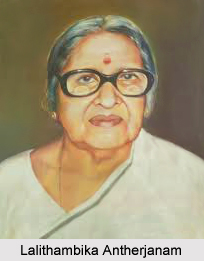
Women writers in Malayalam literature have worked incessantly to make a place for their literary works. In the earlier periods, they were completely o...
Comrade Kirillov, Novel by Raja Rao
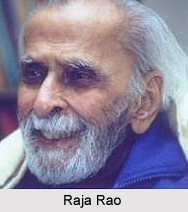
Comrade Kirillov, a distinctive creation of Raja Rao, is presented as a brief yet incisive novelette that offers an ironic portrayal of the self-contr...
The Foreigner, Novel by Arun Joshi
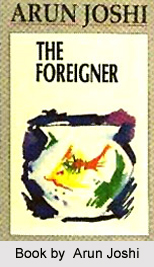
“The Foreigner” is a book authored by Arun Joshi and published by Vision. It is an illustrious creation in the entire career of Arun Joshi, the famous...
Short Story in Telugu Literature
Short Story in twentieth century Telugu Literature was extremely popular and growing in and developing in a major way. Their popularity was greatly fa...
Related articles in Indian Literature
Mythological Themes in Indian Literature
Mythological themes in Indian literature have been integral to every ancient and contemporary writer and their path to f
Literature During Gupta Age
It is during the Gupta Age literature in the form of poetry, epos and drama gained a colossal importance.
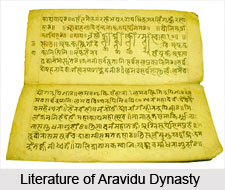
Literature of Aravidu Dynasty
Sanskrit and Telugu were the popular literary medium of communication during Aravidu dynasty.
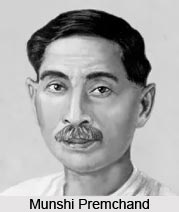
Munshi Premchand
Munshi Premchand was a legendary Indian writer notable for his modern Hindustani literature. A writer of a very high caliber, Premchand`s writings hav...
Sanskrit Poets
The names of some of the Sanskrit Poets are Bharavi, Devarshi Ramanath Shastri, Jayadeva and Srinivas Rath.