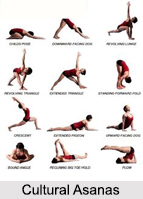
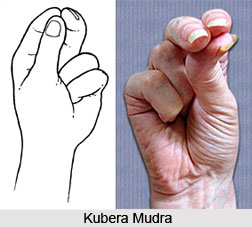
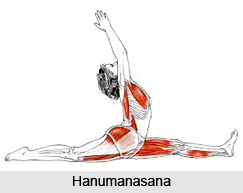
 Hanumanasana is a cultural asana putatively dedicated to Lord Hanuman, and mimics the
By practising this asana, the anatomical focus points in the body are thighs, abdomen, hamstrings, chest shoulders. This asana is therapeutically beneficial for sciatica. One should practice this pose on a bare floor (without a sticky mat) with folded blankets under the back knee and front heel.
Practice of Hanunmanasana
* Kneel on the floor. Step the right foot forward about a foot in front of the left knee, and rotate the right thigh outwardly. Do this by lifting the inner sole away from the floor and resting the foot on the outer heel.
* Exhale and lean the torso forward, pressing the fingertips to the floor. Slowly slide the left knee back, straightening the knee and at the same time descending the right thigh toward the floor.
* Stop straightening the back knee just before reaching the limit of the stretch.
* Now begin to push the right heel away from the torso. Because we started with a strong external rotation of the front leg, gradually turn the leg inward as it straightens to bring the kneecap toward the ceiling.
* As the front leg straightens, resume pressing the left knee back, and carefully descend the front of the left thigh and the back of the right leg (and the base of the pelvis) to the floor. Make sure the center of the right knee points directly up toward the ceiling.
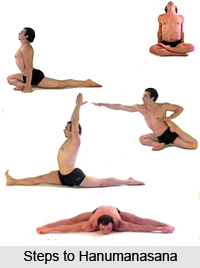 * Also check to see that the back leg extends straight out of the hip (and isn`t angled out to the side), and that the center of the back kneecap is pressing directly on the floor. Keep the front leg active by extending through the heel and lifting the ball of the foot toward the ceiling. Bring the hands into Anjali Mudra (Salutation Seal) or stretch the arms straight up toward the ceiling.
* Stay in this pose for 30 seconds to a minute.
* To come out, press the hands to the floor, turn the front leg out slightly, and slowly return the front heel and the back knee to their starting positions.
* Reverse the legs and repeat for the same length of time.
Beginners learning this pose are often unable to get the legs and pelvis down on the floor, The tightness in the backs of the legs or front groins is the responsible reason for it. Therefore, While in the starting leg position then, place a thick bolster below the pelvis (with its long axis parallel to the inner legs). While straightening the legs, slowly release the pelvis down onto the bolster. If the bolster isn`t thick enough to comfortably support the pelvis, add a thickly folded blanket.
To increase the length of the torso and spine, press the back foot actively into the floor and, from this pressure, lift the shoulder blades firmly into the back.
Effects of Hanuman Asana
* The asana stretches the thighs, hamstrings, and groins.
* It stimulates the abdominal organs.
Precautions in the practice of Hanumanasana
Care should be taken, while performing this asana ans it should not be practised in case of groin or hamstring injuries.