
Griha Yajna is performed with the aim of bringing in peace, prosperity, wealth or longevity in this world, or to bring good showers in the country. According to the Agni Purana, in a Griha Yajna a man should worship with care the planets which are hostile to him. This is because the rise and fall of monarchs are controlled by the influences of the planets, as well as the continuance and dissolution of the terrestrial globe.
Agni Purana states that Griha yajna imparts wealth, peace, prosperity and victory to the performer. A sacrifice performed for the propitiation of the planets (Graha Yajna), is usually divided into three classes. Agni Purana states that the cavity for the sacrificial fire Homa Kunda should be made to occupy a fourth part of the mystic diagram, on the exterior border whereof the planets should be invoked and worshipped. The planet Jupiter should be caused to be seated on the northern part of the exterior rim of the Mandala. A seat should be offered to the Mercury on its north-east part, the Venus on the east, the Moon on its south-east, to the Mars on the south, to the Sun at the centre, to the Saturn at the west, to the Rahu at the south-west and to the Katu at the north-west. Then the gods such as Isha, Shoma, Guha, Lord Vishnu, Lord Brahma, Indra, Lord Yama, Kala, Chitragupta, Lord Agni, Apa, the earth goddess, Hari, Indra, Aindri, Prajapati, Lord Ganesha, Goddess Durga, the god of Storm, the god of the skies, and the twin Ashvinis should be worshipped with the Beeja Mantras as contained in the holy Vedas. The sticks of the sacrificial trees such as the Arka, Palasha, Khadira, Apamarga, Pippala, Oudumvara, Shami and Durva, dipped in honey, clarified butter and curd, should be offered into the fire in succession, for the propitiation of the planets they are held respectively sacred to. Thirteen pitchers should be filled with water, and the libation completing the sacrifice should be cast into the fire.
Thus it can be said that Agni Purana has focussed on the fact that Griha Yajna is needed by individuals in order to appease the planets which in turn brings about peace and prosperity into their lives.
Griha Yajna
Griha Yajna in Agni Purana is a process of worshipping the various planets because it is believed that it is the planets which are responsible for bringing about happiness and prosperity into human lives.
Recently updated articles in Indian Puranas
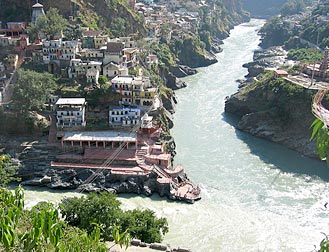
Mandakini, Holy River
Mandakini River is a significant Himalayan river in Uttarakhand, renowned for its ecological, cultural, and religious importance. Originating near the...
Kausika, Son of Vasudeva
Kausika is a minor figure in Hindu mythology and is identified in the Vishnu Purana as the only son of Vasudeva and his wife Vaishali. He is recognize...
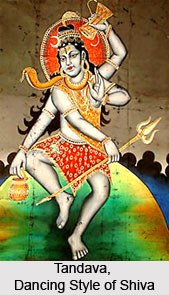
Tandu, Attendant of Lord Shiva
Tandu is revered as the divine attendant of Lord Shiva and the foremost exponent of the Tandava dance. According to the Natya Shastra, he instructed S...
Niramitra, Mahabharata
Niramitra was a son of Nakula and Kareṇumati in the Mahabharata. A descendant of the Pandavas and the Kuru dynasty, he fought on the Pandava side duri...
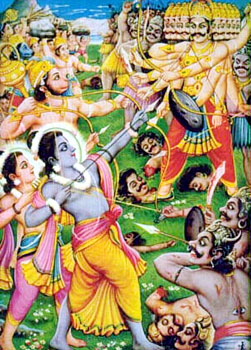
Mahodara, Ramayana
Mahodara was a prominent Rakshasa warrior, minister, and army chief who served under Rāvaṇa during the Battle of Lanka in the Ramayana. Celebrated for...
Related articles in Indian Puranas
Adhyayas in Agni Purana
Adhyayas in Agni Purana are all encompassing. The chapters have dealt with a variety of subjects related to human lives. A large number of chapters ha...
Indian Puranic Tribes
The existence of Indian Puranic tribes is often mixed with mythology and fiction that depict them as superhuman or sub.
Puranic Texts
Puranic Texts are vital according to Hindu, Jain or Buddhist religion; they describe the history of the Universe.

Puranic Shaivism
Puranic Shaivism established during the Gupta Dynasty. This puranic religion developed and expanded, and was accompanied by the development of Brahman...
Nilamata Purana
Nilamata Purana is a Kashmiri Purana that is referred by Kalhana. It is considered as one of the sources of ancient history of Kashmir.