
Gramina Sahitya is rural literature which specifically focuses on life in rural Maharashtra. The point of focus in these works is the life, traditions, and values of common people in the villages. There is also seen in these works a concern about the impact of urbanization and urban lifestyles, economic development, democratization and its influence on traditional hierarchies, and so on. Essentially, this rural literature is interested in presenting the conflict between two different and opposite world-views- urban and rural, modern and traditional.
In the period after Independence, and even more so after Maharashtra state became a linguistically unified state and following the spread of education, economic planning, co-operatives, transportation and means of communication, panchayati raj (village government), and so on, a group of writers came forth from rural Maharashtra who could articulate the ethos of the countryside better. For more than 100 years, the literary output of the urban, middle-class, educated society was identified with Marathi literature. It represented their values, concerns, ideologies, and class consciousness almost to the exclusion of people from rural areas. It was now for the first time that rural life and sentiments were being discussed and occupied a place of prominence in Marathi literature.
Rural literature has drawn attention to the distinctive features and problems of rural life. It has shown the wide diversity in the dialects, customs, natural environment, and so on that exists in the rural parts of Maharashtra. The folk literature and its forms that have flourished for centuries are less often employed as preferred modes of expression. R. V. Dighe is known for his realistic portrayal of rural life in Maharashtra, with which he was familiar with from his childhood. He is recognized as the first to introduce this category, Gramin Sahitya, in Marathi. His major novels include `Panakala` (1939), `Sarai` (1943), and `Pada Re Panya` (1958). He also wrote a number of short stories depicting lives of rural people. Though influenced by the works of H. N. Apte, Thomas Hardy, Sir Walter Scott, and Feodor Dostoyevsky, he delved deep into his own experiences and observations to sketch rural lives and its problems such as untouchability, land tenure, and the issue of land-lessness.
Raosaheb Borade (1940) is credited for bringing the realities of Marathwada to mainstream Marathi literature. He is among the first generation of authors after Independence who brought a new awareness and realism from their personal experiences of life in rural areas. His novel `Pachola` (1971) is a story of emotional stresses created in the lives of village craftsmen because of modernization. The narration by Parvati, the wife of a tailor, brings out the human dimensions of social change. The entire novel is written in Usmanabadi dialect, which lends it authenticity and charm. He has published more than 14 collections of short stories exploring different facets of rural life. Even the titles of his collections reflect his roots in rural life, for example, `Perani` (Sowing), `Malani` (Threshing), `Valvan` (Drying), and `Rakhan` (Guarding the Crop). He focuses on family as a unit and the emotional ties that fuse its members. He has focused on tensions in these relationships by deprivation, especially those felt by women. The impact of social institutions, customs, and traditions on individuals and community is explored with deep sympathy.
Thus it was for the first time with Gramin Sahitya that Marathi literature explored the sentiments, issues and the life of the rural people and brought it to the area of mainstream literary works.
Gramina Sahitya
Gramina Sahitya is the rural literature of Maharashtra. It focuses on the various issues and problems of the people in the villages and their lifestyle, traditions and social institutions. Gramina Sahitya brought rural life into the Marathi literary landscape for the first time after a long period of its domination by urban, middle-class writers.
Recently updated articles in Indian Literature
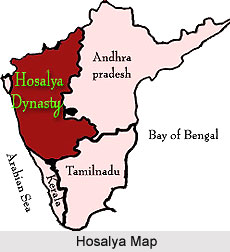
Gadyakarnamrita
Gadyakarnamrita is a 13th-century Sanskrit literary work written mainly in prose. It describes the ninety-day battle at Srirangam between the Hoysala...
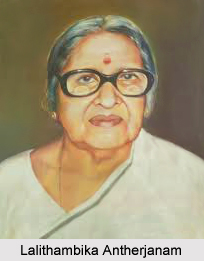
Women Writers in Malayalam Literature
Women writers in Malayalam literature have worked incessantly to make a place for their literary works. In the earlier periods, they were completely o...
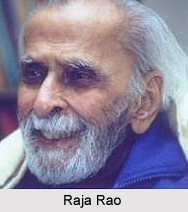
Comrade Kirillov, Novel by Raja Rao
Comrade Kirillov, a distinctive creation of Raja Rao, is presented as a brief yet incisive novelette that offers an ironic portrayal of the self-contr...
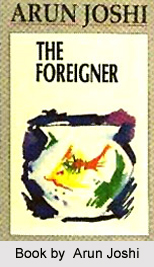
The Foreigner, Novel by Arun Joshi
“The Foreigner” is a book authored by Arun Joshi and published by Vision. It is an illustrious creation in the entire career of Arun Joshi, the famous...
Short Story in Telugu Literature
Short Story in twentieth century Telugu Literature was extremely popular and growing in and developing in a major way. Their popularity was greatly fa...
Related articles in Indian Literature
Mythological Themes in Indian Literature
Mythological themes in Indian literature have been integral to every ancient and contemporary writer and their path to f
Literature During Gupta Age
It is during the Gupta Age literature in the form of poetry, epos and drama gained a colossal importance.
Literature of Aravidu Dynasty
Sanskrit and Telugu were the popular literary medium of communication during Aravidu dynasty.
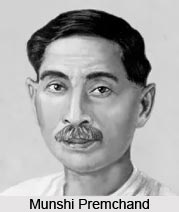
Munshi Premchand
Munshi Premchand was a legendary Indian writer notable for his modern Hindustani literature. A writer of a very high caliber, Premchand`s writings hav...
Sanskrit Poets
The names of some of the Sanskrit Poets are Bharavi, Devarshi Ramanath Shastri, Jayadeva and Srinivas Rath.