
Funeral and ancestral rites form the matter of the tenth chapter in the Mahanirvana Tantra. Shiva relates these in response to Parvati`s query, and then adds a discussion on the Purnabhisheka, a major initiatory ritual amongst most caste Hindus.
Shiva first directs all Tantricas to worship the five devatas and the celestial Mothers (the Tantra devas and the Matrikas) while consecrating all water bodies. He then relates the rituals surrounding the Vriddhi Shraddha
The Vriddhi or Briddhi Shraddha begins with the forming of five grass Brahmana totems. The Brahmana totems must then be worshipped using several mantras after first invoking Ganga, Vishnu (here the lord of sacrifices), the household God and the king.
The Brahmana totems all serve as proxies for the Devatas and ancestors that the ritual honours. Both paternal and maternal ancestors must be worshipped according to the Mantras recited, and several deities should be invoked to protect both the sacrifice and ensure that the ancestors are appropriately honoured in their abodes after passing away.
The devotees should then invoke the Vishva-Devas, the fathers, the mothers, the maternal grandfathers, and the maternal grandmothers. Having so invoked them, they should be worshipped, with offers of Padya, Arghya, Achamaniya, incense, lights, cloths.
After giving honey and grains of barley and sprinkling the offerings with water, accompanied by suitable Mantra, the edibles must be offered to them, followed by a repetition of the Brahma-vidya Gayatri. Then follow rites and rituals for those ancestors that do not have any surviving issue or descendants, which involve the formation of Pindas or mounds with the remaining Akshata (ceremonial rice) which then serve as proxies for honouring the said ancestors. A mantra recited during the Vriddhi Shraddha more or less summarises its intent: `My father is my highest Dharma. My father is my highest Tapas. My father is my Heaven. On my father being satisfied, the whole Universe is satisfied`
The Preta Shraddha (Funeral rites) has Ganga worship and a few others omitted, and in the framing of the Mantra the deceased should be spoken of as Preta whilst rice and Pindas are offered to him. The Shradh performed on the day following the end of the period of uncleanliness is Preta Shradh. If there is a miscarriage, or if the child dies immediately on birth, or if a child is born or dies, then the period of uncleanliness is to be reckoned according to the family`s caste.
The period of uncleanliness in the case of Brahmins is ten days, twelve for Kshatriyas, and a fortnight (for Vaishyas); for Shudras and Samanyas the period is one month (thirty days). Persons over five years of age should be burnt in the burning-ground, but a wife should not be burnt with her dead husband. Shiva asserts that the woman who ascends the funeral pyre of her lord shall go to hell.
The corpses of devotees should be buried, thrown into running water, or burnt, according to their wishes. Shiva then details appropriate rituals for the same.
A day after the period of uncleanliness expires; the mourner should bathe and purify himself, and give away gold and sesamum for the liberation of the Preta.
The son of the Preta should give away various gifts like cattle, lands, fruits and things the Preta himself liked to insure his ascent to Heaven. He should then perform the Shraddha and feed the hungry and the Brahmanas and Kaulas. The man who is unable to provide gifts should perform the Shraddha to the best of his ability, and feed the hungry, and thus liberate his father from the state of existence of a Preta.
This Preta Shradh liberates the deceased from the state of Preta. After this every year on the date of his death edibles should be given to the deceased.
Shiva also assures that there is no need for elaborate ritual, saying `The object of all Sangskaras is completely attained if, in lieu of the prescribed...(rituals) even a single Kaulika is duly honoured at the time of the ceremony`. Shiva then provides more details of conventions to be followed why observing any rituals like the seasonal festivals and the worship of Devatas. He also eulogises on the initiated Kaulika`s primacy in Tantric doctrine, prompting a query on this initiatory rite from Parvati, which forms the matter of the Purnabhisheka ritual, an elaborate ceremony involving the novice Kaulika and a suitable Guru, comprising hymns to the Devatas, to Brahman and the Guru himself.
Shiva asserts that fully initiated Kaulas are pure of soul. All things are purified by their looking, touching, and by their smelling them. All men should worship the Kaula Sadhu with devotion. Kaulas may even dispense with rituals and ceremonies mentioned by Shiva in various other Tantric texts.
`He who sees everything in Brahman, and who sees Brahman everywhere, is undoubtedly known as an excellent Kaula, who has attained liberation while yet living.` Such is the Kaula, described again by Shiva, with which his address ends.
Funeral and Ancestral Rites
Funeral and ancestral rites, followed by the Purnabhisheka ceremony, are described by Shiva in the 10th chapter of the Mahanirvana Tantra
Recently updated articles in Indian Literature
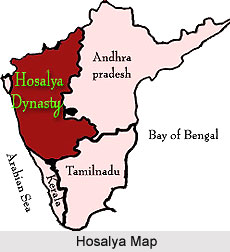
Gadyakarnamrita
Gadyakarnamrita is a 13th-century Sanskrit literary work written mainly in prose. It describes the ninety-day battle at Srirangam between the Hoysala...
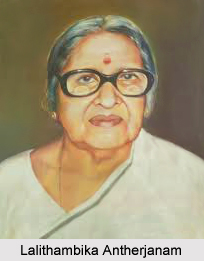
Women Writers in Malayalam Literature
Women writers in Malayalam literature have worked incessantly to make a place for their literary works. In the earlier periods, they were completely o...
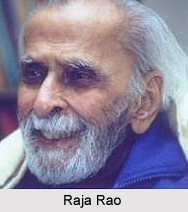
Comrade Kirillov, Novel by Raja Rao
Comrade Kirillov, a distinctive creation of Raja Rao, is presented as a brief yet incisive novelette that offers an ironic portrayal of the self-contr...
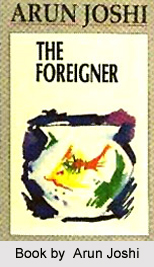
The Foreigner, Novel by Arun Joshi
“The Foreigner” is a book authored by Arun Joshi and published by Vision. It is an illustrious creation in the entire career of Arun Joshi, the famous...
Short Story in Telugu Literature
Short Story in twentieth century Telugu Literature was extremely popular and growing in and developing in a major way. Their popularity was greatly fa...
Related articles in Indian Literature
Mythological Themes in Indian Literature
Mythological themes in Indian literature have been integral to every ancient and contemporary writer and their path to f
Literature During Gupta Age
It is during the Gupta Age literature in the form of poetry, epos and drama gained a colossal importance.
Literature of Aravidu Dynasty
Sanskrit and Telugu were the popular literary medium of communication during Aravidu dynasty.
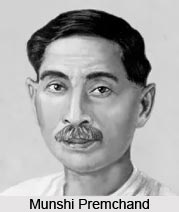
Munshi Premchand
Munshi Premchand was a legendary Indian writer notable for his modern Hindustani literature. A writer of a very high caliber, Premchand`s writings hav...
Sanskrit Poets
The names of some of the Sanskrit Poets are Bharavi, Devarshi Ramanath Shastri, Jayadeva and Srinivas Rath.