
The Fire God in Agni Purana has dealt with the figures of speech and the rules of Rhetoric in general, which are used to embellish the subject-matter of a poem or a drama. The science of Rhetoric admits of three main divisions such as the Dhwani (Division of poetry in which the implied or suggested sense of a passage is more striking than the expressed sense, or where the expressed sense is made subordinate to the suggested sense), Vakyam or a sentence (complete utterance of a thought) and the Padam (a complete or inflected word).
In Agni Purana it has been mentioned that all these three divisions of Rhetoric are usually found in works of positive science or narration. Pre-eminence is given to terms (Shavdas) in works of science (Shastras), to the culminating point of narration in books of story, while in books of poetry, the Avidha (denotation or literal meaning of a word) draws the greatest attention, and hence poetry is differentiated from the two preceding sorts of works.
The first Varnas are the most important, the second division ranks next in respect of importance, while the third (the inflected forms of verbs and nouns) forms the life, as it were, of poetry.
It has been said that poetry is a sentimental statement, expressed in rhetorical terms, which should number only as many as are necessary for giving the fullest utterance to an idea, and in the shortest possible way without any faulty rhetoric. Prose on the other hand is bereft of metrical feet or quarters, and consists of a collocation of complete statements, usually divided in its turn into three sub-heads, such as the Churnam, the Utkalika, and the Vritta Sandhi. In the class of composition known as the Churnakam, all words possessing harsh sounds, as well as long grammatical compounds, are avoided. A Churnakam, abounding in long grammatical compounds, is called the Utkalika, while a prosaic composition, loosely and remotely observing the rules of a metrical stanza (Vrittam), called the Vritta-Sandhi.
Agni Purana says that a verse consists of four feet or quarters, and is called the Vrittam or the Jati, according as it is regulated by number and position of its syllables, or syllabic incidents. According to the divisions of Pingala, a verse is called either the Sama Vrittam (of equal feet), Ardha Sama Vrittam (Half equal metres), or the Vishama-Vrittam (Dissimilar, metre). Knowledge of their rules and composition, serves him as a boat to cross the ocean of poetry, who seeks to visit its opposite shore.
Several types of poem have been referred to in this adhyaya of the Agni Purana. It has been said that the Muktakam consists of single stanzas, all severally composed, and with a special view to the excellence of each. The type of verse known as the Kosha, is composed of fine pearls of poems, as it was, but not linked to each other by any special spontaneity of idea. The type Prakaranarn, in which the cantos or divisions are composed with different metres and sentiments, is divided into two groups, viz., the audible poem, and the dramatic play.
Figures of Speech in Agni Purana
Figures of Speech and rhetoric have received considerable importance in one of the adhyayas of the Agni Purana. According to Lord Agni the figures of speech as well as the rhetoric establishes the subject-matter of the poem or prose in an effective manner.
Recently updated articles in Indian Puranas
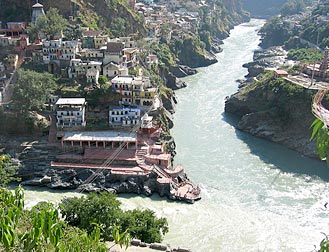
Mandakini, Holy River
Mandakini River is a significant Himalayan river in Uttarakhand, renowned for its ecological, cultural, and religious importance. Originating near the...
Kausika, Son of Vasudeva
Kausika is a minor figure in Hindu mythology and is identified in the Vishnu Purana as the only son of Vasudeva and his wife Vaishali. He is recognize...
Tandu, Attendant of Lord Shiva
Tandu is revered as the divine attendant of Lord Shiva and the foremost exponent of the Tandava dance. According to the Natya Shastra, he instructed S...
Niramitra, Mahabharata
Niramitra was a son of Nakula and Kareṇumati in the Mahabharata. A descendant of the Pandavas and the Kuru dynasty, he fought on the Pandava side duri...
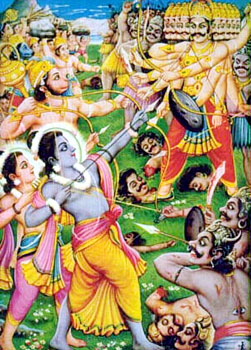
Mahodara, Ramayana
Mahodara was a prominent Rakshasa warrior, minister, and army chief who served under Rāvaṇa during the Battle of Lanka in the Ramayana. Celebrated for...
Related articles in Indian Puranas
Adhyayas in Agni Purana
Adhyayas in Agni Purana are all encompassing. The chapters have dealt with a variety of subjects related to human lives. A large number of chapters ha...
Indian Puranic Tribes
The existence of Indian Puranic tribes is often mixed with mythology and fiction that depict them as superhuman or sub.
Puranic Texts
Puranic Texts are vital according to Hindu, Jain or Buddhist religion; they describe the history of the Universe.

Puranic Shaivism
Puranic Shaivism established during the Gupta Dynasty. This puranic religion developed and expanded, and was accompanied by the development of Brahman...
Nilamata Purana
Nilamata Purana is a Kashmiri Purana that is referred by Kalhana. It is considered as one of the sources of ancient history of Kashmir.