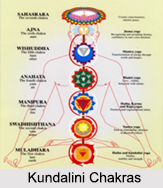
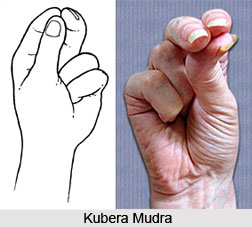
 The Visuddha Chakra or the Throat Chakra is the fifth Chakra situated in the throat, at the base of the neck between the collarbone and shoulder. The Visuddha Chakra is the will center. There are many asanas associated with this chakra.
Vow of Silence Exercise
Listening is an essential and too-often-overlooked component of communication. Yogis often take vows of silence for extended periods of time to purify their vibrations of audible sound and better tune into subtle sounds. By avoiding verbal communication, one can open up other avenues of communication, namely communication with higher consciousness. Begin with a few hours and then try a whole day or longer.
Neck Rolls Exercise
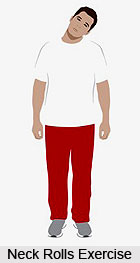
The neck is the narrowest part of the torso. Much of the time it acts as a filter between the abundant flow of energy between the mind and the body. This causes it to be extremely subject to tension and stiffness. Loosening the neck is an essential beginning for any work on the fifth chakra.
The practitioner must lift his head up away from his shoulders, and then slowly roll the head in a circular motion, stretching his neck. He must then stop at any point that feels tense or uncomfortable, and massage with his fingers. While practicing he must pause in the tight places until it relaxes some and then move on. The movement must be in both clockwise and counterclockwise direction.
 Fish Pose Exercise
This exercise helps to open the chest cavity and stimulates the thyroid. The practitioner here lies flat on his back. With hands on hips, he prop his upper body up on his elbows, lifting his chest toward the ceiling and arching the neck backward until his head touches the floor.
Head Lift Exercise
This exercise stimulates the thyroid gland and helps to strengthen the neck. The practitioner needs to lie flat on his back and relax. Then he should slowly lift his head, leaving the shoulders on the floor, so that he is looking at the toes. He must hold this position until he feels the energy move into the neck.
Shoulder Stand Exercise
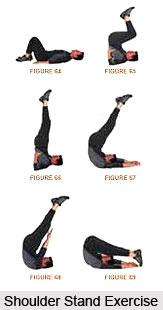
To make this pose easier on the neck, it is helpful to first fold a blanket or towel so that when the practitioner lies flat, his head touches the floor, but his upper thoracic vertebrae lay on the blanket.
The practitioner here lies flat on his back with his arms at his sides. He must then bend his knees and lift his legs toward the chest, rounding the back. As the hips rises he allows his arms to bend at the elbows, so that the heel of his hand can support the waist. He must then slowly straighten the legs above him, using his arms for support.