
Erotica infested the zone of Assam Literature during the Ahom Rule.
The science of erotics (Kama-sastra) was very much cultivated and fostered in the Ahom court, and some of the Sanskrit texts on Kama-sastra were translated into Assamese. A versified treatise on eroticism was compiled by a poet named Kavisekhar Bhattacarya for the entertainment and instruction of Prince Charu Singha Gohain, son of King Rajeswar Singha, and of the Prince`s consort, Princess Pramada Sundari Aideo. It became the practice to engage scholars to read out to queens, princesses and high-born ladies popular kavyas, love-romances and erotic Sastras. That Kamasutra exercised a tremendous influence is evident from the fact that a large number of Mantra-puthis, books on charms relating to love-making, were compiled during the period. These Mantra-puthis contain nostrums, charms and conundrums on the art and practice of love-making, of winning love, exciting passion in woman, beautifying and removing physical defects in woman, and increasing virility. As observed earlier, this period was characterised in particular by a new and rising interest in historical writings. Popular poets evinced antiquarian interests.
Barphukanar Git is a most important historical ballad which narrates events centering round Badancandra Barphukan, an Ahom viceroy at Guwahati, who invited the Burmese to remove his rival, Purnananda Buragohain, from the prime ministership. This ballad presents a popular version of historical events, and its narration closely follows actual events. Barphukanar Git is remarkable for its dramatic interest, descriptive quality, vivid characterisation, and racy humour. Bakharabarar Git and Padum Kuvarir Git are two other very popular historical ballads composed during the period under review. Here we may mention a few other poems of a popular nature. Some of them develop the tales from the Puranas Hitopadesa and Panchatantra. Poets even turned to folklore and fairy tales for inspiration, and found materials that gave their imagination a free rein. Dvija Goswami`s KavyaMstra is a book in verse containing many fables from the HitopodeSa and some moral observations in rhymed couplets. Another Assamese version of the Hitopodes`a was done by Rama Misra, author of Putala-caritra, at the instance of Bhadrasen Gohain Phukan, an Ahom general. Kaviraj Misra is another story-teller, who flourished about 1616. He was an itinerant minstrel, going about reciting his verses on Siyal Gosain (The Fox-Saint) and thereby obtaining food and raiment. The story centres round a legendary figure, Siyal Gosain by name, who was thrown away under a ketaki plant soon after his birth through the intrigues of his stepmother, Kundalata. Chandotara, his mother, was blindfolded at the time of her delivery. The baby was picked up by a newly littered vixen who suckled him and brought him up among her own young ones. The boy grew up among the young cubs and imitated their habits of howling at night and of retreating to their lair at the approach of men. On his return from pilgrimage, Dharmadeva, his father, who traced his origin to the twelve famous Bhuyas, was informed by his wife Kunda- lata that Chandotara had borne no child and the dais (midwife) , heavily bribed by Kundalata, confirmed the lie, which he believed. But one day, on his way to the bathing-ghat, he happened to notice a child retreating into a den at the sight of him. This struck him as curious and, apprehending foul play somewhere; he vigorously questioned the dais on his return and elicited the truth that "Chandotara had been delivered of a male child. Next day he had the child, the mother fox and the young cubs all dug out of the arid hole taken to his house. The boy, when he grew up, came to be known as Siyal Gosain.
Erotica in Assamese Literature
Erotica in Assam Literature during the initiation of the Ahom Rule sculptured the main body of Assam literary art for the centuries to come.
Recently updated articles in Indian Literature
Gadyakarnamrita
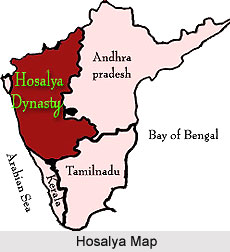
Gadyakarnamrita is a 13th-century Sanskrit literary work written mainly in prose. It describes the ninety-day battle at Srirangam between the Hoysala...
Women Writers in Malayalam Literature
Women writers in Malayalam literature have worked incessantly to make a place for their literary works. In the earlier periods, they were completely o...
Comrade Kirillov, Novel by Raja Rao
Comrade Kirillov, a distinctive creation of Raja Rao, is presented as a brief yet incisive novelette that offers an ironic portrayal of the self-contr...
The Foreigner, Novel by Arun Joshi
“The Foreigner” is a book authored by Arun Joshi and published by Vision. It is an illustrious creation in the entire career of Arun Joshi, the famous...
Short Story in Telugu Literature
Short Story in twentieth century Telugu Literature was extremely popular and growing in and developing in a major way. Their popularity was greatly fa...
Related articles in Indian Literature
Mythological Themes in Indian Literature
Mythological themes in Indian literature have been integral to every ancient and contemporary writer and their path to f
Literature During Gupta Age
It is during the Gupta Age literature in the form of poetry, epos and drama gained a colossal importance.
Literature of Aravidu Dynasty
Sanskrit and Telugu were the popular literary medium of communication during Aravidu dynasty.
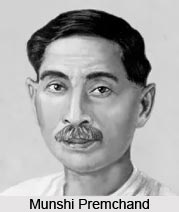
Munshi Premchand
Munshi Premchand was a legendary Indian writer notable for his modern Hindustani literature. A writer of a very high caliber, Premchand`s writings hav...
Sanskrit Poets
The names of some of the Sanskrit Poets are Bharavi, Devarshi Ramanath Shastri, Jayadeva and Srinivas Rath.