
Time of performance is a vital factor in Indian theatre. According to the Natyashastra, the plays were performed in the morning, afternoon and in the first and fourth part of the night. That which is pleasing to the ear and which speaks about religion, which is pure or mixed should be represented in the morning. The play which is magnificent, full of sattva qualities and involves sounds of musical instruments should be represented in the afternoon. That in which the kaisiki style is employed and in which the erotic sentiment predominates and which is full of vocal and instrumental music should be represented in the first part of the night. The one which is full of important events and in which the pathetic sentiment predominates should be represented in the fourth part of the night. Plays were not allowed to be presented at midnight, midday and at dinner time but if the king gave orders; plays could be staged without restrictions of time and space.
The time of the performance is not in many cases stated, but in some plays such as the Malatimadhava and the Karnasundari it is found that it is assumed to be the time when the sun is rising. In most cases, dramatic performances were held generally in the afternoon and it used to take place for nearly four or five hours. From the evidence of the Natyashastra and plays in general it is apparent that plays were performed in daytime and when the moon was rising. While scenic effect could be very easily produced at night, it is interesting to find how such effect was produced by day also. Keeping in mind the occasions for the performances of drama, plays were generally enacted at annual fairs in temples, at the pleasure of the poet`s patron and at festivals rural or urban, public or private. On these occasions, except the dramas which were played at the pleasure of the poet`s patron or king, it was generally holidays when people used to gather to witness plays by day. Reflections of mirrors might have been used just as lights were used at night. Sanskrit dramas had critical audience as is clear from many preludes of dramas.
There was a time-limit for a play. The Sanskrit play was to be finished in a fixed time. From the testimony of the Natyashastra, it is evident that a play was judged by a critic {prasnika) from the point of view of the accuracy of timing (nadikasiddhi) since the time when the jarjara was placed in a dramatic performance by the manager or the sutradhara.
Element of Time
Element of Time is a very important aspect of theatre in India. The Natyashastra gives a clear illustration regarding the time of presentation of the plays.
Recently updated articles in Indian Drama & Theatre
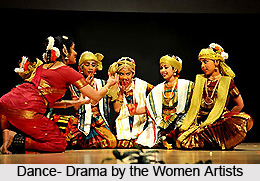
Amateur Theatre
Development of Amateur Theatre has been responsible for useful innovations in theatre culture of Karnataka.
Surendranath Ghosh
Surendranath Ghosh or Dani Babu was a Bengali thespian active during the mid-20th century. He was mostly known for his contributions to Bengal’s moder...
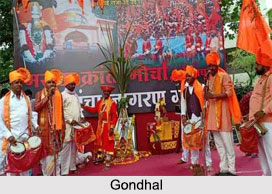
Gondhal Dance
Gondhal is a religious folk dance of Maharashtra. It is performed on special days like when there is a newborn in a family or marriage. Dedicated to g...

Pravritti in Natyashastra
Pravritti in Natyashastra refers to specific human behaviour varying from region to region. There are four types of Pravritti namely, dakshinatya, ava...
Padma Bhushan Awardees (2010-2019)
Padma Bhushan Awardees (2010-2019)
Related articles in Indian Drama & Theatre
Gondhal Dance
Gondhal is a religious folk dance of Maharashtra. It is performed on special days like when there is a newborn in a family or marriage. Dedicated to g...
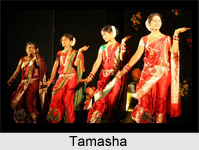
Tamasha Folk Dance
Tamasha is a folk art, which includes the love songs, which are traditional lavanis and dance along with the music.
Sringara Rasa
Sringara Rasa is mentioned in Natyashastra as one of the important rasas. The Sthayi bhava in Sringara rasa is Rati or love.
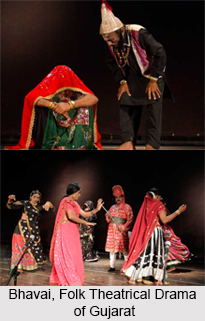
Bhavai - Folk Theatre of Gujarat
Bhavai is a popular folk theatre form of Gujarat that belongs to the tradition of theatre of entertainment.
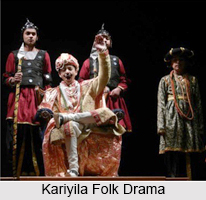
Kariyila Folk Dance
Kariyila is one of the most appealing and popular folk drama forms of Himachal Pradesh, portraying social satire with the accompaniment of folk dance...