 Early Assamese literature can strictly be categorised within the period commencing from 6th century A.D. and culminating in 15th century A.D. The Charyapadas have almost been referred to as the earliest example of Assamese literature. The Charyapadas pertain to Buddhist songs penned within the period of 8th to 12th centuries. These writings, by the way, correspond to Oriya and Bengali languages as well. The phonological and morphological characteristics of these songs bear exceedingly powerful semblance with Assamese some of which are survive to this date.
After the Charyapadas, the early Assamese literary period was once more split into the (a) Pre-Vaishnavite and (b) Vaishnative sub-periods. The earliest acknowledged Assamese writer is Hema Saraswati, who in fact had authored a small poem, Prahra Charita. During the period of King Indranarayana (1350-1365) of Kamatapur, the two poets Harihara Vipra and Kaviratna Saraswati are also known to have composed Asvamedha Parva and Jayadratha Vadha respectively. Another poet named Rudra Kandali had interpreted Drona Parva into Assamese language. But the most distinguished and recognised poet of the Pre-Vaishnavite sub-period in Assamese literature is Madhav Kandali, who had delivered Valmiki`s Ramayana into Assamese verse (Kotha Ramayana, 14th century) under the patronage of Mahamanikya, a Kachari king of Jayantapura. Rudra Kandalis` interpretation and version of Drona Parva of Mahabharata is also one of the classical Assamese works of 14th century A.D.
The aphorisms of Dak Mahapurush, wise maxims from economic activities as well as social behaviour, constitute the earliest didactic compositions in Assamese literature, so far as has been recorded in books. Assam possesses an unbroken heritage of written literature, beginning from at least the 13th century. The earliest known patronage of such efforts had come from the Kamata royal court, since two of the earliest Assamese poets Harivara Vipra and Hema Saraswati penned benedictory verses in praise of the Kamata King Durlabh Narayan.
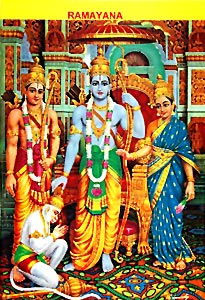
Early Assamese literature during the 14th century gave rise to Madhava Kandali, an extremely powerful and sensitive poet on whom was bestowed the patronage of the Barahi King Mahamanikya Kandali. Madhava Kandali had rendered the Valmiki Ramayana into most graceful and elegant an Assamese verse. It is interesting to note that of all the versions of Valmiki`s great epic into other Indian languages, Madhava Kandali`s was the earliest.
Great Sanskrit scholars, Sankaradeva and Madhavadeva took Assamese language to unprecedented heights of artistic excellence during this ongoing early Assamese literature period. What is more, the high spiritual and artistic ideals blended with a wholesome sense of direction held aloft first by Sankaradeva and then by Madhavadeva, inspired a whole lot of creative writers, both during their lifetimes and after. As a result, Assamese Vaishnavite literature is exceptionally rich in volume, range and flavour. Literature of Shakta affiliation as well as works on various secular subjects also equally had developed through the centuries.
Apart from poetry of which early Assamese literature possesses many real gems like the Kirtana-ghosha of Sankaradeva and the Namghosha of Madhavadeva, the two fields in which it excels are drama and prose. The plays penned by the two Mahapurushas are recognised as the earliest specimens of purely vernacular dramatic literature in the sub-continent. It was as early as the sixteenth century that Vaikunthanath Bhattacharyya, more popularly known as Bhattadeva, rendered the Bhagavata and Gita into such mature prose, that evoked spontaneous and profuse admiration from the most enlightened quarters.