 Division of property and the processes related to property affairs are specified in one of the `adhyayas` of Agni Purana. It has been said that a father wishing a partition of his properties, should divide them either equally among his sons, or settle upon his eldest-born, a greater portion thereof. The mothers (father`s wives) not having received anything from their husband or father-in-law by way of their `Stridhana`, should have a share in the division, in the event of equal allotments having been made to each of the sons. Unequal allotments made by a father should be deemed as binding.
It has been said that the sons should divide among themselves the liabilities of their own father, while daughters should take upon themselves the debts incurred by their mother in her life-time, in the event of their having had no issues. The co-partners of a person should not have any claim to the property acquired by him with his own independent exertion. He will be unable to destroy or sell his ancestral estate, as well as to those given to him by his friends out of love, or on the occasion of his marriage as dowry. The co-partners of an estate should be entitled to accretions or to properties newly acquired by one of them with the profits of the property held in common by them.
The sons of different fathers, forming the members of a joint and undivided family, should take according to the shares of their respective fathers under whom they claim. Both a father and a son are entitled, in equal shares, to an estate acquired by one`s grand-father, or to a property assigned by him to a definite and particular object (`Nivandha`). A son born unto a man by a wife of his own caste (`Savarna`), even after the division of his ancestral estate, should take a share, and a share should be allotted to him in the partition of the estate, if his advent in the world is reasonably anticipated on the occasion, and even after the adjustment of accounts. The co-partners of one`s ancestral estate should not be entitled to any property acquired by his own skill and knowledge or ingenuity or to a lost property recovered by him, even if it be ancestral. Similarly the property given to a man by his parents is his own, while his mother should be entitled to an equal share with the sons, in the event of the partition having been made by his grand-father.
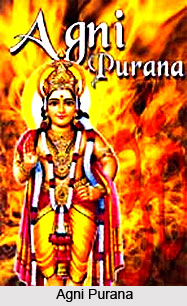
Agni Purana narrates that the married brothers are bound to provide for the marriage-expenses of an unmarried daughter of their deceased father, and to give her a fourth part of a share. The sons of Brahmana father should be entitled to four, three, two and a single share respectively, according to the castes of their respective mothers, or in other words, a son by a Brahmana mother would take four, a son by a Kshatriya mother would take three, a son by a Vaishya mother would take two, while a son by a Sudra mother would take a single share only. Articles found to have been wrongfully taken possession of by another, should be equally distributed among the co-partners, and as such are the practice.
A son begotten by a sonless man in another man`s wife under a Niyoga (authority to beget offsprings), should inherit the properties of both his natural father and the husband of his mother, as such a son can offer cakes of obsequies to both of them.
With regard to the Stridhana it has been mentioned in the Agni Purana that the estates given to a woman by her father, mother, husband, or brother, as well as those presented to her near the nuptial fire, or those which fall under the denomination of `Adhibedanikas`, are the four classes of Stridhana recognised by law. The `Vandhus` of a woman dying without any issue, should inherit the estate (Stridhana) presented to her by her friends and relations, as well as those which are known as the `Anvadheyakam`. The husbands of all castes should inherit the Stridhana left by their respective wives dying without any issue, while their daughters should be deemed as the legal heirs to such properties in the event of their having any female child; otherwise the property would revert to the father of the deceased. Likewise in the case of partition, duly attested one`s cognates, Vandhus and relations, the ancestral the fields and the articles of dowry (`Joutakas`) should be fairly portioned and distributed among the several coparceners entitled to them by law and right.