
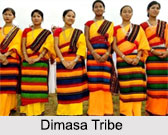
 Dimasa Tribes are the most widely spread tribal groups in the north-eastern region of India. These tribes are mainly found in the North Cochar Hills, Cachar and Karbi Anglong district of Assam. Dimasa tribal community is said to be a component part of the Bodo-Kachari clan.
Dimasa Tribes
Dimasa Tribe is one of the many different tribes of Assam. They are said to be the earliest inhabitants of the Brahmaputra Valley.
Introduction
Dimasa Tribes are the most widely spread tribal groups in the north-eastern region of India. These tribes are mainly found in the North Cochar Hills, Cachar and Karbi Anglong district of Assam. Dimasa tribal community is said to be a component part of the Bodo-Kachari clan.Origin of Dimasa Tribe
As per the history, the Dimasa tribes are said to be the earliest inhabitants of the Brahmaputra Valley. The word "Dimasa" means "children of the big river" that connotes Brahmaputra River. Dimasa tribes belong to the Indo-Mongoloid group which includes the Bodo Tribe and their allied tribes. They call themselves Bodo or Bodo-fisa in the Brahmaputra valley and Dimasa or Dima-fisa in North Cachar Hills and Karbi Anglong District.
Society of Dimasa Tribe
Dimasa tribal people build their houses on hill slopes with a river or streamlet flowing nearby. The houses are generally built on plinth of earth – in two rows facing each other with a sufficiently wide gap in between. An important institution of the village is `Hangsao`. It is an association of unmarried boys and girls of the village. It is organized for the purpose of working together in cultivation and lasts only for one year. Throughout the year, the members of the Hangsao work together in the Jhum cultivation by rotation an area of land at every member`s field.
Religious Life of Dimasa Tribe
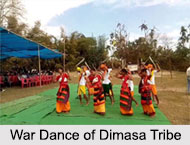 Dimasa tribal community is very much pious and religious minded. Festivals, musical melodies, religious rites and customs have enriched the culture of this tribal community. The supreme deity in the world is the Banglaraja as per the Dimasa tribal community. These tribal people worship several deities like Lord Banglaraja, Sibrai, spirits of ill- will and good wills, Sakainjeek, Madai.
The religious practices of the Dimasas are reflected in their Daikho system. A Daikho has a presiding deity with a definite territorial jurisdiction and a distinct group of followers known as Khel. Every Dimasa Kachari family worships its ancestral deity once a year before sowing the next paddy. It is known as Madai Khelimba. This is done for the general welfare of the family. They cremate their dead. The widow does not tie their hair till cremation. The dead body is cremated by the side of a river or stream.
Festivals of Dimasa Tribe
The Dimasa tribal people celebrate several occasions and festivals namely Bushu and Hangsao with playing instruments, traditional dance. Music and dance play an important role in the day-to-day life of the Dimasa people. The males and females of this community are dressed in their traditional dresses during these festivals and some of them take part in folk dances. By using their traditional musical instruments like Muri, Muri-wathisa, Supin Khram, Khramdubung, they present their traditional dances named - Baidima, Jaubani, Jaupinbani, Rennginbani, Baichargi, Kunlubani, Daislelaibani, Kamauthaikim Kaubani, Nanabairibani and many more.
Traditional Dresses of Dimasa Tribe
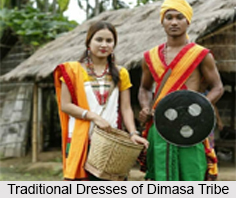 Traditional Dresses of Dimasa Tribe are very traditional and cultural. Both men and women wear costumes designed in household looms. There is a skirt type of attire i.e. "Rigu" which is worn by girls and women in Dimasa tribe. The Dimasa people are an indigenous Assamese community of people inhabiting Assam and Nagaland states in North-Eastern India.
Traditional Dresses for Men of Dimasa Tribe : The men of the Dimasa tribe are known to wear a "Sgaopha" or a "Pagri" (a turban) which is a sign of the pride they take in their name. The Sgaopha is yellow or green in colour, but on special occasions like marriages, the groom wears a white turban with a red thread tied below the chin. The "Rigdo" is a little muffler that these people carry with themselves. "Risha" and "Gainthao" are types of Dhotis that differ in length. The "Riendi" is a shawl worn by men usually made from Eri silk of silk worm.
Traditional Dresses for Women of Dimasa Tribe : The women of Dimasa tribe are extremely pretty, and their amazing dresses bring out the hidden beauty in them. The dresses these women wear is fairly similar to the "Mekhela Chador" except the fact that the "Rigu" is a more standard piece of clothing here. The "Rigu" is a long piece of cloth worn from the waist down, usually reaching up to the ankles. "Bathormai" is a kind of Rigu that has one and only one design on the whole piece of cloth. The Bathormai is a particular Rigu that reaches only till the ankles and therefore is widely worn during summer seasons. "Rijamphain" is a dress like clothing which is white in colour and runs from the chest to the knees, and many young women can be found wearing one of these. These people have simple costumes and yet never leave a shred of elegance wasted.
Crafts of Dimasa Tribe
Dimasa tribe are a group of people residing in Assam. They are believed to be the first inhabitants of the Brahmaputra River Valley. The Dimsas have since long maintained their own traditions and culture that are reflected through the different forms of art work, traditional dresses, costumes, festivals. The Dimasa Tribes have gained much popularity for their exquisite craftwork and textile work. The exotic products crated by them speak about the skills of the traditional craftsmen. The Dimasa tribes are specialised in cane, bamboo and wood crafts that have been handed down from ages. Some of the important crafts of Dimasa Tribes have been discussed below:
Cane, bamboo and wood crafts : The Dimasa Tribes are proficient in cane and bamboo works. Some of the significant craft works are Longkrai, a cane made basket used to carry fire wood, Khagkra, a big basket made of cane and bamboo used to keep goods, Jengkra, a basket made of cane and bamboo to keep clothes, Khailung, wooden box used for keeping cloths and valuable objects like ornaments, Khamplu, a basket made of cane and bamboo for storing rice, Tupi, a cane hat, Changkrong, a flat bamboo tray, Samtu, a wooden grinder, Intui, a bamboo basket, Insung, a big wooden box used for storing cloths and ornaments, Kang, a small bamboo basket, Kungbung, a medium sized bamboo basket, Indrew is similar to Changkrong, lngui, a bamboo stiff mat and Tukjung and Kapaijung, a bamboo filter.
Textile : Textile work has earned a great reputation. At the initial stage, these people first finely rear the silk cocoon. Then they reel them and spin them into a yarn. Finally they are weaved into beautiful fabrics. The textiles are a flourishing industry of the Dimasa Tribes. The quality of the fabrics made by them is much superior in comparison of several other fabrics produced somewhere else in the country. The dressing pattern of the Dimas reflects their culture. The men among the Dimsa Tribes adorn themselves with a Risha similar to dhoti. It is usually green in colour. He also uses a beautifully designed Rimsao i.e. a chadar to cover the upper portion of his body. The Dimsa women wear a Rigu or a skirt to cover the lower portion of her body from her waist. It is similar to the Assamese Mekhela. The skirt is usually made of cotton or silk and is sometimes white or coloured. She also wears a Remai i.e. a wrapper. To cover the upper portion of her body she wears a Rekhausa Rimi. The women also adorn themselves with an artistically designed chadar known as Rijamphai to cover her upper portion of body. During various occasions or dance festivals the women of Dimasa Tribe wears a uniquely designed chadar known as Rikhaosa.
Cane, bamboo and wood crafts : The Dimasa Tribes are proficient in cane and bamboo works. Some of the significant craft works are Longkrai, a cane made basket used to carry fire wood, Khagkra, a big basket made of cane and bamboo used to keep goods, Jengkra, a basket made of cane and bamboo to keep clothes, Khailung, wooden box used for keeping cloths and valuable objects like ornaments, Khamplu, a basket made of cane and bamboo for storing rice, Tupi, a cane hat, Changkrong, a flat bamboo tray, Samtu, a wooden grinder, Intui, a bamboo basket, Insung, a big wooden box used for storing cloths and ornaments, Kang, a small bamboo basket, Kungbung, a medium sized bamboo basket, Indrew is similar to Changkrong, lngui, a bamboo stiff mat and Tukjung and Kapaijung, a bamboo filter.
Textile : Textile work has earned a great reputation. At the initial stage, these people first finely rear the silk cocoon. Then they reel them and spin them into a yarn. Finally they are weaved into beautiful fabrics. The textiles are a flourishing industry of the Dimasa Tribes. The quality of the fabrics made by them is much superior in comparison of several other fabrics produced somewhere else in the country. The dressing pattern of the Dimas reflects their culture. The men among the Dimsa Tribes adorn themselves with a Risha similar to dhoti. It is usually green in colour. He also uses a beautifully designed Rimsao i.e. a chadar to cover the upper portion of his body. The Dimsa women wear a Rigu or a skirt to cover the lower portion of her body from her waist. It is similar to the Assamese Mekhela. The skirt is usually made of cotton or silk and is sometimes white or coloured. She also wears a Remai i.e. a wrapper. To cover the upper portion of her body she wears a Rekhausa Rimi. The women also adorn themselves with an artistically designed chadar known as Rijamphai to cover her upper portion of body. During various occasions or dance festivals the women of Dimasa Tribe wears a uniquely designed chadar known as Rikhaosa.
Recently updated articles in Tribes of India
Arakh Tribe
Arakh Tribe is one of the ancient tribes located in several parts of central India. Their origin dates back to the Tughlaq era. Arakh tribe appears to...
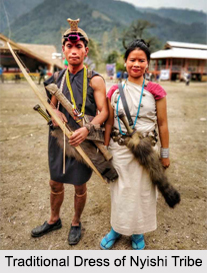
Traditional Dress of Nyishi Tribe
Traditional Dress of Nyishi Tribe is worn during festivals and social gathering. Men wear a cane helmet surmounted with the beak of the great Indian H...
Pasi Community
Pasi is an aboriginal race of India and are mainly distributed over the northern region of the country. The traditional occupation of Pasi is the extr...

Bhojas
Bhojas have been described as a very important tribe in the Aitareya Brahmana. Historical records have said that the Bhojas were settled towards the s...
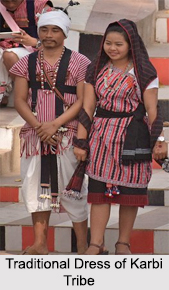
Traditional Dress of Karbi Tribe
Traditional Dress of Karbi Tribe can be easily recognized by the artistic designs inherited from their forefathers. Karbis have their own traditional...
Related articles in Tribes of India
Sentinelese Tribe
Sentinelese tribal community is one of the most isolated and secluded tribes that are found in the whole world.
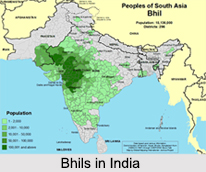
Bhil Tribe
The people of the Bhil tribe are the most widely distributed tribal groups in India.
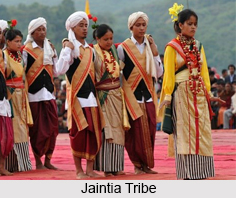
Jaintia Tribe
Jaintia Tribes are located in the Jaintia Hills of Meghalaya. They are also called the Pnars. They are famous for weaving of carpet, making of musical...
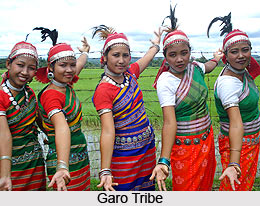
Garo Tribes
Garo Tribes are one of the matrilineal tribes of North-East India who reside in the Garo hills of Meghalaya. Historically, the tribe originated in Tib...
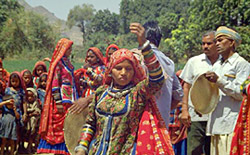
Garasia Tribe
The Garasia tribal community holds a significant position within Indian culture, renowned for their distinctive way of life and rich cultural heritage...