
Devikota which is also known as Kotivarsha, Devkot, Devakota or Diw-kot is a Puranic city. In the earlier days, this ancient city was the administrative centre of Kotivarsha Vishaya.
Location of Devikota
The ruins of the Devikota can be observed in Bangarh, which is situated in Dakshin Dinajpur district (South Dinajpur Ditsrict) of West Bengal state of India.
History of Devikota
As per scholars, there are various facts that mention about Devikota. Lexicographers, Hemchandra and Purushottama have mentioned the city by several names including Banapura, Shonitapura etc. Ramacharita, penned down by Sandhyakara Nandi, describes at length about the temples and the lakes of the city. Some of the historical facts define the city as Umavana or Usavana, Kotivarsa, Shonitapura, Banapura etc. These names appear to be identical with the ruined city of Bangarh which is the capital of the legendary demon king Bana. Interestingly, in the Vaijayanti of Yadava Prakasha, Devikotta and Kotivarsa are considered to be names of the same city. Some other ancient texts like Kalpasutra, Visnu Purana, Shrimadbhagavata, Vayu Purana and Brihat Sanghita have also mentioned about Kotivarsa.
Devikota as an Administrative Centre
It is also believed that Kotivarsa served as an important administrative centre during the Guptas. Their land grant inscriptions, where there was headquarter of a district under the Pundravardhana Bhukti that mentions about this fact. During the early period of the Bengal sultans, Devkot played the role of a significant outpost on the northern frontier of their kingdom. In fact, it also enjoyed an important position at the time of bakhtiyar khalji and later Khalji Maliks.
Devikota in Modern India
Famous historian Cunningham too has mentioned about Devkot and has given a precise image of this place. As per him, it was a place of great significance in the beginning of the Muslim period in Bengal. He defined that the old fort of Devkot was positioned on the left or eastern bank of the Punarbhava. The north of Devkot comprised of a walled enclosure of about the same size while, the south the `Muhammadan quarter of Damdama`. According to Cunningham, from this point there was an embanked road which led to the east past the two great lakes called Dahal Dighi and Kala Dighi.
Devikota
Devikota is a Puranic city and the ruins of the city can be observed in Bangarh, which is situated in Dakshin Dinajpur district of West Bengal state of India.
Recently updated articles in Cities of India
Places of Interest in Deogarh Uttar Pradesh
A place of historical and archaeological significance, Deogarh is a site with few popular places of interest.
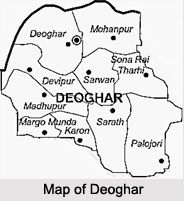
Deoghar in Jharkhand
Deoghar is the divisional headquarters of Santhal Parganas located in Jharkhand and is popular for the famous Baidyanath temple and Shiva Temples.
The Asiatic Society of Mumbai
Asiatic Society in Mumbai is the temple of Asian Studies from the time of British rule in India.
Vasco da Gama / Vasco City
Vasco da Gama / Vasco is the biggest city of Goa and is one of the most visited for its perfect amalgamation of business as well as leisure options.
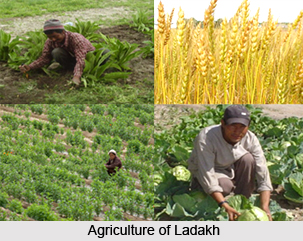
Agriculture of Ladakh
Agriculture in Ladakh is primarily practiced in the short summer season due to its cold desert climate. Farmers grow hardy crops like barley, wheat, p...
Related articles in Cities of India
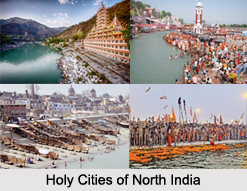
Holy Cities of North India
Holy Cities of North India are having the rich history of Hinduism and the entire civilization was grown up with the hands of beliefs, rituals and the...
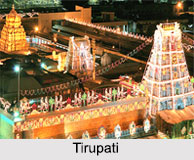
Holy Cities of South India
Holy Cities of South India gives the detailed cultural formation of Dravidians from the early era, which later developed to the world by the Pallavas...
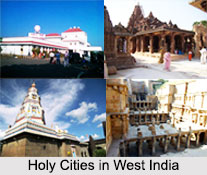
Holy Cities of West India
Holy Cities in West India were established by the rulers of Rajputs and the Satvahana Dynasty and the medieval rulers of Junagadh.
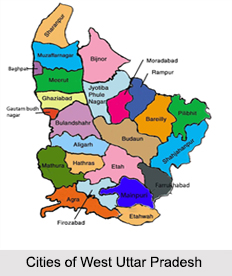
Cities of West Uttar Pradesh
Cities of West Uttar Pradesh include Meerut, Bulandshahr, Ghaziabad, Saharanpur, Muzaffarnagar, Bijnor, Bareilly, Rampur, Agra, Aligarh, Mathura and m...
Port Cities of South India
Port Cities of South India are developed from the early phase of colonial era when the Portuguese and the French traders came to India