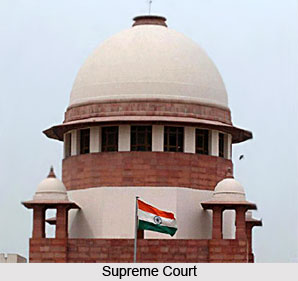
 A sensitive and controversial issue is that of the power of the courts to punish for their contempt. Articles 129 and 215 of the Constitution provide for the Supreme Court and the High Courts being courts of record and having all the powers of such courts including the power to punish for their own contempt. The Contempt of Courts Act, 1971 has codified the law in the matter. Contempt may be defined to mean willful disobedience of the court, in any manner lowering the authority of the court or interfering with or obstructing the administration of justice. It does not inhibit genuine and well-intentioned criticism of courts or their functioning. Also, fair and reasonable criticism of a judicial act in the interest of public good cannot constitute contempt.
However, the law as it has emerged from judicial decisions does not allow even truth to be a valid defense against charge of contempt of court. Also, the courts have sought to make a distinction between criticism made by a former judge and law minister which may be permissible and criticism by other citizens which must be "checked". This is anti-democratic and violative of the freedom of expression, right to equality and non-discrimination clauses. It is necessary that the contempt law and more particularly the exercise of powers under it are reviewed objectively and in an ordinary citizen-friendly perspective.
The Constitution Commission (NCRWC) suggested that it may be laid down by constitutional amendment that "it shall open to the court on satisfaction of the bona fides of the plea and of the requirements of public interest to permit a defence of justification by truth." The Commission had also suggested that no court other than the Supreme Court and the High Courts should be allowed to exercise any power to punish for contempt of itself.
The Contempt of Courts (Amendment) Bill 2004 passed by Lok Sabha on 22 February 2006 seeks to amend the original 1971 Act to provide that the court may permit, in any proceeding for contempt of court, justification by truth as a valid defense if it is satisfied that it is in public interest and the request for invoking it is bona fide. This is in acceptance of the NCRWC recommendation.