The pioneering founder, actor and producer, Gubbi Veeranna, launched in Bangalore the Karnataka Film Corporation in 1930. It produced three memorable silent films, all featuring Veeranna in the lead role: Song of Life (1930), His Love Affair (1931) and Harimaya (1932). He also produced 6 films after the Talkie Revolution. Some of these have become a part of the regional cinematographic history, like, Jeevan Nataka (1942). The film was directed by Wahab Kashmiri in which Veeranna stars with the great Kannada actress Shanta Hublikar and Kamparaj Urs, another pioneer actor, director and producer. Almost all the films by Veeranna were directed by directors outside the Karnataka film industry. It was a short of a trend at that time to invite directors from the neighboring states to make films. The only reason for this is that the other film industries like Tamil, Telegu were more dominant and popular than Karnataka.
One of the classical Kannada directors is Budugur Ramakrishnaiah Panthulu. The first classical film that he produced was Maodala Thedi in 1955. It was made in both Kannada and Tamil. The film starred Shivaji Ganeshan and was directed by P Neelkantan. It is a well constructed somber drama intended to illustrate the tribulations of a middle class family through a deluge of calamities. It was an enormous success in that era. In 1957 Panthulu directed Schoolmaster in which he also played the lead role. It is the story of an honest schoolmaster and reformer who tries to change certain practices in the village in which he is posted.
The same year he also directed and featured in Ratnagiri Rahasya in Kannada and Tamil. It is a fairytale based on folklore against a backdrop of black magic. His other films include Kittur Rani Channamma and Krishnadevaraya.
Premada Putri by R Nagendra Rao is another classical Kannada film that was released in 1957. It is one of the first award winning Kannada films and was simultaneously shot in Kannada, Telegu and Tamil. This credible film relates the suffering of a mother and a daughter because of the drunkenness and laziness of the father but this descent into hell ends when fate finally brings the two women together.
RN Rao illustrates south Indian history with Vijayanagarada Veeraputra, set in the brilliant and powerful Hindu kingdom of Vijayanagara founded by a dynasty of that name ruling over the entire south India in the 14th century. Namma Makkalu (1969) is a film advocating the necessity of inculcating in the children a sense of responsibility in the family and the society.
The meticulous N. Lakshminarayanan, considered as one of the first experimental directors in Kannada, proclaims some of the themes of the New Cinema. Nandi (1964) featuring Rajkumar and launches the beautiful Kalpana, the two greatest stars of the history of Kannada cinema. The film is wholly devoted to the social rehabilitation of deaf and mute and narrates the story of a widower and father of s child born afflicted with this infirmity. With these stars the director made another social drama, Uyyale (1969) on the theme of conjugal relationships, analysed with clarity.
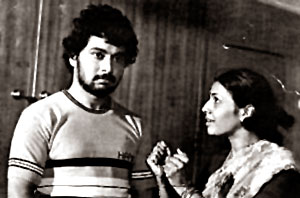
The subject of Mukti, with Kalpana and Uday Kumar, is set in the contemporary period. it is a love story between a student and his friend in the university. The deceased father of the boy has amassed huge wealth in a questionable manner and the mother of the girl is a prostitute. The underlying humanism in many of his films is also evident in Abachurina Post Office (1973).
P Kanagal was one of the greatest protagonists of Kannada cinematography in 1960s and 70s. His Bellimoda, with Kalpana and TN Balkrishna was a phenomenal success from the 1950s till date in Karnataka. In 1970 he shot the best known film in India, Gejje Pooje, a tragic story helped by a galaxy of excellent and beautiful actresses, Kalpana, Leelavathi and Arathi and the first great Kannada actress, Pandharibhai. The next year he made Sharapanjara, a film with a psychoanalytical connotation unusual in Indian cinema of that time. His next venture was Nagara Haavu (1972). This film was shot in a wild mountainous area and deals with an adolescent revolt against society. In a much lighter vein he made Bili Hendhi in 1975.
Other directors of the Classical films include GV Iyer and TS Nagabharana. From the late 1960s Karnataka attained a certain technical self sufficiency in respect of the infrastructure of Chennai. With this more films came to be made here. To keep up with the pace of the films cinema halls also mushroomed. Swinging between commercial cinema of the Hindi-Tamil variety and films reflecting social realities treated with a certain aesthetic concern, Kannada cinematography became the breeding ground of filmmakers who are among the most brilliant and innovative of Indian art cinema.

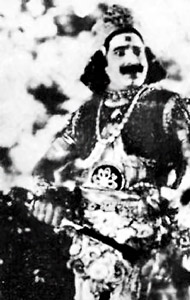 Kannada films have, moreover, for a long time been shot and processed at Chennai. They were often remakes of successful films of the two neighboring states. it was performing arts and literature which gave the much needed impetus to the film industry, an influence which wi8ll be encountered in the blossoming of the Kannada art film during the closing years of the period 1960s to 80s.