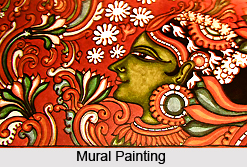
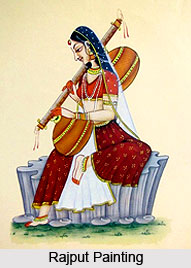
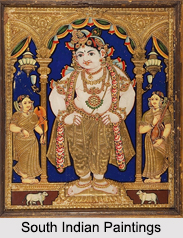
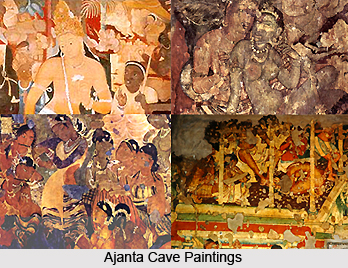
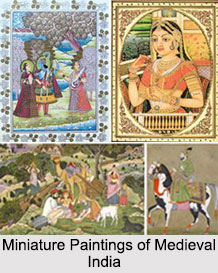
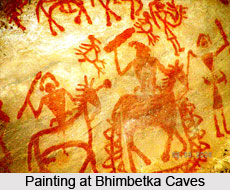
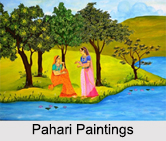
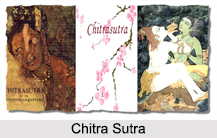
 The name Chitra Sutra suggests that it deals with paintings (Sanskrit `chitra` means painting). Written in Sanskrit, it is by large the most significant work that deals with theories of Indian paintings. Chitra Sutra was first published in 1912; later the first English translation of it was rendered by Stella Kramrisch in the year 1924. Chitra Sutra is part of a much larger work of Vishnudharmottara Purana (Khanda-III, Adhyayas 35-43).The book has always been a part of the south Indian ethos.
Chapters of Chitra Sutra
Chitra Sutra is consisted of 8 chapters or Adhyayas (35-43). Each chapter discusses about different feature of Indian painting:
Adhyaya 35: This chapter showcases the mythic origin of painting and the five types of males together with their differing proportions.
Adhyaya 36: Chapter 36 discusses about the measurements and proportions of the different parts of the body and the colours and other distinguishing features of the five male types.
Adhyaya 37: This chapter deals with the measurements of the five types of females, their hair and eye types, and the general characteristics of a Cakravartin, the supreme ruler.
Adhyaya 38: It gives the details on auspicious marks that divine images, both sculpture and painting should possess.
Adhyaya 39: It features the different postures (sthanas) of figures.
Adhyaya 40: This Adhyaya describes how to mix paints, prepare the surface, and apply the paints.
Adhyaya 41: It defines four types of paintings.
Adhyaya 42: It prescribes the manner in which a large number of beings–royalty, priests, nature and heavenly sprites, demons, wives, courtesans, attendants of Vaisnava deities, warriors, merchants, and others should be depicted.
Adhyaya 43: This chapter depicts the nine Rasas in painting, strengths and defects in painting, as well as sculpture in different materials.
In closing of khanda III chapter 43.37, it has been stated that whatever has been left unsaid about painting can be understood from the section on dance, and what is not given there can be supplied from painting.
Categories of Paintings in Chitra Sutra
Whilst discussing about the features of paintings in details, Chitra Sutra distinguishes paintings into 3 types: Chithra, Ardha Chithra and Chithra Bhasa. In Chitra Sutra, a two dimensional line drawing painting is called Chithra; paintings in low relief are defined as Ardha Chithra and the resembling sculptures are called Chithra Bhasa.
The Six Limbs of Indian Painting
The manuscript further defines the six limbs or `shadanga` of Indian paintings - as `Rupa-bheda` or the various forms; "Pramana" or the proportion in the paintings; `Bhava` or the infusion of emotions; `Lavanya Yojanam` or the infusion of grace; `Sadrisyam` or resemblance to reality; and `Varnikabhanga` or the artistic manner of using the brush and colours in the paintings.
According to this ancient manual, it is the line that defines the various subjects in the paintings. The paintings could also be rated on shadanga. Besides discussing the technicalities of painting, Chitra Sutra also differentiates between `great and `mediocre` artists.