
Censorship of theatre during colonial rule was a major aspect of theatre during the 19th century. But it was not always aestheticised politics that occupied centre stage in the Bengali theatre of late-nineteenth-century Kolkata; 1875 and 1876 were marked by the appearance of a handful of political plays that directly critiqued British presence in India, propagating independence. Two plays in particular Sharat-Sarojini and Surendra-Binodini by Upendranath Das (1848-95) became notorious. However, being of politically sensitive content, both plays were first published under the pseudonym of a certain late Durgadas Das.
But there was more to come. In the same year, 1875, the Great National Theatre came up with a farce titled Gajadananda o Jubaraj (Gajadananda and the Prince), allegedly by Upendranath Das. This play was a satirical account of one Jagadananda, a barrister, who had entertained the visiting Prince of Wales in his house, allowing the womenfolk of his family to meet him. This was regarded a total violation of native custom that forbade the British from trespassing into the inner sanctums of Indian households, the world of women. In the play Jagadananda became, by a simple twist of syllables, Gajadananda, the native-supplicant, the bootlicker. After the second night, Gajadananda o Jubaraj was closed down promptly by the government. It was, after all, referring not to `rogue` planters but to British royalty, the Prince of Wales himself. On 29 February 1875, Lord Northbrook issued the Dramatic Performances Control Ordinance.
The Great National Theatre, in protest, launched a new production overnight, a farce - The Police of Pig and Sheep, ridiculing Mr Hogg and Mr Lamb, two high-ranking British police officials.
This article is a stub. You can enrich by adding more information to it. Send your Write Up to content@indianetzone.com
Censorship of Bengali Theatre during Colonial Rule
Censorship of Bengali theatre during colonial rule was rampant that led to constant protest from the Indians.
Recently updated articles in Indian Drama & Theatre
Amateur Theatre
Development of Amateur Theatre has been responsible for useful innovations in theatre culture of Karnataka.
Surendranath Ghosh
Surendranath Ghosh or Dani Babu was a Bengali thespian active during the mid-20th century. He was mostly known for his contributions to Bengal’s moder...
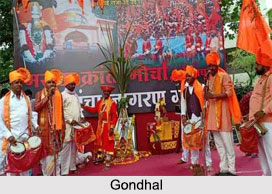
Gondhal Dance
Gondhal is a religious folk dance of Maharashtra. It is performed on special days like when there is a newborn in a family or marriage. Dedicated to g...

Pravritti in Natyashastra
Pravritti in Natyashastra refers to specific human behaviour varying from region to region. There are four types of Pravritti namely, dakshinatya, ava...
Padma Bhushan Awardees (2010-2019)
Padma Bhushan Awardees (2010-2019)
Related articles in Indian Drama & Theatre
Gondhal Dance
Gondhal is a religious folk dance of Maharashtra. It is performed on special days like when there is a newborn in a family or marriage. Dedicated to g...
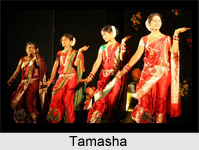
Tamasha Folk Dance
Tamasha is a folk art, which includes the love songs, which are traditional lavanis and dance along with the music.

Sringara Rasa
Sringara Rasa is mentioned in Natyashastra as one of the important rasas. The Sthayi bhava in Sringara rasa is Rati or love.
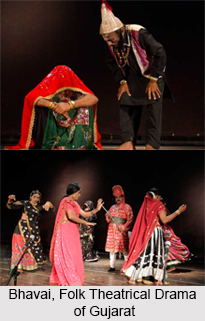
Bhavai - Folk Theatre of Gujarat
Bhavai is a popular folk theatre form of Gujarat that belongs to the tradition of theatre of entertainment.
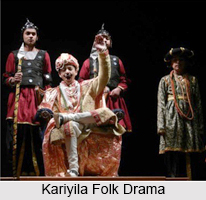
Kariyila Folk Dance
Kariyila is one of the most appealing and popular folk drama forms of Himachal Pradesh, portraying social satire with the accompaniment of folk dance...