Bhaba can be described as feeling or mood. Theoretically, bhaba is the emotive states expressed in a performance towards the evocation of rasa. They are classified into sthayin, sancarin or vyabhicarin, and sattvika. An emotion is recognized as rasa if it is a sufficiently permanent and major human instinct, capable of being delineated and developed to its climax with its attendant and accessory feelings. It is also recognized as rasa if there are persons of that temperament to feel imaginative sympathy at its presentation. Thus bhavas may be viewed first as the sthayin i.e. stable, permanent emotions, those that have the inherent potentiality of transformation into rasa, as follows:
| Bhava |
Rasa |
| Rati (love) |
Sringara |
| Hasa (laughter) |
Hasya |
| Soka (sorrow) |
Karuna |
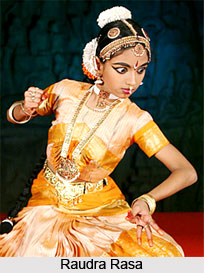
| Krodha (anger) |
Raudra |
| Utsaha (energy) |
Vira |
| Bhaya (fear) |
Bhayanaka |
| Jugupsa (disgust) |
Bibhatsa |
| Vismaya (amazement) |
Adbhuta |
|
|
A ninth, sama i.e. tranquility, is also admitted as the sthayibhava of santa rasa. These durable bhavas are defined as the conditions that neither those akin to them, nor those opposed to them, can overpower. Such a bhava, when delineated in a play, poem, or any other art form, pervades the heart of the sympathetic spectator, reader, or connoisseur.
The thirty-three vyabhicarins or sancarins are relatively fleeting, the feelings and states accessory to and accompanying their respective sthayins. Every sthayin is complemented by a few relevant fleeting psychological states:
| Nirveda (indifference, despondency) |
Autsukya (impatience) |
| Avega (agitation, excitement) |
Unmada (insanity) |
| Dainya (misery) |
Sankd (apprehension) |
| Srama (fatigue) |
Smriti (recollection) |
| Mada (intoxication) |
Vyadhi (sickness) |
| Jadata (stupor) |
Santrasa (alarm) |
| Ugrata (cruelty) |
Vrida (shame) |
| Moha (distraction, delusion) |
Harsha (joy) |
| Vibodha (awakening) |
Asuya (envy) |
| Supta (dreaming) |
Vishada (despair) |
| Apasmara (dementedness, epilepsy) |
Dhriti (equanimity, endurance) |
| Garva (pride) |
Capalata (restlessness) |
| Marana (death) |
Glani (weakness) |
| Alasya (indolence) |
Cinta (anxiety) |
| Amarsha (indignation) |
Vitarka (deliberation) |
| Nidra (sleep) |
Mati (resolve) |
| Avahittha (dissimulation) |
|
Sattvikas are involuntary expressions of feelings, on the one hand physical and on the other rooted deeply in the psychic state. Their involuntary nature betrays their emotive and psychic basis. Therefore they cannot be enacted mechanically and always need the performer`s emotional involvement:
| Stambha (paralysis) |
Vepathu (trembling) |
| Sveda (perspiration) |
Vaivarnya (change of colour) |
| Romanca (horripilation) |
Asru (tears) |
| Svarabhanga (disturbance of speech) |
Pralaya (fainting) |
Additionally, Bharata and his commentators emphasize that when all the components of theatre beginning with vibhava i.e. the stimuli of the bhavas and the environment in which they take place are presented, rasa manifests itself in the spectator. Thus alambana vibhava i.e. the determinant person or thing with reference to which a sentiment arises, uddipana vibhava i.e. the attendant objects and circumstances which stimulate or enhance bhava, and anubhava i.e. the consequent appropriate expressions on the face and external symptoms of the body indicating the rise of a bhava are essential for the realization of rasa.