
Bedar tribes belong to the famous Dravidian language family group. The Bedar tribal community can be found in several places of Karnataka. They are also known as Beda, Berad, Boya, Bendar, Berar, Burar, Ramoshi, Talwar, Byadar, and Valmiki. The word `bedar` has an etymological significance. The word has been derived from the word bed or bedaru, which signifies a hunter. The ancestors of Bedar tribes were the Pindaris. However, some claim that their ancestors were Tirole Kunbis. The origin of the name of the tribe is not properly known. It is said that the meaning of the term bedar is without fear. Less information is available about the origin of these Bedar tribes. Within the Bedar tribal community, there are few Hindus and are called Bedar. The Muslims are being referred as Berad. These Bedar tribes themselves like to be identified as Naikwadi since they work as village policemen or Talwar (watchmen) or Naikmakkalu (chief`s children).
Society of Bedar Tribes
The societal structure of the Bedar tribal community is quite significant. The Bedar tribes have six social groups. Bedar tribes have taken up occupations like farming labourers, security guards, workers, stonecutters, drovers etc. Apart from these occupations, the Bedar tribal are also engaged in occupations of servants, traders, messengers, police and soldiers. The Bedar tribal community is of a mixed nature. There are three sub-divisions of Bedar tribal communities. These are Maratha, Kande and Telugu Bedars. They have their indigenous customs and traditions. They eat meat and also drink liquor.
Just like many of the tribal communities, the institution of marriage is given prime importance in Bedar tribal communities. The proposal of marriage usually comes from the parents of the bridegroom. Although child marriage is prevalent in the Bedar society; the bride does not reside with her husband till her puberty. Marriage within the sub group of the Bedar community is not allowed. Widow re-marriage and divorce are permitted amongst the Bedar tribes. In matters of administration, especially in case of disputable matters, the Bedar tribes take the help of the village headmen, popularly called Kattimani.
Bedar tribal community has developed immense faith on various practices related to religion and spiritualism like fortune telling, magic and astrology. In the Bedar tribal community, all the Brahmins undertake the role of priests. In some places however, Lingayat Mathpatis also act as priests. Amongst the Bedar tribes, both the religions of Hinduism and Islam are prevalent. Janai, Jokhai, Khandoba, Hanmappa, Ambabai, Jotiba, Khandoba are some of the supreme deities of the Bedar tribal community. Images from deities like Durgava, Maruti, Venkatesh, Yellamma and Mallikarjun, are made from silver, copper or brass images and the Durgamurgavva image is made in a box on their head.
Culture of Bedar Tribes
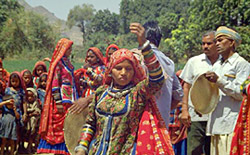
Cultural exuberance of the whole of the Bedar tribal community has nicely being depicted in all its aspects like festivals, language, jewelleries etc. The people of Bedar tribal community communicate in Bedar language. Today the Bedar tribes use diverse languages like Kannada language and Marathi language. Jewelleries are an integral part of the costumes of the Bedar tribal community. Both Bedar males and females are very fond of wearing ornaments that are made up mainly from silver and gold. As per the custom, these Bedar tribes have a set of conventional jewelleries. The Bedar tribes wear gold and silver bracelets (khade), waist girdles (uddurs), and gold earrings (muruva). In addition, Bedar females place their hair in a loose knots, wear several other ornaments like nose-rings, a gold necklace, Dhora is a social hoofed silver jewellery which these Bedar females wear on the head. Moreover there are quite a handful of Bedar tribes who also shave their heads, according to the custom.
Tattooing also is a special custom of these Bedar tribes. The males and females of the Bedar tribe do tattooing on the several parts like forehead, corners of the eyes and forearms. Rites, rituals, customs are part of the Bedar tribal community. Basavis are a group of Bedar tribal females who reside inside the temple premises. After branding them with stamps by the spiritual head the Bedar girls get to the temple where a necklace is attached around their neck in the name of the god. Fairs and festivals are part and parcel of the culture and tradition of the Bedar tribal community. The Bedar tribes celebrate various Hindu festivals like Diwali, Dussehra, and Holi and have a conventional headman or guru. They celebrate these festivals with tribal songs and dances.
Bedar Tribe
Bedar Tribes of Karnataka are also known as Beda, Berad, Boya, Bendar and are divided in six social groups. Cultivation is the main occupation of Bedar Tribe.
Recently updated articles in Tribes of India
Arakh Tribe
Arakh Tribe is one of the ancient tribes located in several parts of central India. Their origin dates back to the Tughlaq era. Arakh tribe appears to...
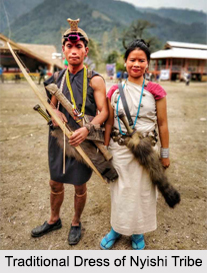
Traditional Dress of Nyishi Tribe
Traditional Dress of Nyishi Tribe is worn during festivals and social gathering. Men wear a cane helmet surmounted with the beak of the great Indian H...
Pasi Community
Pasi is an aboriginal race of India and are mainly distributed over the northern region of the country. The traditional occupation of Pasi is the extr...

Bhojas
Bhojas have been described as a very important tribe in the Aitareya Brahmana. Historical records have said that the Bhojas were settled towards the s...
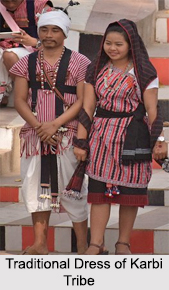
Traditional Dress of Karbi Tribe
Traditional Dress of Karbi Tribe can be easily recognized by the artistic designs inherited from their forefathers. Karbis have their own traditional...
Related articles in Tribes of India
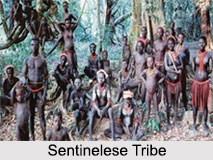
Sentinelese Tribe
Sentinelese tribal community is one of the most isolated and secluded tribes that are found in the whole world.
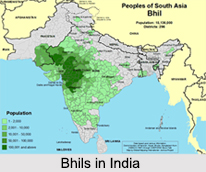
Bhil Tribe
The people of the Bhil tribe are the most widely distributed tribal groups in India.
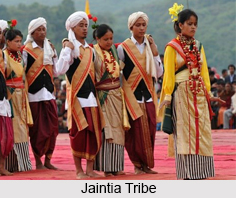
Jaintia Tribe
Jaintia Tribes are located in the Jaintia Hills of Meghalaya. They are also called the Pnars. They are famous for weaving of carpet, making of musical...
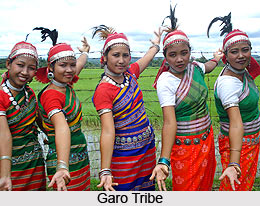
Garo Tribes
Garo Tribes are one of the matrilineal tribes of North-East India who reside in the Garo hills of Meghalaya. Historically, the tribe originated in Tib...
Garasia Tribe
The Garasia tribal community holds a significant position within Indian culture, renowned for their distinctive way of life and rich cultural heritage...