
Ba-Bidn-Bidn Festival, celebrated through varied rituals, add colours to the rich cultural tradition of the Kharia Tribe. It is the sowing festival of the Kharias celebrated both on communal as well as individual levels during the Hindi month of Jeth i.e. in May - June. The families are restricted from sowing paddy in their respective fields prior to the performance of the festival.
Performance of Ba-Bidn-Bidn Festival
The Ba-Bidn-Bidn Festival is first initiated by the Kalo who sows the paddy in the Pahanai land i.e. a field free of rent and owned by the Kalo. A portion of the yield is used for communal purpose such as for preparation of rice beer or for utilizing it during sacred performances. The celebration of the festival is primarily associated with agriculture but it also closely relates to forest life of the Kharias. During the celebration of Ba-Bidn-Bidn festival or prior to it, utilization of Keund (Drospyros melanoxylon) leaves for the purpose of cup making is completely restricted.
A particular day is fixed by the community members for the celebration of the festival. On the appointed day, the Kalo observes fast. He takes bath in the wee hours of the day and collects five fowls of varying colours such as red, white, black, spotted and gray. These fowls are then sacrificed in the name of the Khunt and Pat in his house. The process of propitiation bears resemblance to the several other rituals performed by the Kharia Tribe. The Kalo accumulates a small amount of paddy in a new basket and departs for the Pahanai field which is kept ploughed prior to the celebrations. The Kalo sows a handful of paddy in the field and returns back. The Kalo observes complete silence from the time he leaves for the field and return`s back. Upon returning back, he offers Golang to the ancestral spirits at the entrance door of the kitchen uttering the following mantra:
"O! So-and-so (names), old men (Ancestors) and old women (Ancestresses)! In your names, I am sowing paddy. I ungrudgingly offer sacrifices to you. May not my children suffer from stomachache and headache (i.e. any disease or aliment)."
The concluding part of the festival is marked by eating, drinking and merry making by all the community members. Fish is considered as a ceremonial dish on this special occasion for its association with fertility and agricultural production. Thence, the same sacred performance is repeated on the family level.
Ba-Bidn-Bidn Festival of Kharia Tribe
Ba-Bidn-Bidn Festival of Kharia Tribe, celebrated both on communal and individual levels during the Hindi month of Jeth, is executed by a Kalo who performs all the rituals associated with the puja.
Recently updated articles in Tribes of India
Arakh Tribe
Arakh Tribe is one of the ancient tribes located in several parts of central India. Their origin dates back to the Tughlaq era. Arakh tribe appears to...
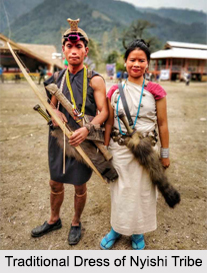
Traditional Dress of Nyishi Tribe
Traditional Dress of Nyishi Tribe is worn during festivals and social gathering. Men wear a cane helmet surmounted with the beak of the great Indian H...
Pasi Community
Pasi is an aboriginal race of India and are mainly distributed over the northern region of the country. The traditional occupation of Pasi is the extr...

Bhojas
Bhojas have been described as a very important tribe in the Aitareya Brahmana. Historical records have said that the Bhojas were settled towards the s...
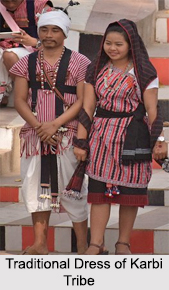
Traditional Dress of Karbi Tribe
Traditional Dress of Karbi Tribe can be easily recognized by the artistic designs inherited from their forefathers. Karbis have their own traditional...
Related articles in Tribes of India

Sentinelese Tribe
Sentinelese tribal community is one of the most isolated and secluded tribes that are found in the whole world.
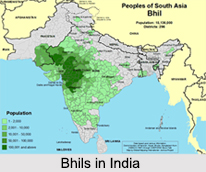
Bhil Tribe
The people of the Bhil tribe are the most widely distributed tribal groups in India.
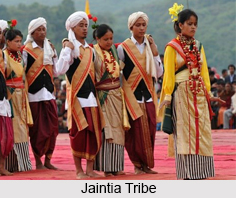
Jaintia Tribe
Jaintia Tribes are located in the Jaintia Hills of Meghalaya. They are also called the Pnars. They are famous for weaving of carpet, making of musical...
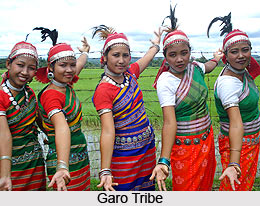
Garo Tribes
Garo Tribes are one of the matrilineal tribes of North-East India who reside in the Garo hills of Meghalaya. Historically, the tribe originated in Tib...
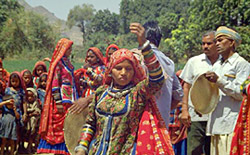
Garasia Tribe
The Garasia tribal community holds a significant position within Indian culture, renowned for their distinctive way of life and rich cultural heritage...