
The army has a primary responsibility of maintaining the peace and security of the kingdom. Many great writers have mentioned in their books about the role played by the army in each princely states. The ancient period saw frequent wars between princely states therefore a strong and loyal army, commanded by able generals was needed by every king.
Literary sources and inscriptional evidence provide us with a fairly accurate picture of the composition of these armies of the kings of various parts of South India. Like the present Indian Army has been divided into various divisions, the armies of the ancient princely states were divided into, four-fold division collectively known as chaturanga-bala. These four divisions were the chariots, elephant corps, cavalry and infantry (ra-tha-jjuja-turaga-padadi).
The chariots (ratha) were put to active use in wars during the very early periods as seen from the numerous works in Tamil written during the Sangam period (c.2nd century B.C. to c.3rd century A.D.). However, in the subsequent periods, from the 4th and 5th centuries A.D. onwards, from the days of the Pallavas and their contemporaries, the chariots were not popularly used in battles and only served as a mode of transport for royalty and perhaps important officials of the state.
Elephant battalion was one of the most important divisions of the army in ancient and medieval South India. Several areas of South India like the Kerala and Karnataka areas were, and still are well populated by these pachyderms and thus they were present in very large numbers in the armies of the South Indian kings, sometimes in several hundreds. The Elephant battalion marched ahead of the armies, fording rivers, breaking down the gates of palaces and forts and generally succeeded in intimidating the enemies. They were usually guided by the mahouts and the soldiers riding atop them in howdas, using weapons such as bows and arrows and spears to kill the enemy soldiers.
The next important division was the cavalry or horses (tumga).
Horses were not native to India and were usually imported, especially from Arabia. Kings of South India liked to have a strong cavalry division with a number of swift-footed horses of good breed, which could travel at lightning speed. Soldiers were trained to ride them and at the same time use weapons like spears and swords to wound and kill the enemy.
Foot soldiers (pada) the most important division of the army followed last. They formed the bulk of the army and using various kinds of weapons inflicted much damage on their foes, however they were also the most susceptible to enemy attack. It is interesting to note that in the medieval times, the army in the Vijayanagara period used guns in their battles as gleaned from the accounts which the foreign travellers to the court of the Vijayanagara kings have left behind. Some of the kings of South India, especially the Cholas had a strong naval fleet. The navy of Rajendra Chola I (1012-1044 A.D.) crossed the sea to conquer Sri Lanka and also conquered parts of Southeast Asia.
Indian Army Divisions in Ancient Deccan
The army played a very significant role in protecting the kingdom.
Recently updated articles in Indian Administration
Functions of Ministry of Home Affairs
The Ministry of Home Affairs oversees internal security, law and order, and border management in India. It coordinates with states, administers Union...
Padma Shri Awards
Padma Shri Award is a civilian award given in India to people who have made outstanding achievements in their respective fields. Some of these awardee...
Padma Bhushan Award
Padma Bhushan Award has been given to eminent personalities in India for their remarkable achievements in their respective fields of expertise. Some o...
Padma Vibhushan Award
Padma Vibhushan Award is a civilian award, presented to people for excellence in their respective fields. This award was established on 2nd of January...
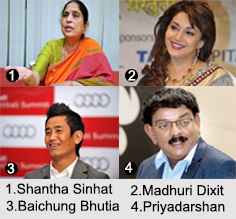
Padma Shri Awardees (2020-2029)
Padma Shri Awardees are people who have received Padma Shri, the fourth highest civilian award in India.
Related articles in Indian Administration

Administration of Chera Dynasty
Administration of Chera Dynasty bears some mentioning in the epic Shilappadikaram. There were four divisions of the total Chera kingdom.
Nayaka Administration
Nayaka Administration was one of the major consolidating factors of the Vijaynagar kingdom in the 16th century. The Nayakas ruled as feudal landlords...
Village Administration in Ancient India
Village has been the pivot of administration in ancient India. As the states were small it enhanced the importance of the village.
Land System in Ancient India
Private Ownership of land was not uncommon in ancient India. As per the system King was considered as the owner of the land.
Samiti in Ancient India
Samiti was an assembly in ancient India that assisted the King. It is equivalent to modern Lower house or Lok Sabha.