
Appaya Dikshita was one of the leading scholars and thinkers of the 17th century AD. He was born in Adayapalam, near Ami in the North Arcot district. It was Krishna Paksha of the Kanya month of Pramateecha Varsha under the Uttara Proushthapada constellation of the Hindu calendar. His father was Rangarajudhwari Dikshita.
Appaya Dikshita got the name Vinayaka Subramanya after the Namakarana or naming ceremony. His guru Rama Kavi gave him the teachings of the Hindu scriptures. At a very young age, he completed the fourteen Vidyas. After attaining his education, Appaya traveled far and wide and entered into philosophical disputations and controversies in many centres of learning. He flourished under the patronage of the kings of Vellore, Tanjore, Vijayanagar and Venkatagiri. He was an Advaitin and did not differentiate between Vishnu and Siva. This is evident from his composition `Sivarkamanidipika` in which he praises Siva and again his poem `Vardarajasthava` and `Krishna Dhyana Paddati` shows his love for Lord Vishnu. It is also said that he composed a hundred verses on Nataraja i, e, on Siva and `Govindaraja` i, e, Vishnu, which are preserved in the same temple-complex in Chidambaram. He tried to end the controversies between the Vaishnavism and Saivism schools of thought and harmonise both the schools. He dedicated his heart and soul in this work and served several years to make it successful. He was warned by a group of people personally to stop this but he did not fear at all and continued the good work with more courage and faith.
Appaya Dikshita wrote the `Kavalayananda`, a work on Sanskrit poetics on the request of his patron king of Vijayanagar Venkata II. The ruler of Velur, Chinna Bommu Nayaka also offered his patronage to this great scholar. It is believed that the Nayaka bathed Appaya Dikshita in gold (kanakabhishekam) in appreciation of his intellectual scholarship. He was a regular visitor of the court of the Nayaka kings of Tanjavur where too he was greatly honoured.
Appaya Dikshita wrote almost hundred and four works. He followed the philosophy of Srikantha. According to an inscription found in a Siva temple at his birthplace, Adayapalam, it is said that he taught a Sanskrit philosophical work named `Srikantha Bhashya` to five hundred students. Chinna Bommu Nayaka provided land and gold to these students to help them to continue with their studies on the request of Appaya. The active involvement of him in debates with scholars of other systems of philosophy kept him often busies.
Apart from being a good poet and scholar, Appaya Dikshita was a great Siddha-yogi. It is said that whenever he used to sit for meditation or for worship of the Almighty, he used to keep a bundle of his towel in front of him. Then he transferred all the evils and troubles within him to these towels through his yogic powers. All the students of him watched in surprisingly the towels jumping around the place. Later he explained them how he transferred his ailment which was in the form of an evil spirit to the cloth and then took it back soon after his meditation was over. These experiences were really very thrilling.
There is one more story about his mystic devotion. This one is related to his work named `Atmarpana-stuti`, which is a small work of fifty stanzas. It is believed that through this poem he makes the inner self-melt as it were by his wonderful mystic poetry. The true devotion to the Supreme Power can be seen in it. The inner mental state of a great devotee is reflected in it, where the ego vanishes fully. There is a very interesting story behind the composition of this work. Once, he wanted to test his own devotion to the Lord and so he consumed the `Datura` juice, which results intoxication. Then, he asked his disciples to write down whatever he utters during the stage when his consciousness was disturbed. Generally, in such a stage the suppressed and hidden thoughts get released from one. And when the students completed writing what he said, it came out as the `Atmarpana-stuti`, which is therefore also called `Unmatta-panchasati`
Appaya Dikshita
Appaya Dikshita was one of the leading scholars and thinkers of the 17th century AD.
Recently updated articles in Indian Literature
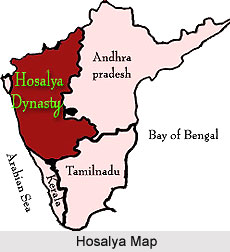
Gadyakarnamrita
Gadyakarnamrita is a 13th-century Sanskrit literary work written mainly in prose. It describes the ninety-day battle at Srirangam between the Hoysala...
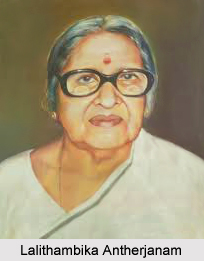
Women Writers in Malayalam Literature
Women writers in Malayalam literature have worked incessantly to make a place for their literary works. In the earlier periods, they were completely o...
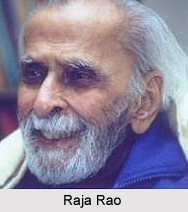
Comrade Kirillov, Novel by Raja Rao
Comrade Kirillov, a distinctive creation of Raja Rao, is presented as a brief yet incisive novelette that offers an ironic portrayal of the self-contr...
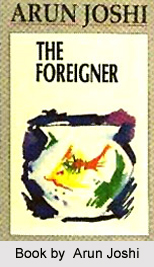
The Foreigner, Novel by Arun Joshi
“The Foreigner” is a book authored by Arun Joshi and published by Vision. It is an illustrious creation in the entire career of Arun Joshi, the famous...
Short Story in Telugu Literature
Short Story in twentieth century Telugu Literature was extremely popular and growing in and developing in a major way. Their popularity was greatly fa...
Related articles in Indian Literature
Mythological Themes in Indian Literature
Mythological themes in Indian literature have been integral to every ancient and contemporary writer and their path to f
Literature During Gupta Age
It is during the Gupta Age literature in the form of poetry, epos and drama gained a colossal importance.
Literature of Aravidu Dynasty
Sanskrit and Telugu were the popular literary medium of communication during Aravidu dynasty.
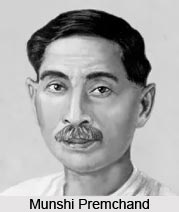
Munshi Premchand
Munshi Premchand was a legendary Indian writer notable for his modern Hindustani literature. A writer of a very high caliber, Premchand`s writings hav...
Sanskrit Poets
The names of some of the Sanskrit Poets are Bharavi, Devarshi Ramanath Shastri, Jayadeva and Srinivas Rath.