
Lalgiri was the propounder of Alakhiya Sampradayaa. He was born in the village Sulakhaniya in a cobbler family in the early years of the 19th century. In the boyhood he was taken by a sadhu belonging to the Naga branch of Dadu Sampradaya. After about fifteen years he returned to Bikaner in 1829 and started preaching. Many became his disciples. He was instrumental in the construction of the famous gigantic well of Bikaner known as Alakh Sagar.
His available vani is in easy Rajasthani and consists of only 29 sabads. It deals with the swarup of God, means of realizing God within one`s own self by sadhana, illusory nature of the world and Nam smaran. He reproached idol-worshippers, impostors, deceivers and the exhibitionists. To him Alakh, who is Nirakar, Nirlep and Niranjan, is the only ultimate truth. Upasana of this Alakh alone is worthwhile. Hence the Sampradaya was named Alakhiya. He has used the Nath style and terminology and is inclined towards the sadhana of Hatha Yoga. The accepted system of deferential salutation is `Alakh-Maula`. The Sampradaya was popular in Bikaner and the adjoining regions. His followers mostly came from the backward classes of the society.
Hence it can be concluded saying that all the sections of the society were included within the Lalgiri Sampradaya irrespective of caste, creed or social status. Lalgiri had inspired all his followers to seek the Absolute Truth.
This article is a stub. You can enrich by adding more information to it. Send your Write Up to content@indianetzone.com
Alakhiya Sampradayaa
Alakhiya Sampradayaa propounded by Lalgiri emphasised on the futility of idol worship.
Recently updated articles in Indian Literature
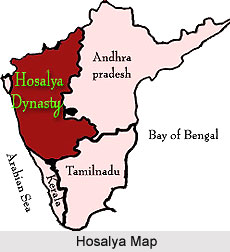
Gadyakarnamrita
Gadyakarnamrita is a 13th-century Sanskrit literary work written mainly in prose. It describes the ninety-day battle at Srirangam between the Hoysala...
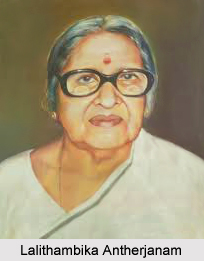
Women Writers in Malayalam Literature
Women writers in Malayalam literature have worked incessantly to make a place for their literary works. In the earlier periods, they were completely o...
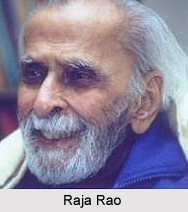
Comrade Kirillov, Novel by Raja Rao
Comrade Kirillov, a distinctive creation of Raja Rao, is presented as a brief yet incisive novelette that offers an ironic portrayal of the self-contr...
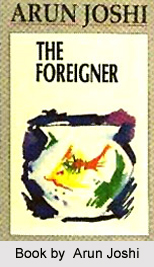
The Foreigner, Novel by Arun Joshi
“The Foreigner” is a book authored by Arun Joshi and published by Vision. It is an illustrious creation in the entire career of Arun Joshi, the famous...
Short Story in Telugu Literature
Short Story in twentieth century Telugu Literature was extremely popular and growing in and developing in a major way. Their popularity was greatly fa...
Related articles in Indian Literature
Mythological Themes in Indian Literature
Mythological themes in Indian literature have been integral to every ancient and contemporary writer and their path to f
Literature During Gupta Age
It is during the Gupta Age literature in the form of poetry, epos and drama gained a colossal importance.
Literature of Aravidu Dynasty
Sanskrit and Telugu were the popular literary medium of communication during Aravidu dynasty.
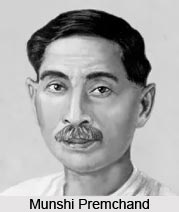
Munshi Premchand
Munshi Premchand was a legendary Indian writer notable for his modern Hindustani literature. A writer of a very high caliber, Premchand`s writings hav...
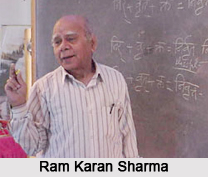
Sanskrit Poets
The names of some of the Sanskrit Poets are Bharavi, Devarshi Ramanath Shastri, Jayadeva and Srinivas Rath.