About Poems in Sanskrit
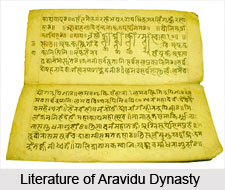
Poems in Sanskrit Literature are the base of Indian Literature and authors, poets and writers have always referred to these writings to enrich the literature that depicts the land having a civilization of three thousand years or more.
Sanskrit Secular Poetry is one genre of Sanskrit poetry that has been influenced by Pali and Prakrit Literature. Poetic art was steadily developing in refinement from the earlier stage which is preserved in the Rig Veda itself and in the Atharva Veda and in Pali texts. Several secular poems have been ascribed to Kalidasa of which the ƒ,ªrngdratilaka is considered worth honouring. Its twenty-three stanzas picturizes love. The poet condemns while praising his beloved. The note of bitterness and pain has been the most influencing.
Ghatakarpara is a poem of the category written in twenty-two stanzas that describes the situation of a young wife. This poem is indebted for its title to the fact that the author offers to carry water in a broken jar for any one who can surpass him in Yamakas and thereby evolved the poet Ghatakarpara. This work is earlier than Kalidasa. Ghatakarpara clearly was ranked higher by Indian taste and he was also made one of the nine jewels of Vikramaditya`s court as a contemporary of poet Kalidasa.
Mayura was a poet who flourished in the court of Harshavardhana in the seventh century and was the father-in-law of Banabhatta. Matafiga Divakara was more famous compared to both of them.
Govardhana was a poet whose aim was to raise the Yamuna River in the air in the shape of elevating love songs extant in Prakrit to the level of Sanskrit language. His medium was the Arya verse. He also composed in this metre which was borrowed by Sanskrit from Prakrit. The poetry lacks the popular flavour. The Prakrit model has been imitated that is carried to the extent of styling the sections Vrajyas. His brothers Udayana and Balabhadra brought out the corrected version of his work.
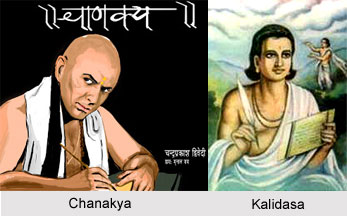 Gnomic verses was first composed or espoused by writers of the fable literature. Before writing it was passed from mouth to mouth till efforts were made by compilers to collect. One need not doubt that the collector became normally an inventor at the same time. Such verses were visible in collections such as Rajanitisanmacaya, Chanakyaniti, Vrddha Chanakja, Laghu-Chanakya. There are seventeen recensions. Each manuscript shows distinct variations; the compilers were diverse, they had many sources open therefore it is impossible to determine the original shape of the collection. There is an absurd assumption that it was composed by Chanakya, the minister of Chandragupta Maurya. It is clear that this composition was passed off under his name as he was famous.
It is not even known whether the first stanza is a treatise on Rajaniti, the conduct of princes. Another composition of Bhojaraja has been preserved in a manuscript that has 576 verses divided into eight chapters. It deals with general rules for the ways of life, general indications on richness and poverty, on fate and human attempt and on variety of ethical and spiritual topics.
The stanzas are not connected by line of thought though there are exceptions. Verses are meant to be adversative. In a group of seven verses different kinds of Brahmin are illustrated. The ordinary character of the topics is improved by the use of metaphors and similes nature. Cloka is the prevalent metre though there are stanzas that are in other metres. They are Indra Vajra, Vancastha, Vasant Tilaka, and Cardulavikridita.
Minor collections of gnomic stanzas are credited to Vararuci, to Ghatakarpara and to Vetala Bhatta. The styles used are Nitiratna, Nitisdra and Nitipradipa. Nitigataka of Bhartrihari is a noticeable work. Under Sankara Varman (883-902) of Kashmir Bhallata, wrote several verses. His Cataka is elaborated and in varied metres. He has employed a simple style.
Another Kashmirian poet Bilhana is also known or his gnomic verses. He has been inspired from Bhartrihari. His verses lack originality. His matter is very interesting than his manner. His date is uncertain, but before the Sadukti-karndmrta (1205), in which he is cited.
Sanskrit Secular Poetry
Sanskrit Secular Poetry has been influenced by Pali and Prakrit Literature. Poetic art was steadily developing in refinement from the earlier stage which is preserved in the Rig Veda itself and in the Atharvaveda and in Pali texts. Several secular poems have been ascribed to Kalidasa of which the €rngdratilaka is considered worth honouring. Its twenty-three stanzas picturizes love. The poet condemns while praising his beloved. The note of bitterness and pain has been the most influencing.
Ghatakarpara is a poem of the category written in twenty-two stanzas that describes the situation of a young wife. This poem is indebted for its title to the fact that the author offers to carry water in a broken jar for any one who can surpass him in Yamakas. Thereby evolved the poet Ghatakarpara. This work is earlier than Kalidasa. Ghatakarpara clearly was ranked higher by Indian taste and he was also made one of the nine jewels of Vikramaditya`s court as a contemporary of poet Kalidasa.
Mayura was a poet who flourished in the court of Harshavardhana in the seventh century and was the father-in-law of Banabhatta. Matafiga Divakara was more famous compared to both of them.
Govardhana was a poet whose aim was to raise the Yamuna River in the air in the shape of elevating love songs extant in Prakrit to the level of Sanskrit language. His medium was the Arya verse. He also composed in this metre which was borrowed by Sanskrit from Prakrit. The poetry lacks the popular flavour. The Prakrit model has been imitated that is carried to the extent of styling the sections Vrajyas. His brothers Udayana and Balabhadra brought out the corrected version of his work. A more sympathetic idea of him is given in a verse that is cited by Rupagosvamin:
pdntha Dvdravatltn prayasi yadi he tad Devakinandano vaktavyah
smaramohamantravivagd gopyo `pi ndmojjhitdk
etah kelikadambadhfdipatalair alokagunyddigak
Kalindltatabhumayo `pi tava bho ndydnti cittdspadampdntha Dvdravatltn prayasi yadi he
tad Devakinandano vaktavyah smaramohamantravivagd gopyo `pi ndmojjhitdk
etah kelikadambadhfdipatalair alokagunyddigak
Kalindltatabhumayo `pi tava bho ndydnti cittdspadam
Buddhist author Dharmakirti has many stanzas that have been ascribed, which are found also in the collections of Amaru and Bhartrihari. He was a logician of the seventh century A. D.
Classical Poetry in Sanskrit Literature
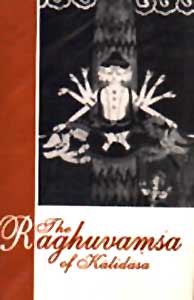 Classical poetry in Sanskrit literature can absolutely and blindly be referred to as the most prolific, most scholarly, most erudite and the most exhaustively-researched work ever to have been accomplished in ancient India. The amount of effort and exertion put in by authors like Kalidasa or Sriharsha, bear eminent proof in the invention of the verse metres or other poetic specifications still being espoused. Every line emoted a profound sense of pathos, of exaltation or even satire to their most bitter extent; umpteen commentaries on the classical form of poetry have been published ever since, that perhaps can only be envisaged by the limit of Sanskrit literature and attempts at its revival.
Classical poetry pertains to that section of verse developed approximately from the 3rd to 8th centuries. Kalidasa is the foremost example coming under this Classical category. An impressive characteristic in this particular Sanskrit literary tradition is that sometimes poets had the habit to flaunt their technical adroitness employing highly structural word-games, like stanzas that read the same backwards and forwards, words that could be split in different ways to create different meanings, sophisticated metaphors, and so forth. This distinctive style is referred to as Kavya. An authoritative example under this Sanskritic literary genre is the poet Bharavi and his magnum opus, the Kiratarjuniya (6th-7th century). Yet another luminary in this verse category, Magh is respected for his epic poem (Mahakavya) Shishupala Vadha, the 20 cantos of which are based upon the Mahabharata episode where the insolent king Shishupala is beheaded by Krishna`s sudarshana chakra.
The greatest works of Classical Sanskrit poetry in this period are the five Mahakavyas, or interpreted into English as "great compositions", comprising: Kum?rasambhava by Kalidasa, Raghuvansa by Kalidasa, Kiratarjuniya by Bharavi, Shishupala Vadha by M?gha and, Naishadha-Charita by Sriharsha. However, a specific bunch of scholars also include the Bhattikavya as the sixth Mahakavya. Other major Sanskritic literary works from this period include Kadambari by Banabhatta, the first Sanskrit novelist (6th-7th centuries), the Kama Sutra by Vatsayana and the three shatakas of Bhartrhari.
Sanskrit Religious Poetry
Sanskrit Secular Poetry is basically a new form of poetry that drifted slightly away from the typical hymns addressed to Gods. The gradual change of religion evoked a change in adoration of Gods. Besides the worship of Lord Shiva, Lord Vishnu, Lord Surya there appeared new such as Lord Krishna, Lord Rama and Goddess Durga. Epic shows the existence of such hymns, the Indian Puranas and Tantras also have specimens of them. However the higher poetry invaded this field. The philosophers were hesitant to take part in the composition of Stotras, songs of praise however they denied it that lent dignity to this art.
There are vast numbers of stotras but most of tem are not poetically worth. A large number of them that belong to a later date and still many of them cannot be assigned to any definite period. Candigataka by Banabhatta is a collection of 102 stanzas that is written in Sragdhara metre. This poem is written in honour of Shiva`s consort. However he does not impress with any sincere devotion. His demerits appear clearly in a couple of stanzas:
vidrane rndravrnde savitari tarale vajrini dhvastavajre
jdtdgahke gagdhke viramati maruti tyaktavaire kuvere
vaikunthe kunthitdstre mahisavi akirusampaurusopaghnanighnam
nirvighnam nighnatl vah gamayatu duritam bhtiriblidvd bhavdni.
The Cataka celebrates the rays of the sun; the horses, the charioteer, the chariot and the disk itself. Mayura`s style is elegant. Arjuna is compared with the actor who speaks the prologue to the drama.
Mayura was fond of religious poetry as seen in the Subhdsitdvali. A speech between Shiva and Parvati:
candragrahatiena vind ndsmi raine kini pravartayasy evam
devyai yadi rncitam idani nandinn dhuyatdm Rahuh.
Mayura is ranked as a typical exponent of the Gauda style as treated by Dandin. His epithets are etymologically explicable. His alliterations are rich and abundant metaphors and similes are used. A series of harsh sounds as well as variation of sounds within a stanza are introduced in order to mark changes of feeling. Some of these verses are:
Cirnaghrdndnghripdnin vranibhir afiaghanair ghargharavyak
taghosdn dirghaghratan aghaughaih punar api ghatayaty eka nllaghayav
yah
gharmahgos tasya vo `ntardvigunaghanaghrndnighnanirvighna-
vrtter
dattdrghdh siddhasahghair vidadhatu ghrnayah glghram ahghovighdtam.
Bana in the Candigataka shows similar features however he does not indulge in the long similes. Contemporary of Bana and Mayura according to tradition was preserved by Rajasekhara. It is considered that he was a clever courtier. It has been hinted that the poet needs to be identified with the Jain writer Manatunga who`s Bhaktamarastotra is very famous. A religious motive is also present in the Vakroktipahcagika of the Kashmirian poet Ratnakara. The following example is:
tvam me nabhimato bhavdmi sutanu gvagrvd avagyam tnatah sddhuktmn bhavatd na me rucita ity atra bruve `ham pariah
mugdhe nasmi nameruna nanu citah preksasva mam pdtu vo vakrokiyeti haro himdcalabhtivam smerdnandm mukayan.
Shankara is another poet who has written many hymns especially to Devi, the mother-goddess, whom the Shaktas adore. His doctrine of two aspects of truth, the higher and the lower allowed him to adopt the popular beliefs and to express his feelings in a way that is acceptable to everybody other than metaphysicians. Utpaladeva`s Stotravali consists of a series of twenty short hymns in honour of Shiva.
Sanskrit Gnomic Poetry
 Sanskrit Gnomic Poetry had its beginnings in the Rig Veda. The moral stanzas are preserved in a surprising manner in an episode of the Aitareya Brahmana. Gnomic verses also appear in the Upanishads and the Sutras. Mahabharata is rich in gnomic verses as well as in didactic poetry. It is also evident that Patanjali was also aware of such a literature. However they were not so popular. They cannot be compared to proverbs racy of the soil preserved in their primitive form.
Gnomic verses was first composed or espoused by writers of the fable literature. Before writing it was passed from mouth to mouth till efforts were made by compilers to collect. We need not doubt that the collector became normally an inventor at the same time. Such verses were visible in collections such as Rajanitisanmacaya, Chanakyaniti, Vrddha Chanakja, Laghu-Chanakya. There are seventeen recensions. Each manuscript shows distinct variations; the compilers were diverse, they had many sources open therefore it is impossible to determine the original shape of the collection. There is an absurd assumption that it was composed by Chanakya, the minister of Chandragupta Maurya. It is clear that this composition was passed off under his name as he was famous.
It is not even known whether the first stanza is a treatise on Rajaniti, the conduct of princes. Another composition of Bhojaraja has been preserved in a manuscript that has 576 verses divided into eight chapters. It deals with general rules for the ways of life, general indications on richness and poverty, on fate and human attempt and on variety of ethical and spiritual topics.
The stanzas are not connected by line of thought though there are exceptions. Verses are meant to be adversative. In a group of seven verses different kinds of Brahmin are illustrated. The ordinary character of the topics is improved by the use of metaphors and similes nature. Cloka is the prevailent metre though there are stanzas that are in other metres. They are Indra Vajra, Vancastha, Vasant Tilaka, and Cardulavikridita.
Minor collections of gnomic stanzas are credited to Vararuci, to Ghatakarpara and to Vetala Bhatta. The styles used are Nitiratna, Nitisdra and Nitipradipa. Nitigataka of Bhartrihari is a noticeable work. Under Sankara Varman (883-902) of Kashmir Bhallata, wrote several verses. His Cataka is elaborated and in varied metres. He has employed a simple style.
Another Kashmirian poet Bilhana is also known or his gnomic verses. He has been inspired from Bhartrihari. His verses lack originality. His matter is very interesting than his manner. His date is uncertain, but before the Sadukti-karndmrta (1205), in which he is cited.
Shambhu wrote under Harsha of Kashmir (1089-1101) an Anyoktimuktalata in 108 elaborate stanzas. His Rajendrakarnapura is a eulogy of King Harsha. The Drstantagataka of Kusumadeva is a later work.
Other later compositions include the Bhavacataka of Nagaraja and the Upadevagataka of Gumani. The anthologies are rich in gnomic matter and there are a number of poems which are gnomic. The well known is the Catakastaka. The date of which is uncertain.
Sanskrit Didactic Poetry
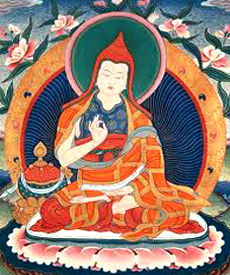 Sanskrit Didactic poetry can be dated back to the eighth century. There is less evidence of the early didactic poetry. Shantideva`s Bodhicharyavatara is one of the most distinguished efforts known in this regard. Some of the poems are ascribed to Shankara. The Catacloki which has 101 verses sets out with rich imagery the principles of the Vedanta. The Mohamudgara with its elaborate rhyming makes it more lyrical than didactic.
Some poetic merit is also attributed to Crhgarajtidnanirnaya which gives a contest between the claims of love and of knowledge in thirty-two stanzas. The author and date is unknown. The early treatise on Indian pornography, the Kuttammata is one the examples of didactic poetry that was written in the late eighth century. The style of the author is simple but not clumsy.
Kshemendra wrote his Samayamdarka, which perhaps means ` mother by convention.` Another work of Kshemendra is the Kalavilasa which is composed in ten sections discourses of the various occupations and foolery of mankind. Muladeva is the hero. A curious modernity in Kshemendra`s pictures is clearly seen. The Darpadalana which is written in seven sections is aimed to show the folly of pride. Each section begins with some gnomic sentences and thereby follows a tale in which the leading character delivers a long speech.
The Sevyasevakopadega has been written in sixty-one stanzas is a text of advice regarding servants and their masters. The Chaturvargasaihgraha gives a description of the four ends of life, morality, practical life, love and release. Charucharyagataka is a hundred verses laying down the rules of good behaviour, illustrating them by giving references to myths and tales. Kshemendra`s also influenced the Mugdhopade‡a of Jalhana which is a warning in sixty-six stanzas against the wiles of hetairai. Ksemendra employed a simple style.
Amitagati`s Subhdsitaratnasamdoha, `Collection of Jewels of Happy Sayings,` was written in 994 and his Dharmapariksa was penned around twenty years later. The former work has been written in thirty-two chapters. It has been written in one metre. It touches on the various aspects of Jain ethics, with an obvious controversial attitude towards Brahmanical practices.
More important is Hemchandra`s Yogashastra has been written in simple cloaks along with his own commentary in an elaborate prose. The first four chapters give a clear account of Jain philosophy, the last eight deals with the various duties and austere practices of Jainism. From this view point more emphasis is attached to the elaborate Crhgdravairdgyatarangini which is composed in forty-six stanzas, disapproving female love by Somaprabha (1276).