
Dravya means continuing object or substance: one of the types of objectively real basic features of the cosmos according to the Vaiseshika Philosophy. Dravya is a persistently enduring object with constant nature that possesses persisting qualities and transitory motions. Substance is defined as something that lacks constant absence of qualities and motions. Substances lack qualities and motions at the moment of origination but the object has an identity and a form.
A substance or basic particular is a subject different from its properties rather than a union of properties. The category includes different types of irreducible and indestructible atoms that are comprised of the earth, water, fire and air; the atmosphere, time, space and souls and the inner sense. Atoms are the raw material of the cosmos. Substances are individualized by the different arrangements of their parts. A substance is an integrated whole product that forms a novel unit, over and above the sum of its parts. Each sensory quality is apprehensible only through the corresponding sense organ.
In the Nyaya system there are nine types: prithivi, ap, tejas, vayu, Akasa, Kala, dis, manas and atman. In the Jain system there are six types: jiva, dharma, adharma, pudgala, Kala, and Akasa.
Dravya is applicable to physical objects and ontological entities. There are six dravyas:
Isvara, jiva, jnana, nitya-vibhuti, prakrti and Kala. These six dravyas are classified into Ajada and Jada. Ajada meaning spiritual substance and it includes Isvara, jiva, jnana and nitya-vibhuti. Jada includes prakrti and Kala.
In Jainism, Dravya have three characteristics. It has the quality of existence, quality of permanence through origination and destruction and it is the substratum of attributes and modes. The Dravya is uncreated and cannot be destroyed, its essential qualities remain intact and it is only its mode or condition that can and does change.
Dravya - Continuing Object
Dravya is an Indian Philosophy based on the concept of substance or the composition of something. Dravya is the bedrock for modification.
Recently updated articles in Indian Philosophy
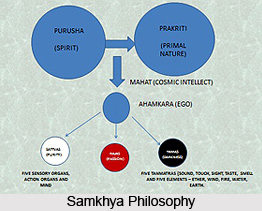
Samkhya Philosophy
Samkhya philosophy is one of India’s oldest intellectual traditions, explaining reality through the interplay of Puruṣha (pure consciousness) and Prak...
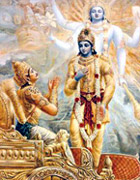
Maya, Prakriti in Hinduism
Maya or illusion is a very potent instrument of the Divine Prakriti, the Primal nature. In Hinduism one must be able to come out of Maya in order to a...
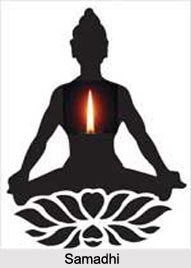
Samadhi in Hinduism
Samadhi is the result of meditation or that state of mind when there is an absence of all idea of individuality.
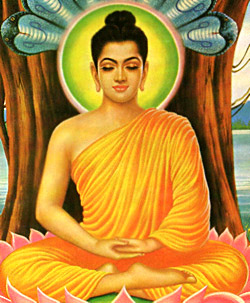
Samadhi in Buddhism
According to Buddhism, oen can only achieve samadhi through strict meditation and right concentration.
Abdul Rehman Jilani Dehlvi
Syed Abdul Rehman Jilani Dehlvi was a renowned Sufi saint of the Qadri Order in India.
Related articles in Indian Philosophy

Ajivika Philosophy
Ajivika philosophy is different from the mainstream religion
Indian Philosophy In The Vedic Period
Indian Philosophy in the Vedic Period was primarily based on the concepts of nature worship.
Achintya Bheda Abheda Philosophy
Achintya-Bheda-Abheda is a School of Vedanta that represents the philosophy of unimaginable one-ness and difference in relation to the power creation...
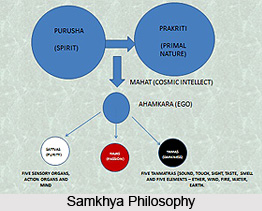
Samkhya Philosophy
Samkhya philosophy is one of India’s oldest intellectual traditions, explaining reality through the interplay of Puruṣha (pure consciousness) and Prak...
Charvaka Philosophy
The Charvaka Philosophy believes that only those things that can be perceived is the ultimate reality.