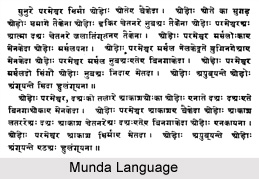
 Munda language is a particular Indian tribal language that is spoken by more than nine million people in the central and eastern regions of India. It is also spoken by people in India`s neighbouring country that is Bangladesh.
Forms of Munda Language
Munda language forms a branch of the Austro-Asiatic tribal language group. Munda language is basically placed in opposition to the Mon-Khmer languages, which are prominent in Southeast Asia. However, the origin of Munda language is not properly known. It is said that this language is autochthonous language of the eastern region of India.
Branches of Munda Language
There are basically two branches of Munda language family and these are North Munda, which is mostly spoken in the Chota Nagpur Plateau of the states of Jharkhand, Chhattisgarh, Odisha and West Bengal. The second branch of this language family is known as South Munda, which is principally spoken in the central region of Odisha and along the Andhra Pradesh and Odisha border region. In the North Munda branch, Santhali is considered as the chief language. Moreover this branch is the larger one among the two. The languages of this group are chiefly spoken by more than nine-tenths of the total Munda language speakers of the country. Mundari and Ho languages rank next, after Santhali language, in terms of the total number of speakers. These are followed by Korku and Sora languages of this group. However, the rest of the Munda languages are spoken by small and isolated groups of people and they are also little known.
Characteristics of Munda Language
The basic characteristics of Munda language comprises two genders (animate and inanimate), three grammatical numbers (singular, dual, and plural), a division between inclusive and exclusive first person plural pronouns and also the usage of either suffixes for indicating tense. Consonant sequences are quite irregular in Munda sound systems, apart from the middle of a word. Pronunciation is generally predictable in Munda language except Korku, as in this particular language syllables show a difference between the high and low tone.
Characteristics of Munda Language
One of the fascinating characteristics of Munda languages is their ability to use any word for any concept. Part of speech distinctions like nouns, verbs, adjectives and adverbs are vague or lacking in these languages. The research shows that the words in Munda languages are of great functional elasticity.