
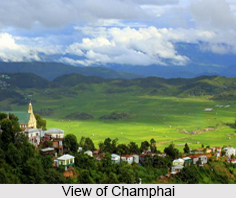
 Champhai is a commercial town at the Indo-Myanmar border, located in Mizoram state. It covers an area of 3,198 sq km and has a population of 101,400. It is said that the history of Mizo starts from Champhai and ends in Champhai. It is a fast developing city on the Indo-Myanmar border. The famous Rohdil Lake is only 22 km away from the town of Champhai. Champhai offers a wonderful view of the Myanmar hills. A storehouse of ancient relics, monuments and memorials connected with legends and folklores, Champhai has a background of rich heritage. The hamlets around the town are surrounded by monuments and monoliths that depict success in war, valorous hunting, personal distinctions and achievements.
Champhai
Also known as the ‘Rice Bowl of Mizoram’, Champhai is a border town in the state of Mizoram and is one of the popular tourist destinations in the north eastern India.
Introduction
Champhai is a commercial town at the Indo-Myanmar border, located in Mizoram state. It covers an area of 3,198 sq km and has a population of 101,400. It is said that the history of Mizo starts from Champhai and ends in Champhai. It is a fast developing city on the Indo-Myanmar border. The famous Rohdil Lake is only 22 km away from the town of Champhai. Champhai offers a wonderful view of the Myanmar hills. A storehouse of ancient relics, monuments and memorials connected with legends and folklores, Champhai has a background of rich heritage. The hamlets around the town are surrounded by monuments and monoliths that depict success in war, valorous hunting, personal distinctions and achievements.History of Champhai District
History of Champhai District depicts the domination of various rulers in the region and its development as a district. Champhai district is situated in the north east of the state of Mizoram, near the India-Mayanmar border.
 The records of British government, who ruled the country in ancient times, state that Fenngo clan was the first group to migrate form east to Mizoram state from 1500-1800 AD. The village where they settled gradually were named according to their clan name as Lawihmun, Chawnchhim etc. The ancient cultural heritage of the Mizo people can still be witnessed in several areas of Champhai district. Vanhnuailiana came to this district with his companions in 1864. He later became the chief of Lawihmun whereas his mother was made the chief of Chawnchhim. After the death of Vanhnuailiana in 1871, his wife Rolianpuii became the chief of Chawnchhim and ruled over it.
On 17th of February 1872, General Bourcher and Cachar Deputy Commisioner came to Lawihmun with the purpose of making a treaty with Vanhnuailiana. On finding the village deserted, they went to Chawnchhim, the next day, and signed a treaty with the elders of Ropuiliani. In the year 1879 the sons of Vanhnuailiana namely Liankhama, Buangtheuva, Dothiauva, Chinhleia and Lalburha tried to invade the western part of Mizoram for their settlement. But they found out that the place was already captured by the descendants of Mangas, which led to the famous Chhak leh Thlang Indo war between the east and west of Mizoram.
After that Chawnchhim was captured by the British Military group. In that period, most of the villagers dwelled near the police quarters and hence knew foreign language. Having a gun licence was made compulsory for the people having a gun. This order of getting a licence was however misunderstood by the Mizo people and consequently sold out their guns to Pawi, staying in Myanmar. Thenzawl Pasaltha Chengaia then took back from Pawi, ten guns. This pleased the Deputy Commissioner and Chengaia was made the chief of Vanlaiphai. However Chengaia wanted to be the chief of Champhai.
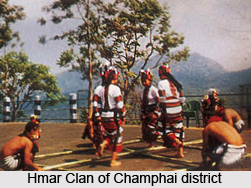
In 1909, the 11th Deputy Commissioner of the state of Mizoram created the unique administration of Champhai. Under that administration, the chiefs of the region became the members of Panchayat. Champhai is the first place to be inhabited by the Mizo people. The district is about 100 years old and the first clan to occupy this region were Hmar clan. After their migration, it was captured by Ralte clan who were followed by Sailo clan. The end of Sailo period was marked by Lusei clan. A number of clans inhabited in the area of Champhai district. Numerous historical monuments also stand in this place including Mangkhaia lung, Chhura farep, Sikpui lung, Lungverh, Mura puk etc. Champhai was later ruled by the British rulers too.
The records of British government, who ruled the country in ancient times, state that Fenngo clan was the first group to migrate form east to Mizoram state from 1500-1800 AD. The village where they settled gradually were named according to their clan name as Lawihmun, Chawnchhim etc. The ancient cultural heritage of the Mizo people can still be witnessed in several areas of Champhai district. Vanhnuailiana came to this district with his companions in 1864. He later became the chief of Lawihmun whereas his mother was made the chief of Chawnchhim. After the death of Vanhnuailiana in 1871, his wife Rolianpuii became the chief of Chawnchhim and ruled over it.
On 17th of February 1872, General Bourcher and Cachar Deputy Commisioner came to Lawihmun with the purpose of making a treaty with Vanhnuailiana. On finding the village deserted, they went to Chawnchhim, the next day, and signed a treaty with the elders of Ropuiliani. In the year 1879 the sons of Vanhnuailiana namely Liankhama, Buangtheuva, Dothiauva, Chinhleia and Lalburha tried to invade the western part of Mizoram for their settlement. But they found out that the place was already captured by the descendants of Mangas, which led to the famous Chhak leh Thlang Indo war between the east and west of Mizoram.
After that Chawnchhim was captured by the British Military group. In that period, most of the villagers dwelled near the police quarters and hence knew foreign language. Having a gun licence was made compulsory for the people having a gun. This order of getting a licence was however misunderstood by the Mizo people and consequently sold out their guns to Pawi, staying in Myanmar. Thenzawl Pasaltha Chengaia then took back from Pawi, ten guns. This pleased the Deputy Commissioner and Chengaia was made the chief of Vanlaiphai. However Chengaia wanted to be the chief of Champhai.
In 1909, the 11th Deputy Commissioner of the state of Mizoram created the unique administration of Champhai. Under that administration, the chiefs of the region became the members of Panchayat. Champhai is the first place to be inhabited by the Mizo people. The district is about 100 years old and the first clan to occupy this region were Hmar clan. After their migration, it was captured by Ralte clan who were followed by Sailo clan. The end of Sailo period was marked by Lusei clan. A number of clans inhabited in the area of Champhai district. Numerous historical monuments also stand in this place including Mangkhaia lung, Chhura farep, Sikpui lung, Lungverh, Mura puk etc. Champhai was later ruled by the British rulers too.
Economy of Champhai
Economy of Champhai is predominantly depended upon agriculture and border trade. It is also the trading center of Mizoram for goods like clothes, silverware and electronics imported from Myanmar. It has 11 km long and 48 km wide land for rice cultivation which can produce 19,200 quintals of rice per year. Grape is the second most cultivated product of this region. 10,000 quintals of grape were cultivated in 2011 alone.
Tourism in Champhai District
Tourism in Champhai District comprises of mesmerizing natural beauty. Some of the unique yet beautiful geographical features embellish the district. Various myths and legends are also associated with different tourist sites which have further enhanced the popularity of the district as a tourist destination.
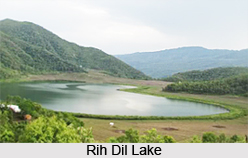 Rih Dil Lake : Rih Dil Lake is one of the most famous and beautiful lakes of Champhai district. This heart shaped lake is 1 kilometre in length and 170 metres in width. It is believed that the lake serves as the way for the transcendence of the souls to their heavenly abode. The lake has a wondrous beauty as its water always remains clear even in the absence of any outflow or inflow of water. The lake has given rise to a number of folk tales. For visiting the lake, prior permission is required from the office of Deputy Commissioner.
Kungawrhi Puk : Kungawrhi Puk is a wide and deep hole beside a hill. It is located at Farkawn village. Myths say that the hole was once the entrance of an underground village where spirits used to dwell.
Thasiama Seno Neihna : Thasiama Seno Neihna is a plateau located on a steep hill. Its precarious projection out of the hill makes it inaccessible for man. Legends say that once a beautiful fairy known as Chawngtinleri bestowed Thasiama a gift that he will become prosperous by the multiplication of his pet, Mithun. The fairy used to guide his Mithun to this place safely where it used to calf. The fairy also protected it from tigers and other animals. However, the geography of the plateau makes it impossible for any Mithun to climb up.
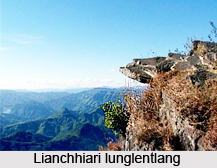 Lianchhiari lunglentlang : It is a famous cliff projected outwards from a mountain. The cliff is a nature`s wonder and attracts a plethora of tourists towards this beautiful site.
Fiara Tui : Fiara Tui, a source of water, is another popular tourist spot of Champhai district. This water come from the mountain named Tan tlang. Myths say that in olden days the people of this region had to travel long distances in search of drinking water. Fiara, the son of a poor widow, once turned a flat stone and surprisingly found a source of clear water. Initially it was the secret of Fiara and his mother but was later discovered by the villagers as a better and sweeter source of water.
Mangkhaia Lung : Mangkhaia Lung is a massive memorial stone having engravings of human figures. These figures were considered to be the guardians of the dead. Adjacent to this, other smaller structures also stand with animal and human figures engraved on them.
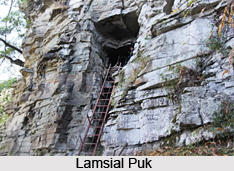 Lamsial Puk : Lamsial Puk is a cave located in Farkawn village of Champhai District. The cave once furnished a large mass of skeletons. Historical records suggest that the cave had witnessed a gruesome war between two villages where numerous warriors were killed. Many of the warriors were buried alive inside the cave. The dead bodies of the warriors belonging to Lamsial village were also kept inside the cave.
Sikpui Lung : It is stone platform which serves as the stage for dancing and singing during the Sikpui festival. Hmar community of the district celebrate this festival every year since ages.
Mura Puk : Mura Puk is an assembly of six caves situated in Zote village. These caves were believed to be a hiding place for the villagers from being attacked by Mura, a gigantic eagle, for food.
Tourism in Champhai District, apart from possessing wondrous natural beauty, is also the narrative of various historical events. Culture prevailing among the local folks of the district can also be understood by taking a tour around the district. Unique tourist sites of Champhai district greatly add to the natural heritage of India.
Rih Dil Lake : Rih Dil Lake is one of the most famous and beautiful lakes of Champhai district. This heart shaped lake is 1 kilometre in length and 170 metres in width. It is believed that the lake serves as the way for the transcendence of the souls to their heavenly abode. The lake has a wondrous beauty as its water always remains clear even in the absence of any outflow or inflow of water. The lake has given rise to a number of folk tales. For visiting the lake, prior permission is required from the office of Deputy Commissioner.
Kungawrhi Puk : Kungawrhi Puk is a wide and deep hole beside a hill. It is located at Farkawn village. Myths say that the hole was once the entrance of an underground village where spirits used to dwell.
Thasiama Seno Neihna : Thasiama Seno Neihna is a plateau located on a steep hill. Its precarious projection out of the hill makes it inaccessible for man. Legends say that once a beautiful fairy known as Chawngtinleri bestowed Thasiama a gift that he will become prosperous by the multiplication of his pet, Mithun. The fairy used to guide his Mithun to this place safely where it used to calf. The fairy also protected it from tigers and other animals. However, the geography of the plateau makes it impossible for any Mithun to climb up.
Lianchhiari lunglentlang : It is a famous cliff projected outwards from a mountain. The cliff is a nature`s wonder and attracts a plethora of tourists towards this beautiful site.
Fiara Tui : Fiara Tui, a source of water, is another popular tourist spot of Champhai district. This water come from the mountain named Tan tlang. Myths say that in olden days the people of this region had to travel long distances in search of drinking water. Fiara, the son of a poor widow, once turned a flat stone and surprisingly found a source of clear water. Initially it was the secret of Fiara and his mother but was later discovered by the villagers as a better and sweeter source of water.
Mangkhaia Lung : Mangkhaia Lung is a massive memorial stone having engravings of human figures. These figures were considered to be the guardians of the dead. Adjacent to this, other smaller structures also stand with animal and human figures engraved on them.
Lamsial Puk : Lamsial Puk is a cave located in Farkawn village of Champhai District. The cave once furnished a large mass of skeletons. Historical records suggest that the cave had witnessed a gruesome war between two villages where numerous warriors were killed. Many of the warriors were buried alive inside the cave. The dead bodies of the warriors belonging to Lamsial village were also kept inside the cave.
Sikpui Lung : It is stone platform which serves as the stage for dancing and singing during the Sikpui festival. Hmar community of the district celebrate this festival every year since ages.
Mura Puk : Mura Puk is an assembly of six caves situated in Zote village. These caves were believed to be a hiding place for the villagers from being attacked by Mura, a gigantic eagle, for food.
Tourism in Champhai District, apart from possessing wondrous natural beauty, is also the narrative of various historical events. Culture prevailing among the local folks of the district can also be understood by taking a tour around the district. Unique tourist sites of Champhai district greatly add to the natural heritage of India.
Recently updated articles in Cities of India
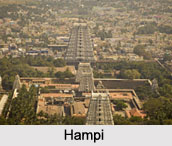
Hampi, The Lost City of Vijayanagara Empire
Hampi, located in Karnataka, is a historic destination renowned for its magnificent ruins, ancient temples, and remarkable Vijayanagara architecture....
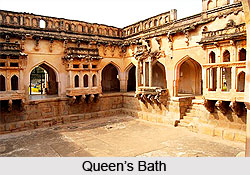
Queen’s Bath in Hampi
The Queen’s Bath in Hampi is a magnificent 15th-century structure believed to have served as a private bathing complex for the Vijayanagara royal fami...
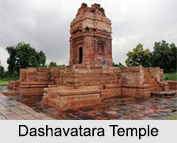
Places of Interest in Deogarh Uttar Pradesh
A place of historical and archaeological significance, Deogarh is a site with few popular places of interest.
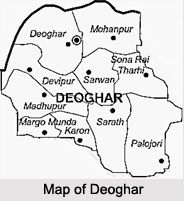
Deoghar in Jharkhand
Deoghar is the divisional headquarters of Santhal Parganas located in Jharkhand and is popular for the famous Baidyanath temple and Shiva Temples.
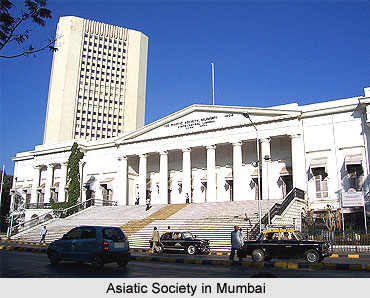
The Asiatic Society of Mumbai
Asiatic Society in Mumbai is the temple of Asian Studies from the time of British rule in India.
Related articles in Cities of India
Holy Cities of North India
Holy Cities of North India are having the rich history of Hinduism and the entire civilization was grown up with the hands of beliefs, rituals and the...
Holy Cities of South India
Holy Cities of South India gives the detailed cultural formation of Dravidians from the early era, which later developed to the world by the Pallavas...
Holy Cities of West India
Holy Cities in West India were established by the rulers of Rajputs and the Satvahana Dynasty and the medieval rulers of Junagadh.
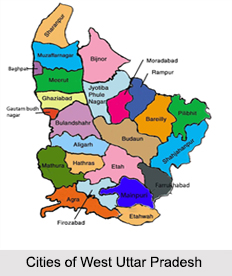
Cities of West Uttar Pradesh
Cities of West Uttar Pradesh include Meerut, Bulandshahr, Ghaziabad, Saharanpur, Muzaffarnagar, Bijnor, Bareilly, Rampur, Agra, Aligarh, Mathura and m...

Port Cities of South India
Port Cities of South India are developed from the early phase of colonial era when the Portuguese and the French traders came to India