
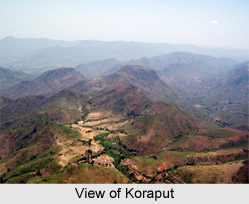
 Koraput is place of tourist importance with her rolling mountains, undulating meadows, roaring rapids, enchanting waterfalls and terraced valleys leading up to verdant hills, feasts the eyes as few other districts can. Koraput town is known associated with agricultural basis, but also due to its rich history from Vedic era, Koraput has the rich tourist destination. One can reach Koraput by reaching Vishakhapatnam Airport in Andhra Pradesh not by Bubhaneshawar Airport of Odisha.
Koraput
Koraput is a town in Koraput District of Odisha. This town is a collection of old, new and a lot of human endeavour with the relics of Solar Dynasty in India and history of tribes in Jharkhand, Bihar, Chattisgarh and Odisha.
Introduction
Koraput is place of tourist importance with her rolling mountains, undulating meadows, roaring rapids, enchanting waterfalls and terraced valleys leading up to verdant hills, feasts the eyes as few other districts can. Koraput town is known associated with agricultural basis, but also due to its rich history from Vedic era, Koraput has the rich tourist destination. One can reach Koraput by reaching Vishakhapatnam Airport in Andhra Pradesh not by Bubhaneshawar Airport of Odisha.History of Koraput
 History of Koraput defines the rule of Solar Dynasty, Eastern Ganges dynasty and the tribal rule in early era. Koraput faces the historical forts, temples and the caves from the early Vedic era and the medieval era. This city was further developed under the rule of British East India Company in India.
Koraput derives its name from its headquarters the present town of Koraput. In ancient times when the Nala Dynasty was ruling over this tract, Pushkari near modern Umarkot was the capital city. Before the Solar Dynasty, the tribal rules the entire area of Koraput .
In the medieval period, Nandapur developed as the capital under the Silavamsi kings and sometimes under the kings of the Solar dynasty. Vikram Dev of the Solar dynasty shifted his headquarters to Jeypore about the middle of the 17th century and this town prospered as the capital.
Koraput was chosen by the British East India Company and later British Empire in India in 1870 for better health prospects. The origin of the name of Koraput is obscure. There are several theories, none of which are convincing.
Derivation of the Name : The name Koraput comes from "Kora-Putti" or “the hamlet of the nux-vomica†and it is derived presumably from a tree or trees that must at one time have been prominent near the site. But today not a single tree of nux-vomica is to be found near about the town of Koraput. Koraput is corrupted form of "Karaka pentho". Karaka literally means "hail-stone". It is also believed that one "Khora Naiko" laid foundation of the village during the time of Nandapur kings. He hailed probably from Ranpur and served under the Nandapur kings in the Militia, and for his faithful and meritorious services he has permitted to establish this village which was named after him as Khora Putu, and later on the name has been abbreviated to "Koraput". Koraput is surrounded by mountains, thick forests and waterfalls.
Location of Koraput
Koraput is located at 18.82 degree North to 82.72 degree East. It has an average elevation of 870 metres (2854 feet).
Geography of Koraput
Koraput with her golden autumn and misty mornings of the monsoon months, her painted spring and slumbering summer and her winter ranging from fierce to mild provides varieties of living in different seasons which is rare elsewhere. Here in spring, nature and man vie with each other to make living joyous. Some major rivers of Odisha pass through the district Koraput like Machhakunda, Vamsadhara and Kolab. This town is also bestowed with waterfalls like Duduma falls, Bagra falls and Khandahati falls. It also contains the largest mountain of Odisha, called Deomali along with Chandragiri Mountain. Koraput district is famous for the important places like Jeypur, Duduma, Bagra, Sunabeda MiG factory etc. Koraput holds a total area of 8,807 square kilometres.
Demography of Koraput
The total population of Koraput is of 13, 79,647. The district has a literacy rate of 36.20%. Koraput is dependent on agricultural activities.
Economy of Koraput
Koraput has total cultivable land of 3, 01,000 hectares. With a 157 km long national highway the district is well connected to all the other districts of Odisha.
Society of Koraput
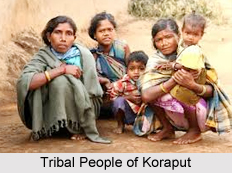 Society of Koraput has the tribal culture. Koraput is a part of the tribal belt in southern Odisha. Jagannath temple of Koraput is one of the main attractions in Koraput. The culture and the society show the royal rule in bugone era with some of the ancient rituals and customs among the people of Koraput, who are mainly following Vaishnavism cult.
Hat Poda of Koraput : Most of the area of Koraput was under thick forest cover until a few years ago. Many adivasi communities live in this district. Largely due to deforestation, industrialization and urbanization these communities have almost come to modernity and are adopting new ways of life. However, on any Sunday one can see the adivasis selling their products (vegetables and fruits of organic origin) in Sunday markets popularly known as Hat Poda. The "hat poda" or the `haat` plays an important role in maintaining Adivasi identity.
Dongar Festival : In the month of November (2nd-3rd week), a famous festival of tribal, organised by the district administration Dongar Festival or Parab is being organised every year to showcase the life of adivasis. In reality, one could see the Adivasis being paraded as `museum specimens` for the sake of the voyeuristic tourist. Many foreign tourists also visit this place to witness this festival. The adivasi languages, culture and traditional knowledge are closely connected with their ecosystem.
Religion of Koraput : Though it is one of the tribal belts in Odisha, the people of Koraput has the Vaishnavism faith. Koraput is mostly famous for its Jagannath Temple which is also known as Sabara Srikhetra. Srikhetra is normally referred to as Puri Jagannath, but the unique identity of the Koraput temple is because of the fact that no section of the society is barred entry. Thousands of persons flock to the temple every day for darshan. The trust body of Jagannath temple of Koraput has built huge accommodation centres for pilgrims and is an important force behind the growing number of tourist arrivals. Jagannath temple of Koraput also runs COATS (Council of Analytical Tribal Studies), a university-like educational institute is a successful attempt to restore and educate tribal way of life, customs, tradition, medicine, language, social structure and history.
Tourism of Koraput
The tourism of Koraput develops concentrating the temples, which abounds the district, bearing testimony of the civilization inhibited here from time immemorial. A number of temples dotted throughout the district fetch tourist throughout the year, which is profitable to the tourism industry of Koraput.
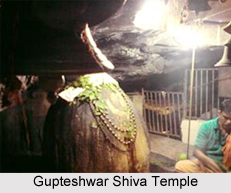
The Gupteswar cave shrine dedicated to lord Shiva is infested with immense religious significance. But in the tourism industry of Koraput it draws the considerable importance because of the scenic beauty. The untamed wilderness the cave surrounded by the sal trees and intersected by the Kolab river is placed the 2m high Shiva Lingam, which is the focal point of the tourist attraction here. The shrine is called "Gupteswar", which signifies hidden god. It is named so because the Shiva lingam, stationed in the crux of the cave is hidden for centuries and it is not even viewed from outside. Adjacent to the Gupteswar cave, lies the "Gupta Kedar", which is important because of its historical significance. The place associated with sthe epical story of Ramayana and the life of ShreeRama, the place "Gupta Kedar" is an important center in the tourism industry of Koraput because of its natural beauty. Moreover, regarding the place a mythological story of Lord Shree Rama is also involved that he has unveiled the Siva lingam, while roaming in the Dandakaranya forest, which is an added interest about the place.
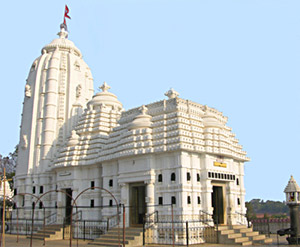 The Jagannath temple of Koraputbuilt in 1972, Sabara Srikhetra is an important center of interest in the tourism industry of Koraput. To the tourist it is a center of immnese interset because of the exquisite carvings and fabrications around the temple walls. The masterful artistry of the sculptors and the artisans of the ancient period is of unusual kind, which attractthe visitors. Moreover he religious implication of the Jagannath Temple is no less profitable for the tourism industry of Koraput. A vast chunk of tourist in the temple constitutes the tourist folk of the Jagannath Temple, Sabara Srikhetra.
Apart from the antique temples, there are other sites, which are immensely important centers encouraging the tourism industry of Koraput to achieve a full-fledged development. One of them is the Maliguda Tunnel, which is renowned as the highest broad-gauge railway tunnel in Asia and the second highest in the world. Apart from being an international reputation, the fascinating atmosphere surrounding of the Maliguda Tunnel makes it an ideal pace for the weekend picnic and a short excursion.
The Duduma waterfall (157.5 metres) has been formed by the Macchakund river in Orissa. The water torrent here supports the development of hydrolectric project. Macchakund is famous in the tourism industry of Orissa as a sacred pilgrimage and is known as "Matsya Tirtha".
The Gupteswar cave shrine dedicated to lord Shiva is infested with immense religious significance. But in the tourism industry of Koraput it draws the considerable importance because of the scenic beauty. The untamed wilderness the cave surrounded by the sal trees and intersected by the Kolab river is placed the 2m high Shiva Lingam, which is the focal point of the tourist attraction here. The shrine is called "Gupteswar", which signifies hidden god. It is named so because the Shiva lingam, stationed in the crux of the cave is hidden for centuries and it is not even viewed from outside. Adjacent to the Gupteswar cave, lies the "Gupta Kedar", which is important because of its historical significance. The place associated with sthe epical story of Ramayana and the life of ShreeRama, the place "Gupta Kedar" is an important center in the tourism industry of Koraput because of its natural beauty. Moreover, regarding the place a mythological story of Lord Shree Rama is also involved that he has unveiled the Siva lingam, while roaming in the Dandakaranya forest, which is an added interest about the place.
The Jagannath temple of Koraputbuilt in 1972, Sabara Srikhetra is an important center of interest in the tourism industry of Koraput. To the tourist it is a center of immnese interset because of the exquisite carvings and fabrications around the temple walls. The masterful artistry of the sculptors and the artisans of the ancient period is of unusual kind, which attractthe visitors. Moreover he religious implication of the Jagannath Temple is no less profitable for the tourism industry of Koraput. A vast chunk of tourist in the temple constitutes the tourist folk of the Jagannath Temple, Sabara Srikhetra.
Apart from the antique temples, there are other sites, which are immensely important centers encouraging the tourism industry of Koraput to achieve a full-fledged development. One of them is the Maliguda Tunnel, which is renowned as the highest broad-gauge railway tunnel in Asia and the second highest in the world. Apart from being an international reputation, the fascinating atmosphere surrounding of the Maliguda Tunnel makes it an ideal pace for the weekend picnic and a short excursion.
The Duduma waterfall (157.5 metres) has been formed by the Macchakund river in Orissa. The water torrent here supports the development of hydrolectric project. Macchakund is famous in the tourism industry of Orissa as a sacred pilgrimage and is known as "Matsya Tirtha".
Recently updated articles in Cities of India
Places of Interest in Deogarh Uttar Pradesh
A place of historical and archaeological significance, Deogarh is a site with few popular places of interest.
Deoghar in Jharkhand
Deoghar is the divisional headquarters of Santhal Parganas located in Jharkhand and is popular for the famous Baidyanath temple and Shiva Temples.
The Asiatic Society of Mumbai
Asiatic Society in Mumbai is the temple of Asian Studies from the time of British rule in India.
Vasco da Gama / Vasco City
Vasco da Gama / Vasco is the biggest city of Goa and is one of the most visited for its perfect amalgamation of business as well as leisure options.
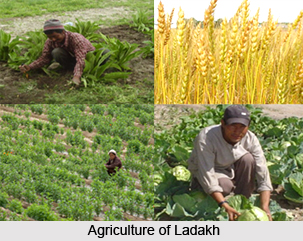
Agriculture of Ladakh
Agriculture in Ladakh is primarily practiced in the short summer season due to its cold desert climate. Farmers grow hardy crops like barley, wheat, p...
Related articles in Cities of India
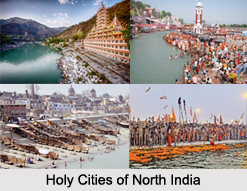
Holy Cities of North India
Holy Cities of North India are having the rich history of Hinduism and the entire civilization was grown up with the hands of beliefs, rituals and the...
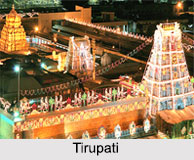
Holy Cities of South India
Holy Cities of South India gives the detailed cultural formation of Dravidians from the early era, which later developed to the world by the Pallavas...
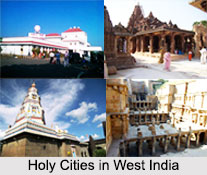
Holy Cities of West India
Holy Cities in West India were established by the rulers of Rajputs and the Satvahana Dynasty and the medieval rulers of Junagadh.
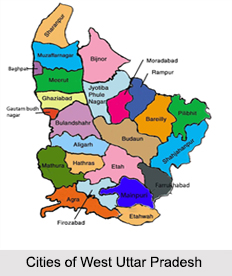
Cities of West Uttar Pradesh
Cities of West Uttar Pradesh include Meerut, Bulandshahr, Ghaziabad, Saharanpur, Muzaffarnagar, Bijnor, Bareilly, Rampur, Agra, Aligarh, Mathura and m...
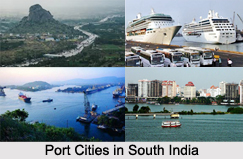
Port Cities of South India
Port Cities of South India are developed from the early phase of colonial era when the Portuguese and the French traders came to India