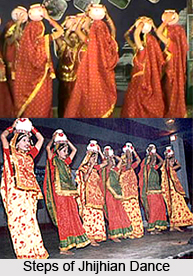
 Jhijhian dance is a folk dance practiced in the Bihar state of India. It is a ritualistic dance which is performed during the times when there is absolutely no rain and the land is sun parched. It is performed in a group.
Objective of Jhijhian Dance
This dance is related to rain and the objective is very different. The cultivation of food crops is an important means of living in India hence the rain is the most important factor. So, it is sung when there is no rain for a long time than its usual arrival. Through `Jhijhian`, the villagers portray the drought when there is not a single drop of rain anywhere, the lands are cracked and parched, the sky is lifeless without clouds and the people are awaiting rains. Hence, this is an exact time, for the performance of this dance, when the village women pray to Lord Indra for rain.
Jhijhian dance is ritualistic in nature and a part of the ritual to appease the rain god Indra, hoping to get a good rain for a year, for a resulting good quality harvest. The song accompanying this dance contains the prayer for the rain god. This is the message of the most eminent folk dance of Bihar.
Performance of Jhijhian Dance
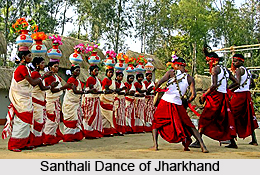
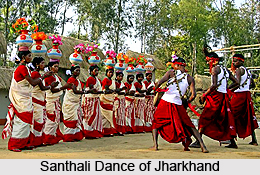
The dance is only performed by women and this is a very revered festival for women and is celebrated with a lot of gaiety and splendour. The dancers of Jhijhiya place artfully designed lanterns that have holes and are made of mud on their heads. There are lamps that are placed inside these lanterns. These lamps are filled with oil or ghee and lit.
Besides dancers, the performers of this ritualistic dance also include a lead singer, harmonium player, bansuri player and a drummer to play the dholak. There are two female singers and other players on percussion instruments. Two Nagara drums commonly called Tassa in Trinidad make up the rhythm for performance. All these accompaniments create sweet notes and enhance the singing. There is an inherent melody in the words "Hula-Hula Barshun Inder Deveta" -- when it is sung with conviction and devotion to the God.
Costume of Jhijhian Dance
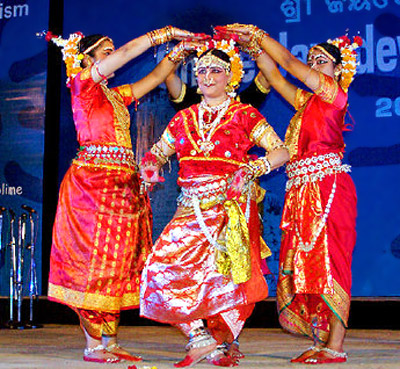
The female dancers usually wear traditional attire and adorn themselves with jewelleries like necklace, bangles etc.