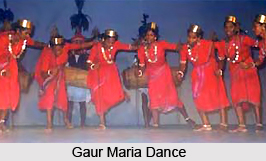
 Gaur Maria dance is a well known art form of Bison Horn Marias of Abhujmaria plateau of Bastar in Madhya Pradesh state of India. This spectacular dance performance symbolizes the hunting spirit of the tribe, since the word `Gaur` means a ferocious bison. This traditional dance is a dance of joy and invocation. Gaur Maria dance is quite popular during the occasion of marriage.
Performance of Gaur Maria Dance
It is a group dance and both male and female enthusiastically participate in this dance. The announcement or invitation for the dance is given by making sound with a bamboo trumpet or a horn. The men folk in the presence of flutes and drums make their entry in the dancing arena. They are soon joined by the female dancers.
The participants carry dancing sticks called `Tirududi` in their right hands and tap them according to the drumbeats. They perform in their own groups by the side of the male members. Sometimes, they also take the liberty to cross and re-cross in between the groups of male dancers and drummers. The jingling anklets of the dancers truly correspond to the songs of their lips as they move further in dancing.
By beating the drums, tossing of the horns and feathers of their headgears, as per the rising tempo, the men give the dance a wilder touch in appearance. The men with drums usually move in a circular direction by creating a variety of dancing patterns. In the bison dance, they attack one another and chase the female dancers. The Marias imitates a number of bison movements in the dance performance; most of them perform like frisky bulls, hurling wisps of grass into air, charging and tossing horns. This dance performance is engaged with chanting of many words in loud voice for inspiration in dancing.
Costume of Gaur Maria Dance
The male dancers exhibit their dancing skills by wearing headdresses that are frilled with stringed `cowries` and plumes of peacock feathers fastened to them. The female performers generally adorn themselves with brass fillets and bead necklaces. These traditional jewelleries cover a large part of their bodies. They also paint their bodies with tattoos.