Indianetzone: Largest Free Encyclopedia of India with thousand of articles Indian Languages

Art & Culture | Entertainment | Health | Reference | Sports | Society | Travel
Free E-magazine
Indian Languages : Indian Language: Urdu l Indian Language: Hindi l Indian Tribal Languages l Dravidian language l Indian Language: Bengali l Indian Language: Bhojpuri l Indian Classical Languages l
Forum on Indian
Reference
A forum dedicated for talking about anything related to Indian reference.

 
Free E-magazine
Subscribe to Free E-Magazine
on Indian Languages

 
Indian Languages

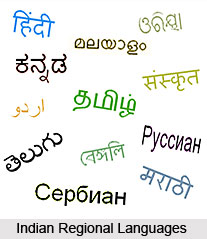
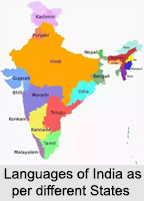
All the 28 Indian states have their separate languages. Besides these there are tribal languages as well. The diversity of India is well reflected in the Indian languages. The national language of India is Hindi. The latter has its origin in the Sanskrit language. Besides the cultural amalgamation of has also led to the incorporation of various languages that have enriched India in their own ways.

Indian Language: Urdu
The Urdu language is an oral language rather than a written one. Urdu is a language associated with a form of Indian poetry known as Urdu poetry. Over the years, it has absorbed elements of Persian and Arabic writing. Some Indian schools teach Urdu Languageas a first language and have their own syllabus and exams.Urdu is the official language of Pakistan. It is also one of India’s twenty-three official languages.

 
Indian Language: Hindi
The Constitution of India, adopted in 1950, declares Hindi in the Devanagari script as the "official language of the Union" (Article 343(1)). Hindi is also enumerated as one of the twenty-two languages of the Eighth Schedule of Indian Constitution.Hindi is the most commonly spoken Indian language. It is the fifth most spoken language in the world .

 
Indian Tribal Languages
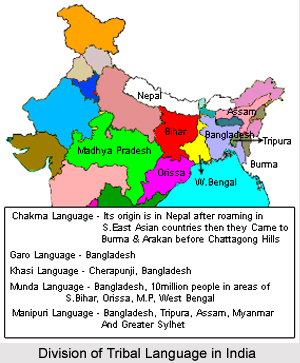
The Indian subcontinent consists of a number of separate linguistic communities each of which share a common language and culture. Tribal language is defined `as folk languages having no literary of their own and spoken by people of ethnic groups who preferred to live in relatively isolated groups`. Indian tribal languages are very complex but are valuable relics of India`s past glory that why they are preserved orally in the form of songs, legends and other tales.

 
Dravidian language
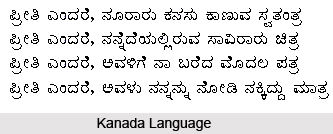
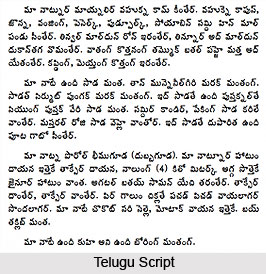
The Dravidian language family is large, with about 20 languages spoken in southern India. The four major Indian languages of Dravidian family are Tamil, Telugu, Kannada, and Malayalam. There is no definite origin of Dravidian language. Though it is said that the Dravidian language has some connections with the Indus-Valley civilization.Dravidian Language family is one of the most traditional language groups in the world.


Indian Language: Bengali
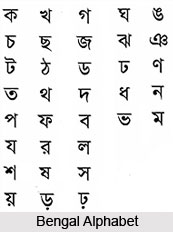
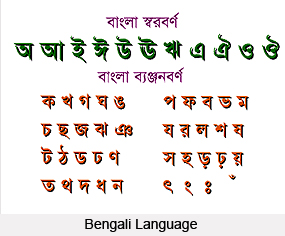
Bengali or Bangla is an Indo-Aryan language of the eastern Indian subcontinent. It has evolved from Prakrit, Pali and Sanskrit. Bengali is native to the region of eastern India.Bengali is the national and official language of Bangladesh and one of the 23 Indian national languages recognised by the Union of India. It is the official language of the state of West Bengal and the co-official language of the state of Tripura, Cachar District of southern Assam and the union territory of Andaman and Nicobar Islands.

 
Indian Language: Bhojpuri
Bhojpuri t is widely spoken mainly in north central and also some of the eastern provinces of Indian subcontinent. States like Bihar, north west of Jharkhand speak Bhojpuri along with other speakers residing in Uttar Pradesh`s Purvanchal region and its suburbs. It shares space with other Indian languages like Maithili and Magadhi etc. an estimated 70 million people of Uttar Pradesh and 50 million of western Bihar speak Bhojpuri. The Bhojpuri too is quite enriched where eminent personalities both from ancient period as well the contemporary era had left their mark in the whole of Indian panorama.

 
Indian Classical Languages
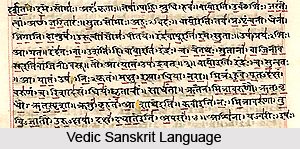
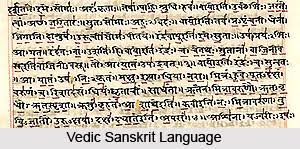
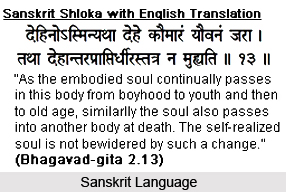
A classical language is a language with a literary tradition that can be judged as "classical" —ie. "it should be ancient, it should be an independent tradition that arose mostly on its own not as an offshoot of another tradition, and it must have a large and extremely rich body of ancient literature. A provision to confer status of classical languages in India was made by constitutional decree in the 2004. As a part of the Indian classical languages, Sanskrit is the oldest spoken language, and Sanskrit literature contains a very rich dramatic and poetic tradition that is not only connected with religious texts of Hinduism, Buddhism and Jainism but also astronomy, dance medicine, music which have more technical aspects.

 
Indian Languages Sitemap