Introduction
India's flora and fauna are incredibly diverse, owing to the
nation's vast geography and varied climate. The country's ecosystems, ranging
from tropical rainforests and coastal regions to arid deserts and high-altitude
Himalayas, support a wide range of plant and animal species. India is home to
over 45,000 species of plants and more than 90,000 species of animals, many of
which are endemic. This rich biodiversity plays a crucial role in maintaining
ecological balance, providing habitats for wildlife, and supporting agriculture
and traditional medicines. Conservation efforts are essential, as India's flora
and fauna are integral to the country's natural heritage and environmental
health.
Indian Flora and Fauna
Indian flora and
fauna comprise of numerous forest types, trees, plants, flowers, animal,
birds, reptiles etc. The rich and diverse flora and fauna receive support from
favorable climatic conditions in India.
Indian Flora and Fauna of the Western Zone
Indian
Flora and Fauna of the Western Zone constitutes tremendous variety. Owing
to the varying climatic conditions of the country numerous kinds of plants,
trees, reptiles, mammals and amphibians are found in this region.
Indian Flora and Fauna of the Eastern Zone
Indian
Flora and Fauna of the Eastern Zone comprises of a huge variety. A large
area of the eastern India is covered by dense forest having numerous species of
plants and trees.
Indian Flora and Fauna of the Northern Zone
Indian
Flora and Fauna of the Northern Zone are the representation of richness of
the natural resources of India. Tremendous variety of plants is found in
different states of northern India.
Indian Flora and Fauna of the Southern Zone
Indian
Flora and Fauna of the Southern Zone have a great contribution in the
diversity of Indian ecosystem. They also allure numerous tourists across the
globe.
Botanical Gardens of India
In India there are many Botanical Gardens
that preserve countless indigenous plant species. These Gardens are places for
research regarding plantation, cultivation and quality and quantity of fruits
and flowers.
Indian Animals
Indian
animals boast of a rich and varied biodiversity in the country. Indian wild
animals are tiger, lion, elephant, leopard, etc. Some of the Indian pet animals
are dogs, cats and rabbits.
Indian Birds
Indian
birds are of various types and species and are found throughout the length
and breadth of the sub-continent. The Indian sub-continent has 13% of the total
bird species found in the world.
Indian Reptiles
Indian
reptiles comprise one of the largest parts of the Indian wildlife and are
found all over the country. They receive shelter in the Indian wildlife
sanctuaries and national parks.
Butterfly
Butterflies
have captured the maximum interest of human beings among all interests. This is
mainly due to its large size, beautiful colour patterns and universal habitat.
Indian Pheasants
Indian
Subcontinent provides suitable habitats to a species of birds called
Pheasants. Various species of pheasants have been recorded in different parts
of India.
Indian Wildlife
Indian
wildlife comprises of several species of animals, birds, reptiles, etc.
Areas protecting Indian wildlife are known as national parks and wildlife
sanctuaries.
Endangered Species in India
Endangered Species
in India includes birds, mammals and reptiles that are in desperate need of
conservation, protection and mass awareness. These species have been identified
by different national and international organizations.
Natural Vegetation in India
Natural Vegetation
in India refers to a plant community which has grown naturally by following
the climatic variables. They have been left undisturbed by humans for a long
time.
Indian Plants
Indian
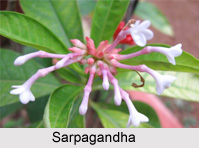
plants are of various types and each of the species has a specialty of its
own. Some plants are used for decoration, while others are used for treatments
of different diseases.
Indian Trees
Indian
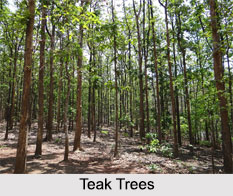
trees are grouped into gardening trees, timber trees, medicinal trees,
evergreen trees, deciduous trees, etc. Different species of trees are used for
different purposes.
Indian Shrubs
Indian
shrubs are small to medium-sized bushes, which have persistent woody stems
above the ground. Some of these shrubs are Red Bell Bush, Golden Shower, Purple
Wreath and Moonbeam.
Forest Vegetation in India
Forest Vegetation
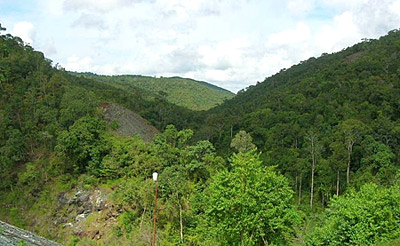
in India covers a wide range of types depending on the prevailing
geographic conditions in a particular part of the country.
Forest Vegetation in India
Forest Vegetation
in India covers a wide range of types depending on the prevailing
geographic conditions in a particular part of the country.
Indian National Parks
Indian national
parks are innumerable and scattered throughout the nation, which have been
established to protect the rich variety of wildlife in the country.
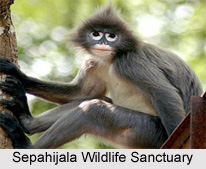
Indian Wildlife Sanctuaries
Indian wildlife
sanctuaries are homes to diverse wild species. In India, there are around
531 wildlife sanctuaries. These sanctuaries are scattered throughout the
country.
Reserved Forests in India
Reserve
forests in India are considered as rich source of flora and fauna, which
helps in maintaining biological balance in the environment. Typically, reserved
forests in India enjoy higher degree of protection.
Indian Biosphere Reserves
Indian biosphere
reserves are designated areas, in which plant and animal species and their
habitats are protected. Some of them are part of the international network of
biosphere reserves.
Tiger Reserves in India
Tiger
reserves in India strive to attain success in preserving tiger population
in the country. Project Tiger is a conservation program under which the Indian
tiger reserves are administered.
Elephant Reserves in India
Elephant reserves
in India are various protected areas, which conserve elephants and their
natural habitats in the country. Along with elephants, several other species of
wildlife are protected in these areas.
Biodiversity of Thar Desert
Biodiversity of
Thar Desert is accountable for diversified ecosystem and human culture.
There are stretches of sand in the region which include sandy plains and
hillocks.
Deserts and Xeric Shrub-Lands in India
Deserts and
xeric shrub-lands in India has been defined as a biome that is
characterized by, relating to, or requiring only a small amount of moisture.
Vegetation in Indian Semi-Deserts and Deserts
Vegetation
in the Indian semi-deserts and deserts is quite interesting. Though, the
desert seems to be hot and barren with no life at all, at a first glance, it
does house nature`s wonders at their best.
Rain Forests of India
Rainforests
of India are mainly located in the north-eastern state of Assam. They are
also found in the Andaman & Nicobar Islands and the Western Ghats.
Temperate Deciduous Forests
The temperate
deciduous forest has four distinct seasons, spring, summer, autumn, and
winter. In the autumn the leaves change colour.
Upper Gangetic Plains Moist Deciduous Forests in India
Upper
Gangetic Plains moist deciduous forests in India lie on the alluvial plain
of the Asia`s largest river, Ganges and also Yamuna, and cover a huge area of
263,100 square kilometers.
Central Deccan Plateau Dry Deciduous Forests in India
Central
Deccan Plateau dry deciduous forests in India are an integral part of the
Deccan Plateau that is a large triangular plateau, situated in southern India.
Chottanagpur Dry Deciduous Forests in India
Chhota-Nagpur
dry deciduous forests in India extend across the states of Bihar, Madhya
Pradesh, and West Bengal. The forests are home to large populations of Asia's
largest predator and largest herbivore, the Tiger and the Asian Elephant.
Eastern Himalayan Broadleaf Forests in India
Eastern
Himalayan broadleaf forests in India form an ecoregion that is globally
outstanding for both species richness and levels of endemism.
Deccan Thorn Scrub Forests in India
Deccan
Thorn scrub forests in India are located in the arid parts of the Deccan
Plateau. The region is spread across the Indian states of Tamil Nadu, Andhra
Pradesh, Karnataka and Maharashtra.
Northwestern Thorn Scrub Forests in India
Northwestern
Thorn scrub forests in India form an ecoregion that represents a large
expanse of degraded dry forest surrounding the Thar Desert.
Eastern Highlands Moist Deciduous Forests
Eastern
Highlands moist deciduous forests are recognized for the rich and varied
flora and fauna. The region is spread over an area of 341, 100 sq. km. covering
different states of eastern and central India.
East Deccan Dry Evergreen Forests
East
Deccan dry evergreen forests are an ecoregion of southeastern India. It
covers the eastern part of Tamil Nadu and southeastern part of Andhra Pradesh.
Maldives-Lakshadweep-Chagos Archipelago Tropical Moist Forests
Maldives-Lakshadweep-Chagos
Archipelago tropical moist forest is located in the region of Indian Ocean
with the broad wood leaves like Scaevola and Argusia.
Himalayan Subtropical Pine Forests
Himalayan
subtropical pine forests are renowned for being the largest in the whole of
the Indo - Pacific areas. It comprises of subtropical coniferous forest eco
region.
Mountain Forests in India
Mountain
Forests in India are an integral part of the country`s natural vegetation.
These forests are mainly located at a high altitude in the mountains and
usually vary to a great extent.
Indian Dry Deciduous Forests
Indian dry
deciduous forests are actually a type of the Indian deciduous or monsoon
forests and they are mainly found in both Northern India and in south Deccan
plateau in India.
Forests in Eastern Ghats Mountain Range in India
Forests
in Eastern Ghats Mountain Range in India are formed with the mountains and
the stones of charnockites, granite gneiss, khondalites, metamorphic gneisses
and quartzite rock formations.
Forests in Western Ghats Mountain Range in India
Forests
in Western Ghats Mountain Range in India are divided into four main eco
space categories. These forests are now the tourist attractions.
Northeast India-Myanmar Pine Forests
Northeast
India-Myanmar Pine forests are located in the northeastern part of India
and in the adjacent portions of Burma (Myanmar). The forests form an ecoregion of
9700 square kilometres.
Sundarbans Freshwater Swamp Forests in India
Sundarbans
freshwater swamp forests is considered to be one of the most endangered and
endemic ecoregions in India, as it is nearly extinct, at present.
South Western Ghats Montane Rain Forests in India
South
Western Ghats montane rain forests are an ecoregion of southern India. The
forests are situated at elevations over 1000 meters and are cooler and wetter
than the lower-elevation forests.
South Western Ghats Moist Deciduous Forests in India
South
Western Ghats moist deciduous forests in India have one of the richest and
most diverse ecosystems of the bioregi. The forests are located between 250 and
1000 meters of elevation.
Himalayan Subtropical Broadleaf Forests in India
Several forest types are included in the Himalayan
Subtropical Broadleaf Forests ecoregion in India. These forests are
composed of alluvium deposited over the ages by the rivers.
Western Himalayan Sub-Alpine Conifer Forests
Western
Himalayan subalpine conifer forests are temperate coniferous forest
eco-region of the middle and upper elevations of the western Middle Himalayas.
Western Himalayan Broadleaf Forests
Western
Himalayan broadleaf forests are characterised by the broad leaves in herbs
and shrubs. This forest is found in the temperate region of Western Himalayas
covering Nepal, India and Pakistan.
Brahmaputra Valley Semi-Evergreen Rain Forests in India
Brahmaputra
Valley Semi-Evergreen Rain Forests are an integral part of India`s
ecosystem. These forests were historically considered as some of the most
productive areas in India.
Indian Temperate Coniferous Forests
Indian
temperate coniferous forests are an integral part of the natural vegetation
in India. These forests are a planetary major biotic community that is
characterized by the dominant forms of plant life.
Indian Tidal or Mangrove Forests
Indian
Tidal or Mangrove Forests are hotbeds of biodiversity, and India is home to
the largest and the second largest in the world. They consist of numerous
species of aquatic and wild life.
Monsoon Forests
Monsoon
forest, also called dry forest or tropical deciduous forest, open woodland
in tropical areas that have a long dry season followed by a season of heavy
rainfall.
Indian Tropical Rain Forests
Tropical Rain
Forests are found in areas with a regular and no more than two months of
low rainfall. It consists of canopy of trees which is completely closed
preventing sunlight.