| Western Education in British India |
|
The current system of Indian education, with its western style and content, was introduced and founded by the British in the 20th century, following recommendations by Macaulay.The subjects taught included Reading, Writing, Arithmetic, Theology, Law, Astronomy, Metaphysics, Ethics, Medical Science and Religion. The schools were attended by students representative of all classes of society.
|
|
| Female Education In British India |
|
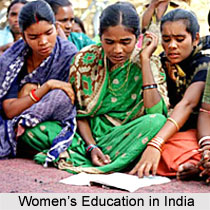
The girls during the British period in India and especially Hindu society were not given formal education. They were given education related to household chores.With the introduction of English-medium schools in the nineteenth century, Indian education came to be characterized by ‘dualism’.The development of women’s education in India is usually dated from 1849,. when the Bethune school was opened by the British government in India.
|
|
| Indian Education: Career Options after HSC |
|
|
In Indian educational system, HSC or Higher School Certificate Examinations is considered to be a crucial stage for deciding an individual`s path of career. This is the stage that everyone says can make or break a student`s life. After completion of HSC one can opt for career options in varied field depending on her interest and capabilities like fashion designing, management studies , etc.In Indian education, now a days, there are a number of career oriented courses after HSC.
|
|
| Indian Education: Bachelor of Management Studies (BMS) |
|
BMS stands for Bachelor of Management Studies. It`s a 3-year full time degree program introduced by the Universities in India.It`s the focus on management that makes the Bachelor of Management Studies (BMS) stand out. You`ll get more than a solid grounding in your specialty subject and also learn what makes a business tick and what makes a manager great. After completing this course student get a Bachelor`s degree in the subject .In India education in management is one of the most sort out courses.The oportunities available after completing the course are Accountant
Business Development Manager
Economist
Events Manager
Human Resource Manager
Investment Advisor
Marketing Manager
Public Relations Manager
Tourism And Hospitality Manager
Strategic Manager
|
|
|
|
|
|
| Bachelor of Engineering |
|
|
Engineering education in India has a long tradition, the beginning of which goes back to the year 1847 with the foundation of Roorkey University. It is a matter of great achievement that India has been promoting engineering education in the country over the last few years . After completion of HSC examinations, a student may either opt for B.Sc (Bachelor of Science), B.E (Bachelor of Engineering) or MBBS (Bachelor of Medicine and Bachelor of Surgery), depending upon the outcome of their results. |
|
| Indian Education: Medical Entrance Examination |
|
A number of popular medical entrance exams are held in India for admission to various medical colleges. These exams test the suitability of the candidates for admissions to various medical programmes. The procedure adopted by the Examination bodies for selection of students is on the basis of marks obtained in the entrance examination and qualifying test.Some useful information on some of the top medical entrance examinations in India are .
AIIMS Entrance Exam
AFMC Pune Entrance Exam
JIPMER Entrance Exam
DUMET
CBSE PMT
CMC Vellore Entrance Exam
PMET and other state Boards.
|
|
|
|
| Banking Board Exams |
|
|
Banking is one of the most lucrative professions in India. In Indian economy economy, banks occupy an undisputed position of importance. Earlier, in the year 1978, Banking Services Recruitment Boards (BSRBs) were established in different states.After dissolution of BSRB`s, banks now advertise about their vacancies through classified advertisements. |
|
| Gurukul |
|
Gurukul Education in India has always been regarded as one of the basic inputs in human resource development. The concept of “Gurukulam” is a unique feature of the Indian education where the all round development of the student is taken care by the Guru. Gurukul is a type of ancient Hindu school in India. The school is residential in nature where the shisyas or students and the guru or teacher living together. The students were treated equally irrespective of their social status. The students receive knowledge from the guru and also helps him in his day to day life. |
|
|