 India is known for the cults of several Gurus, offering knowledge in regard to spiritualism as well as religiousness. These Gurus have promoted spirituality, meditation, love, peace, brotherhood, serving others and other humanitarian values to people in India and the rest of the world. Regardless of age, all followers of a guru are like his children. From misery and distress, He gives them shelter and imparts to them the knowledge of self-realization without expecting anything in return. The gurus also teach meditation and other methods for realizing the God who resides within. Now the question comes in mind that how does one can find a Guru? According to an ancient saying `when the disciple is prepared, the guru appears. A genuine spiritual guru seeks out good students. If he finds that the student is not yet ready, he will gradually prepare him for higher teachings. And when the wick and oil are properly prepared, the guru lights the lamp`.
Thus a Guru is a teacher in Hinduism, Buddhism, and Sikhism, as well as in many other new religious movements. A Guru is the person who determines each and every pace his disciple and guides him to the way to liberation of soul and salvation. In these religions, the guru is seen as a sacred channel for wisdom and a way to self-realization. In Sanskrit, `Guru` also refers to Brihaspati, a Hindu divine figure. Guru or Brihaspati is believed to exert teaching influences, in Vedic astrology. Indeed, in many Indian languages such as Hindi, the Thursday is called either Brihaspativaar or Guruvaar (vaar meaning day of the week). The word `guru` is widely used in concurrent India, with the general meaning of `teacher`. In Western usage, the original meaning of guru has been extended to cover anyone who acquires followers. They might not necessarily in an established school of philosophy or religion. Guru is used to refer to a person in a further Western metaphorical extension, who has authority because of his or her perceived secular knowledge or skills.
The importance of finding a guru is emphasised in Hinduism who can impart transcendental knowledge (vidya). A person without a guru or a teacher (acharya) in Indian culture was once looked down on as an orphan or unfortunate one. In an understanding, the Gurus are the instrumental in leading the mankind to the God. As because Gurus lead to God, are said to be greater than God. The transmission of teachings is called the guru-shishya tradition.
 Some of the most noteworthy Gurus and Saints in India include the names of Shankaracharya, Ramanujacharya, Madhvacharya, Swami Raghavendara, Bhagwan Swaminarayana, Swami Vamanashram et al. They are the propagators of peace, spirituality, humanitarianism and fraternity. The gurus are the representation of different cults and are the believers of the oneness of divinity.
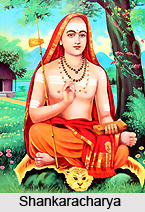
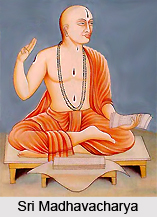
One of the spiritual gurus of India was Shankaracharya who was the believer of Hinduism. The title Shankaracharya, descends from Sankara of Kaladi and it is a stream of none other than Hindu thought. The tradition is said to have established by Adi Sankaracharya and instituted four mathas of Shankaracharya....Uttaramnaya matha (in Uttarakhand in the north), Purvamnaya Matha (Puri in Orissa in the east), Dakshinamnaya matha (at Sringeri in Karnataka in the south) and Pascimamnaya matha (Dwaraka in Gujarat in the west). Another guru, Ramanijacharya, is the theologian of early part of 11th Century India who is also considered as the chieftain advocator of the Vishishtadvaita. Sri Madhavacharya idolized as the principal of `Tattvavada` philosophy and as the incarnation of Vayu aka Mukhyaprana, after Lord Hanuman and Bhima in Hindu Philosophy. The illustrious saint of Hinduism of the 16th Century, Swami Raghavendra was the exponent of Vaishnavism and the Dvaita philosophy. The 19th century spiritual personality was Bhagavan Sri Ramana Maharshi. He with his visits to earth brought into existence a gloriole to the eternal truth of Vedanta of mankind. His teaching was based on Hinduism and he said to his disciples to follow the paths and practices depicted in different religions. He was also known to have advised the practice of bhakti and self surrender.
Another guru, who followed the essence of Hinduism, was Sahajananda Swami. Bhagwan Swaminarayana is the central figure of the Swaminarayana faith of Hinduism and Sahajananda Swami advocated his doctrine of love, peace, purity and non-violence as an incarnation of God. Swami Sahajanand Saraswati other than spirituality, befitted as an eminent person figure in the peasantry movement of Bihar, well acknowledged as the `Dandi Sanyasi`.
 Another cult that was followed by the spiritual gurus was the beliefs of Saraswat community. As per the ancient history, the followers of Saraswat community were the descendants of a Brahmin caste which is depicted in ancient Hindu scriptures. They were the residents of the Saraswati River valley. As per an ancient legend, the community was founded by the sixth avatar of Lord Vishnu, Parashurama with the five sons of Maharaja Ratten Sen. Parijnanashram-I Swamiji was the first Guru of the Saraswat Brahmin community, enthroned directly by the Lord Bhavanishanka. He established the Gokarna Matha. He founded a math in Chitrapur which is named as Chitrapur Math. Later, Shankarashram-I Swamiji succeeded Swami Parijnanashram and was recognised as the second guru of the Saraswat Community. Then, Swami Parijnanashram II was selected as the third guru of the Saraswat Community. He was a man austere by nature, under whom a `Spiritual Tide` swept over the society. Shankarashram-II Swamiji was the fourth Guru of the Chitrapur Saraswat Brahmin community; Shankarashram-II Swamiji was the true Yogi and a scholar. Swami Keshavashram was a capable fiduciary in its true sense; Swami Keshavashram was the fifth Guru of the Saraswat community.
Another guru, Swami Krishnashram, held the position of Mathadhipati of the Chitrapur Math for 24 years and throughout his tenure, he tried to bring positive changes towards the Saraswat Brahmin Community. Thus he was regarded as the change initiator and reformer.
Another cult that was followed by the spiritual gurus was the beliefs of Saraswat community. As per the ancient history, the followers of Saraswat community were the descendants of a Brahmin caste which is depicted in ancient Hindu scriptures. They were the residents of the Saraswati River valley. As per an ancient legend, the community was founded by the sixth avatar of Lord Vishnu, Parashurama with the five sons of Maharaja Ratten Sen. Parijnanashram-I Swamiji was the first Guru of the Saraswat Brahmin community, enthroned directly by the Lord Bhavanishanka. He established the Gokarna Matha. He founded a math in Chitrapur which is named as Chitrapur Math. Later, Shankarashram-I Swamiji succeeded Swami Parijnanashram and was recognised as the second guru of the Saraswat Community. Then, Swami Parijnanashram II was selected as the third guru of the Saraswat Community. He was a man austere by nature, under whom a `Spiritual Tide` swept over the society. Shankarashram-II Swamiji was the fourth Guru of the Chitrapur Saraswat Brahmin community; Shankarashram-II Swamiji was the true Yogi and a scholar. Swami Keshavashram was a capable fiduciary in its true sense; Swami Keshavashram was the fifth Guru of the Saraswat community.
Another guru, Swami Krishnashram, held the position of Mathadhipati of the Chitrapur Math for 24 years and throughout his tenure, he tried to bring positive changes towards the Saraswat Brahmin Community. Thus he was regarded as the change initiator and reformer.
Swami Vamanashram was known for his deep involvement in spiritual pursuits that made the Chitrapur Math more advanced spiritually. But His unwillingness to perform the authoritative responsibilities of the religious organization, the Chitrapur math created a void in the administration. Another guru, Swami Pandurangashram was also revered for propagating the spiritual refinement. He was the eighth guru of the Chitrapur Saraswat Brahmin community. The Chitrapur Village under the guidance of Swami Pandurangashram became the model village on the aspect of development. Swami Anandashram, the ninth guru of Saraswat Brahmin community initiated many social and financial changes for the betterment of His Community. These eventually led Him to win over the strong conjugation of the Community. Swami Parijnanashram III, the tenth guru of Saraswat Brahmin community, was the man with a progressive out look towards life. Swami Parijnanashram III had always strived for the technological advancement of the society. The eleventh guru of the Chitrapur Saraswat Community is Shrimat Sadyojat Shankarashrama.
 The spiritual guru, Shirdi Sai Baba was reckoned as a yogi and was said to be the divine incarnation. As per some of his disciples, he was a Sadguru and Dattatreya or the incarnation of Lord Shiva. He was the propagator of Hinduism and in his oration he tried to bring harmony in Hindu and Muslim religions. His predecessor, Santhys Sai Baba carried on the belief that he propagated. He unveiled the great and tangible spiritual thoughts to human kind. Sri Sathya Sai Baba re-established the inflection of virtuousness in the world, which seeks purposely an end to the unrest and grief.
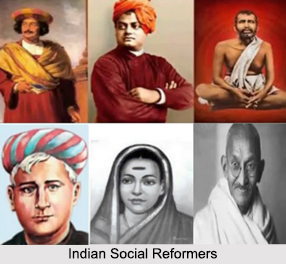
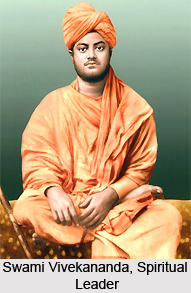
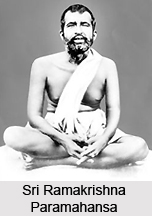
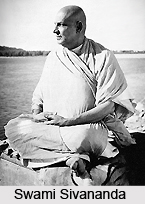
Another great reformer and the spiritual leader was Ramakrishna Paramahansa who divulged the oneness of God and motivated the human mind to achieve the ultimate moksha of life. It is believed that he was an avatar of God. He ushered the Bengali Renaissance and Hindu renaissance as a whole in the time of 19th and 20th centuries in which his disciple Swami Vivekananda accompanied him. He was the person who had gone through different experimentations with different religions and finally reached to the conclusion that each religion has the same saying, the oneness of God. Swami Vivekananda, the disciple of Ramakrishna Paramahansa, was the reformer of Hinduism and he was the person who gave Hinduism the glory of world religion. He founded Ramkrishna Mission. After Swami Vivekananda, Swami Sivananda most commonly known as `Mahapurush Maharaj` was given the responsibility of the Ramakrishna Order and he carried on his duties as the second president of the foundation with all his excellence. Swami Chidananda with His cheerful personality, admonitory conduct and sinful traits earned admiration from people. Swami Nigamananda was one of the most influential spiritual leaders of India. He founded Saraswat Math in Jorhat, Assam and Nilachal Saraswat Sangha in Orissa.
Apart from these spiritual gurus, gurus like Sri Aurobindo glorify the list. He was a brilliant literary personality with adept qualities of a spiritual guru. His words inspired the entire India during the freedom movement of India.
Chaitanya propagated the thoughts of Vaishnava cult. He took initiative to establish universal brotherhood. There are four major lineages or sampradayas in Vaishnavism. Each of the lineages follows special philosophical systems related to the human soul and God. The sampradayas are Lakshmi-sampradaya, Brahma sampradaya, Rudra sampradaya, Kumara-sampradaya.