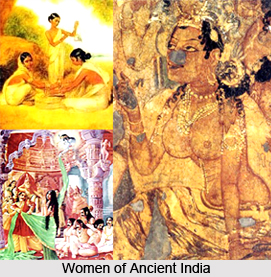
 Women in India have always been topics of concern since ancient times. They can be the appropriate example of perfect home-makers. With their incomparable quality of the calm ness of mind they easily handle even toughest situation as well. The Indian women are completely devoted to their families. They are preached in the names of Goddess Durga, Goddess Saraswati, Parvati and Goddess Kali.
From an unknown period in Medieval India to the modern times the condition of women is still the same with a little change. In India, the families are always `Patriarchal. Women were never given any rights of liberty and equality. The condition of women was so bad that if she gave birth to a girl child she was treated in a humiliated manner. Women were not only abstained from being educated but also were not permitted to step out of the house. They were asked to eat after their husbands have eaten and in fact were given to eat the leftovers of their husband`s meal.
Women in Ancient India
It is said that women in ancient India enjoyed equivalent status and rights with men in all spheres of life. Further, women were properly educated in the early Vedic period. References can be found in the works of Grammarians such as `Patanjali` and `Katyayana`. Women had the liberty to select their husbands. This system was called as `Swambar.` Women in fact had superior position than their male counterparts.
Women in Medieval India
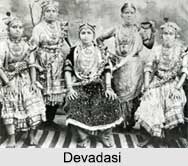
The condition of Women in society deteriorated more during the medieval period with the entrance of Muslims. At this point of time several evil practices like child-marriage, sati, and female infanticide were practiced largely. `Purdah` system was started. These women were also forced to practice `zenana`. Rajput women of Rajasthan practiced `jauhar. `Polygamy was common in Hindu Kshatriyas. At the same time many women excelled in arts, literature, and music. Women were also rulers in the medieval period. Some of the great women rulers were Razia Sultana, the only women monarch to rule the throne of Delhi. The Gond queen Durgavati ruled for 15 long years, before she lost the battle to Asaf Ali emperor Akbar`s general. Chand Bibi also fought the Mughals in 1590`s. Nur Jahan is still considered as the most effective ruler. In spite of all these successful women the condition of poor Indian women was the same. At this time, girls were married at a very tender age. Sati was also practiced where women were forced to jump in the burning funeral of their dead husband. Devdasi tradition was common in southern India where girls were married to deity or trees. The Bhakti movement tried to restore women`s position. Mirabai was most popular Bhakti movement figure.
Women in Modern India
Modern India witnessed some developments in the status of women. There were many women reformers in India who worked for the betterment and upliftment of their other female counterparts. The begum of Bhopal discarded the `purdah` and fought in the revolt of 1857. Many reformers like Ishwar Chandra Vidyasagar, Jyotiba Phule with his wife Savitribai Phule, Ram Mohan Roy undertook various measures to eradicate social stigmas from the society. Sir Sayyid Ahmad Khan established the Aligarh Muslim University for the spread of education among the Muslims. Among many the Widow Remarriage Act of 1856 was important. The education system was also elevated. English was introduced in this period. Various female English writers like Sarojini Naidu, Kamala Das made their presence felt in this period.
In the modern times, women in India are given freedom and rights such as freedom of expression and equality, as well as right to get education. Women in Contemporary India are doing the same what a male can do. Various prestigious positions are held by Indian women. They are enjoying the `ladies first` facility in various fields. But still problems like dowry, female infanticide, sex selective abortions, health, domestic violence, are prevalent in the society. Several acts have been passed to demolish all these problems. But illiteracy and lack of awareness are the obstacles in the path of Indian women to stand against these follies.
Position of Women in India
Women in India have the perfect blend of strength and tenderness. They have the beautiful quality to manage home and the outer world simultaneously.