


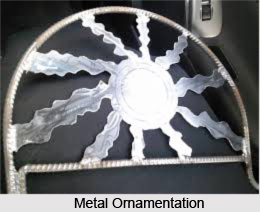
The history of Indian metal craft is rich as it was introduced around 3000 B.C. The metal craft has its ramifications from mythological figurines, sculptures of deities to pots, pans, utensils, photo frames, doorknobs, taps, key chains, boxes and so on. The metal craft involves the tradition of enameling, etching and damascening for the beautification of the metal objects. Metal craft is admired for its durability and beauty. Metal Craft in Ancient India The exquisite beauty of metal craft made its presence felt in the artistry of Gold jewellery art and silver jewellery art, gold and silverware, brass and copperware, metal ornamentation, bidri and enameling. The princely states of India, the royal heads were fascinated by the idea of enameled utensils. Wine-cups, finger-bowls, pill boxes in both gold and silver, often studded with jewels were introduced. During the epoch of the Raja Serfoji II (1797-1832), the Maratha ruler of Tanjore, Tanjore metal plate was introduced. This was manufactured by the royal artisans of his court. The metal plate was decorated with the besetment of silver, brass, and copper. The base metal was mainly brass. That was just the beginning of a new idea. Metal Craft in Modern India In the modern day metal craft in Ladakh region of Kashmir is admired for traditional vessels made out of iron and brass. Intricate floral and calligraphic patterns are embellished on copper and silver items that make the metal item look gorgeous. The "naquasi" style that is the oxidization of the metal item is prevalent in North India. It is done to make the design stand out from the background. Brass metal is used to make a variety of brass items including household items like pots, trays, bowls, and sculptures of deities, household utensils and decorative pieces. Brass and silver metal craft is prevalent all over India. Different types of metal crafts in India The art of 'Koftagari,' which is a craft of encrusting one metal into another, is a specialty of India. Dokhra art on silver and copper has found a special place in national and international market for jewelleries and home decorative items. Other popular metal crafts that are popular in Indian subcontinent includes bidri craft, silver filigree, meenakari, maori craft, and many more. These crafts are discussed in details below. Brass metal art in India Brass engraving and lacquer art, another form of metal craft produces items like photo frames, bowls, plates, boxes etc with the embellishments of ethnic designs and floral patterns, hunting scenes etc., on the surface. Lacquered designs varies either by varnishing the entire body or a part of the item. Brass is also used in the production of vases, tumblers, water containers, ornamented spittoons, food cases, bells, candle stands, kerosene lamps, picnic carriers and a large variety of lamps. The most adored items are swords, daggers and shields. 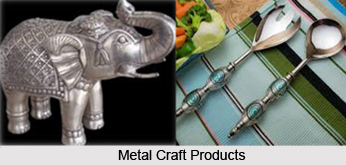 Bidri craft in India
Bidri or the inlay craft of metal is derived from Persia and developed during the Mughal Empire. The craft is named after the place Bidar in Karnataka. The making of Bidri items requires pouring molten zinc and copper solution into moulds. The intricate process of Bidri involves the art of casting, engraving, inlaying and polishing. Cigarette cases, huqqa bases, bowls, boxes, candle stands, trays, ashtrays, vases, jewellery, buttons and other utensils are quintessential of this exclusive craft. Dokhra craft in India The tribal belts of India are famed for the "Dokhra" metal craft. Small figurines of horses, drummers, tribal deities and plaques are made with extreme uniqueness of artisanship from brass scrap. The polished bronze mirrors are a distinct craft of Kerala, India. Silver art in India Silver filigree work is another form of metal craft of India. It engages employing intricate designs made out thin silver wires and produces items made of strips of silver, looped and in zigzag pattern mainly using thin twisted silver wires. Items such as trays, cigarette case, key chains and other decorative pieces animals and birds are manufactured from this dominated creative filigree work. The metal craft of silver work has given rise of products like spice boxes, rose-water sprinklers, caskets, hukkas and highly-carved silver furniture. Maori metal craft Another craft of more or less of identical category is "Maori" craft which leaves the engraved floral designs glitter against a black background. This art became famous among the royals of India and gradually made its way to common households. Chrakwan metal craft Another craft of metal practiced in India is 'Chrakwan' which is a black pattern on copper or brass background. Chrakwan evolved at the same period with Maori and was equally popular among royal for its exquisite design. 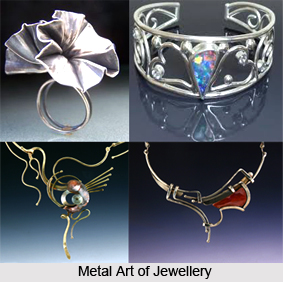 Koftagari metal craft
Koftagari or Koftgari is an ornamental work that is produced by inlaying steel with gold. The art is crafted with hair thin wires of precious gold and silver on hard ferrous metals. The art became increasingly popular among Rajputs of Rajasthan. Charakku metal craft Charakku, one of the largely used cooking vessels is made of bell-metal and is an important contribution of metal craft. The surface of Charakku is made up of old gold tint and it maintains its original colour and luster for years. To prepare 'payasam' (sweet dish made out coconut milk) in large quantities in ceremonial and religious occasions Charakku is used. The special method of making a Charakku is called Charakku craft. Iron craft The 'deepak' or large lamp, made of iron is another example of the successful use of metal craft in India. Deepak includes a number of small, shallow crucibles, like 'diyas' or little lamps, sometimes decorated with bird and animal figures that are made separately and later joined together to give shape to the lamps. The lamps are different in type, use and sizes like 'laman diya', 'supali diya', 'gadli diya', 'khut diya' and 'viman diya'. Standing lamps, called 'kuthu-vilakku' is a type of lamp that is used to worship the deity at temple. Though the metal craft has been spread in a numerous divisions and flourished in different sects of culture, the metal art of India remains a tradition. From jewellery to home utility items, metal craft is India has displayed its unique craftsmanship throughout. |
| |||



Indian Metal Craft
| Indian Metal Craft consists of items made of metal like iron, copper, silver, bronze and gold. This is an ancient craft that dates back to the period of Indus Valley civilization. The craft has evolved with time under the influence of several dynasties that ruled India. |
| ||||||||||||||||||||||||||||

