
Malayalam is classified as a South Dravidian language. Malayalam language is concentrated in the state of Kerala and adjoining areas. As "Malai" (Chera) denotes "mountain", the word "Malai-alam" obviously refers to either people or the language of the hilly region. About a thousand years ago Tamil was the spoken language of present-day Kerala state with a number of local variations. It is said that Malayalam as a spoken language. This was not referred to in Tamil literature before the fifteenth century.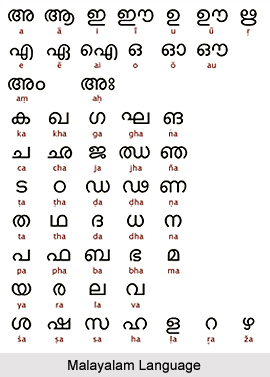
Malayalam Language
Malayalam language, one of 22 scheduled languages of India, is mostly concentrated in Kerala, Lakhswadeep and Puducherry. A Dravidian language, Malayalam is renowned for its rich literary tradition and also holds cultural significance.
Introduction
Origin of Malayalam Language
The origin of the Malayalam language has long been a subject of scholarly debate. The widely accepted theory suggests that Malayalam evolved from a western coastal variant of early Middle Tamil. This linguistic offshoot is believed to have branched away between the 9th and 13th centuries. Interestingly, this coastal dialect retained several archaic features, hinting at a much earlier divergence of spoken forms in prehistoric times. The language found in the Chera Perumal inscriptions is often regarded as a distinct dialect or variant of Tamil used during that era. The earliest known literary work in Malayalam that clearly marks its departure from Tamil influence is “Ramacharitam,” which dates back to the late 12th or early 13th century.
Script of Malayalam Language
Malayalam was originally written using the Vatteluttu script, one of the oldest writing systems in South India. Over time, this script evolved to accommodate the linguistic needs of the language. The modern Malayalam script is a development of Vatteluttu, expanded by incorporating characters from the Grantha script to effectively represent Indo-Aryan loanwords. This blend created a script capable of expressing a broader range of phonetics. Notably, the present-day Malayalam script shares significant visual and structural similarities with the historical Tigalari script, which was traditionally used for writing Tulu in South Canara and Sanskrit in the nearby Malabar region.
Official status of Malayalam Language
This language is one of the 22 scheduled languages of the country being the official language of Kerala. There are at least five main regional dialects of Malayalam language and a number of communal dialects.
There are 37 consonants and 16 vowels in the Malayalam script. Malayalam language differs from other Dravidian language because of the absence of personal endings on verbs. It has a one to one correspondence with the Indo Aryan language. For write-ups, Malayalam has a unique script, which covers all the symbols of Sanskrit language and also some of the specific letters of Dravidian languages. The script used is called Kolezhethu (rod-script).
Dialects in Malayalam Language
The multiple dialects are found that have branched out from Malayalam language. Malabar, Nagari-Malayalam, Malayalam, South Kerala, Central Kerala, North Kerala, Kayavar, Namboodiri, Moplah, Pulaya, Nasrani, Nayar are some of them. In Comparative Grammar of Dravidian Languages (1875), Bishop Robert Caldwell, a famous personality asserted that Malayalam language evolved out of Tamil language. This period is famous as the Sangam Age and at that time; Kerala was integrated to a huge portion of the political segment, better known as Tamilakam, with the Dravidian civilisation and languages reaching its zenith.
Geographical Distribution of Malayalam Speakers
Malayalam is predominantly spoken by native communities in the southwestern state of Kerala and the Union Territory of Lakshadweep in the Arabian Sea. As per the 2011 Indian Census, Kerala accounted for the overwhelming majority of Malayalam speakers including 32.4 million people, which represents 93.2% of all Malayalam speakers in the country and 97.03% of Kerala’s total population. The language also has a noticeable presence in neighboring states like Tamil Nadu with approximately 957,705 speakers, Karnataka with 701,673, and Maharashtra reported 406,358 speakers. Though the number of Malayalam speakers in Lakshadweep stood at just 51,100, they comprise around 84% of the islands' population.
Historically, Malayalam has held a significant position in regions outside Kerala as well. In the former Gudalur taluk of Tamil Nadu’s Nilgiris district (now divided into Gudalur and Panthalur), Malayalam was once the most spoken language, accounting for 48.8% of the population. Similarly, it ranked as the second most spoken language in the South Canara taluks of Mangalore and Puttur.
Recently updated articles in Languages in India
Linguistic History of India
Linguistic history of India traces down two basic kinds of literary styles still prevalent in the country.
Ancient Sanskrit Grammarians
Ancient Sanskrit grammarians were pioneering scholars who considered factors like pronunciation and euphonic combination and the discrimination of par...
Tamil Language
Tamil is a Dravidian language spoken primarily in India and other countries of South Asia. It is one of the official languages of Tamil Nadu. With a r...
Malayalam Language
Malayalam language, one of 22 scheduled languages of India, is mostly concentrated in Kerala, Lakhswadeep and Puducherry. A Dravidian language, Malaya...
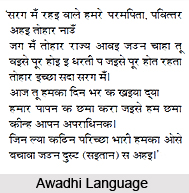
Awadhi Language
Awadhi is one of the enriched languages of India, Hindi too originated from it. Awadhi, an Indo-Aryan language from the Indo-European family, originat...
Related articles in Languages in India
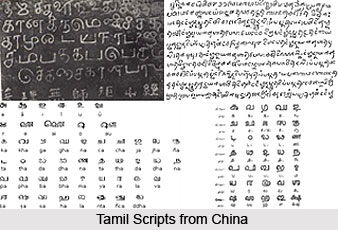
Development of Tamil Scripts
Development of Tamil scripts can be traced to the period just after the reign of Asoka. The Tamil script is believed to have developed from the Brahmi...
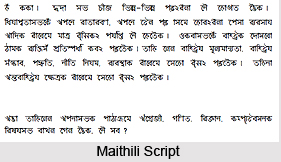
History of Maithili Language
History of Maithili Language can be dated back to the early fourteenth century. Maithili is now one of the national languages of India.
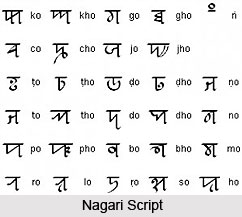
Nagari Script
Nagari script today is classified as Devanagari, believed to have served as the ancestor of various modern-day writing.
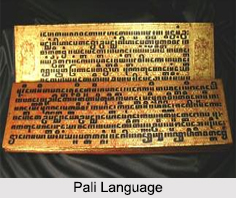
Pali Language
Pali Language owes its origination to Gautama Buddha and his disciples, who were chief to propagate it.
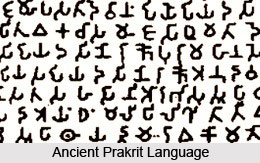
Origin of Prakrit Language
Origin of Prakrit language can be attributed to Sanskrit according to some historians. Some consider it as nature’s gift which is easily comprehensibl...