Traditional Indian Medicines are made from herbs or mixture of herbs either alone or combining it with minerals, metals and other ingredients. Traditional Indian Medicine reminds one of the ancient Indian health care systems popularly known as Ayurveda. Ayurveda is concerned with the protection of "Ayush" which includes healthy living along with therapeutic measures that relate to physical, mental, social and spiritual harmony.
Concept of Traditional Indian Medicine
The central concept of traditional Indian medicine is the theory that the good health can be maintained when there is a balance between the Tridoshas; Vata, Pitta and Kapha. Vata is the air principle necessary to mobilize the function of the nervous system. Pitta is the fire principle which uses bile to direct digestion and hence metabolism into the venous system. Kapha is the water principle which relates to mucous, lubrication and the carrier of nutrients into the arterial system.
Origin of Traditional Indian Medicine
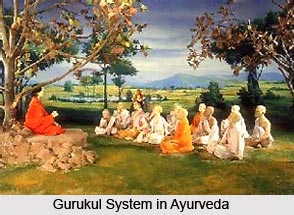
The origin of this traditional Indian medicine, Ayurveda is stated to be a divine revelation of the ancient Indian creator Lord Brahma. This knowledge was directly passed to Daksha Prajapati in the form of "Shloka" sung by Lord Brahma and this was then passed through a successive chain and ultimately to Lord Indra, the protector of Dharma. The first human exponent of Ayurveda was Bharadvaja, who learned it directly from Lord Indra. Bharadvaja in turn taught Ayurveda to a group of assembled sages, who then passed down different aspects of this knowledge to their students. Ayurveda was first described in text form by Agnivesha, in his book the "Agnivesha Tantra". The book was later renamed by Charaka and came to be known as the "Charaka Samhita".
Study of Traditional Indian Medicine
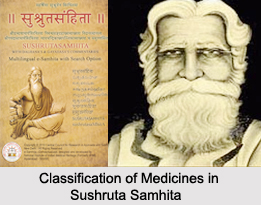
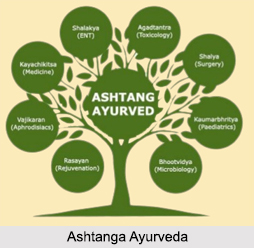
Another early text of Ayurveda is the "Sushruta Samhita" which was compiled by Sushruta, the primary pupil of Dhanvantri, sometime around 1000 BC. Dhanvantri is known as the "Father of Surgery", and in the Sushruta Samhita, the teachings and surgical techniques of Dhanvantri are compiled and complemented with additional findings and observations of Sushruta regarding topics ranging from obstetrics and orthopaedics to ophthalmology. Sushruta Samhita together with Charaka Samhita served as the textual material within the ancient Universities of Takshashila and Nalanda. The eight branches of Ayurveda are
•Internal medicine (Kayachikitsa Tantra)
•Surgery (Shalya Tantra)
•Ears, eyes, nose and throat (Shalakya Tantra)
•Pediatrics (Kaumarabhritya Tantra)
•Toxicology (Agada Tantra)
•Purification of the genetic organs (Bajikarana or Vajikarana Tantra)
•Health and Longevity (Rasayana Tantra)
•Spiritual Healing/Psychiatry (Bhuta Vidya).
Thus, Traditional Indian Medicine relies on historically-proven herbs and a completely holistic treatment to promote balanced and good health and prevent as well as treat disease.