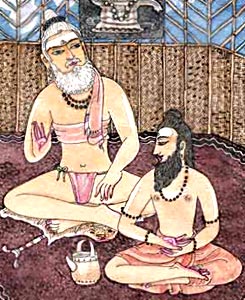
 The history of yoga in India is long yet copious with its pregnant past. In the Indian yogic culture, the first yogic Guru or the Adi Guru is regarded as Lord Shiva. Shiva in yogic practice is known as the relentless mediator and is depicted as sitting in elongated state of deep serene in an undisturbed meditation. The ideal Yogi Shiva with his spiritual practices, encased amidst his incredible spiritual abilities has offered the concept of yoga a celestial tinge.
However realistically the seal of Mohenjodaro (3000 B.C.) in the Indus Valley Civilisation, depicting the yogic posture of Shiva sitting in a meditative pose, is believed to be the oldest record of existence of Yoga in the mystic land. From this seal, the history of Yoga can be traced back to age of Indus valley and it is assumed that Indus people were aware of yoga. Yoga is even mentioned in the earliest literature, the Vedas. The principles of Yoga are mentioned in the four Vedas, namely the Rigveda, Samaveda, Yajurveda and Atharvaveda.
In the history of Yoga, the term Yoga was probably first used in the Rigveda, then in the Yajurveda and Atharvaveda and also in such later Vedic works as the Satapath. Since nature is the base for these Upanishads, so it is certainly not an overstatement to say that the technique of yoga such as asana and kriyas developed from nature. Meditation on the sacred syllable OM and the idea of controlling the respiratory system as an aid to the process of meditation seems also to belong to the very early period. A suggestion is even made in the Atharvaveda that the Atharvan already knew something about the importance and control of breath and the vital forces. A systematic treatment of the many existing yoga practices were made available in the Maitrayani Upanishad. It discloses the six- fold (Sadanga) Yoga consisting of Pranayama or control of bio - motor force; Pratyahara or abstraction; Dharna or concentration; Dhyana or meditation; Tarka or an examination whether the mind has become transformed in its objects or not and Samadhi or trance.
Yoga in India started as a part of living and also as a part of Indian culture. During the ancient period, Yoga was a secret system, only known by a few. It was practiced within a small community because the authentic Yogis were afraid that Yoga would fall into wrong hands and would be misused. During the Vedic period, the tendency of Indian sage was to overcome the physical inconveniences created by the forces of Nature. Thus instead of putting on clothes for protecting himself against the external heat or cold, the yogis would rather prefer to temper his body in such a way that he might beat them peacefully or absolutely overcome them. This method of least conflict invariably called for self-denials, which consisted in acts of "yoking or harnessing" his desires and senses and also in "achieving the unachieved".
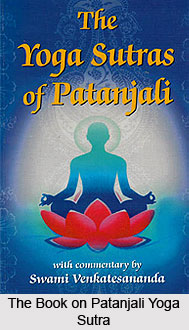
However Yoga Sutras by Maharshi Patanjali written in the 5th century BC is the foundational text for Yoga which amidst its antiquity is still regarded as the fundamental text of Yoga. All yoga as practiced today is based on the Patanjali Yoga Sutras. Historically, it is believed that Maharshi Patanjali may have lived in around 500 BC to 2000 BC and Patanjali has written on mainly three subjects namely, grammar, medicine and yoga. Patanjali`s three works together deal with man`s development as a whole in thought, speech and action. The Patanjali Yoga Sutras is divided into four chapters or padas namely Samadhi pada (on contemplation), Sadhana pada (on practice), Vibhuti pada (on properties and powers) and Kaivalya pada (on emancipation and freedom). These chapters cover art, science and philosophy of life. There are around 196 sutras in the Patanjali yoga sutras. These sutras are absolutely compact, accurate, reflective and devout in approach. Each sutra of the Patanjali yoga sutra is enlightening and is filled with prosperity of knowledge and wisdom. This knowledge is bestowed upon its aspirants (sadhaka). Patanjali has documented the Patanjali yoga sutra in such a way that it can be reasonable to all and sundry.
The Patanjali yoga sutra state, through proper practice one can radiate goodwill, friendliness and compassion. The four chapters or padas of the yoga sutras correspond to the four stages of life. The ultimate achievement of following the path of Patanjali yoga sutra is to experience the effortless, indivisible state of the prophet.
These Sutras need to be understood keeping in mind the time and culture in which these were written. In those days printing was unknown, thus the need of brevity has been taken care of by Patanjali remarkably well. Each Sutra is meaningful if looked at individually and also these Sutras are connected with each other thus complementing each other very well. The masterly manner in which Patanjali Yoga Sutra has been compounded reveal the fact that as a Yogi Guru, Patanjali was of a very high order who had personal and practical knowledge of all Yoga Techniques. Comprehending well the human mind Patanjali has written the four chapters on yoga sutras which still echoes the contemporaneity of yoga whilst pounding the history of yoga, both as a practice and even as a subject.
The Patanjali yoga Sutras were associated with the traditional writings of Samkhya Philosophy. Samkhya is based on classifying the external world into 25 categories. It is founded on the belief of three Gunas and how they affect the Prakurti and Purusa in the world. There have been 30 ancient commentaries written about the Sutras, 500 years after they were published. The major commentators are - Vyasa, Bhikshu and Vacaspati Misra (8th Century A.D.). Yoga at that time was known in forms of Hatha Yoga, Mantra Yoga, Laya Yoga and Raja Yoga.
Towards the end of the 9th Century and the beginning of 10th Century A.D. was the time of Goraksanatha. He was the follower of Matsyendranatha (middle to end of 9th Century A.D.) who was one of 84 Siddhas of the Natha Sect. Goraksanatha "reformed" Yoga and made it systematic. This turned a new chapter in the history of yoga. Goraksanatha wrote several books on "Hatha Yoga" and popularised certain Asanas and ratios in Pranayamas.
>In the history of Yoga, there continued to be more writings on Hatha Yoga including a famous treatise, Hathayogapradipika by Svatmarma in 14th Century A.D. A new concept in the history of yoga was indicated later by Swami Vivekananda who focused on Rajayoga, Jnanyoga, Bhaktiyoga and Karmayoga. Vivekananda thought that Yoga should be brought to the Modern Society hence initiated the speedy ontogeny of yoga as a concept.
Finally came Paramahansa Madhavadasji period in the history of yoga. He was a Bhakti Yogi and traveled around India eleven times in order to learn and exchange information with other connoisseurs about Yoga.
In contemporary days, yoga aims at improving health to achieving Moksha. Within Jainism and the monist schools of Advaita Vedanta and Shaivism, yoga takes the form of Moksha, which is liberation from all worldly suffering and the cycle of birth and death (Samsara). There is a realisation of identity with the Supreme Brahman in the modern concept of Yoga.
The chronological history of the yoga is summarised as below -
•3000 BC : Richas : Indicates earliest strings of Bhakti.
•500 BC : Bhagwat Cult : Flowering of Bhagwata Indian culture
•600 to 1500 BC : Shrutis : Earliest expression of Aryan Rishis.
•600 BC : Maharshi Patanjali wrote the Yoga Sutras on Astang Yoga.
•Before 900 AD : Yukta Dipika : Work on Samkhya.
•900 AD : Goraksanath - Disciple of Matsyandranath, father of Hatha Yoga.
•14th Century AD : Svantnarama - Author of Hstha Yoga Pradipita.
•15th Century AD : Shivananda Saraswati : Author of Yoga Chintamani.
•15th Century AD : Gauranga Chaitanya Mahaprabhu : Great Devottee of Lord Krishna.
•16th Century AD : Tulsidas : Author of Ramcharitramanas.
•16th Century AD : Mirabai : Great Bhakti poetess of lord krishna & author of Miranada.
•16th Century AD : Vynabhiksu : Author of Yoga Vartika.
•18th Century : Gheranda : Author of Gheranda Samhita.
•18th Century AD : Ramkrisha Paramhans & Swami Vivekananda
•18th Century AD : Paramhansa Madhavdasji