


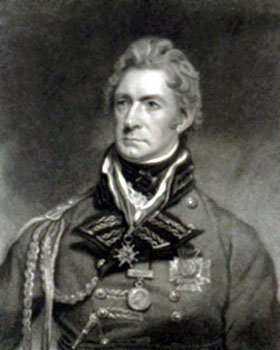
 Administrative reforms of Warren Hastings were executed through capable administrators like Sir John Malcolm, Sir Thomas Munro, Mount Stuart Elphinstone Jenkins and Charles Metcalfe. Thomas Munro was the Governor of Madras in 1820. He had established the Ryotwari system of land tenure in Malabar, Canara, Coimbatore, Madurai and Dindugal. The settlement was made directly with the actual tiller of the soil. The ryot or the actual tiller was considered the owner of the soil. He had the right to sell and transfer land. The cultivator had to pay directly land revenue without intervention of the zamindar or village community. Administrative reforms of Warren Hastings were executed through capable administrators like Sir John Malcolm, Sir Thomas Munro, Mount Stuart Elphinstone Jenkins and Charles Metcalfe. Thomas Munro was the Governor of Madras in 1820. He had established the Ryotwari system of land tenure in Malabar, Canara, Coimbatore, Madurai and Dindugal. The settlement was made directly with the actual tiller of the soil. The ryot or the actual tiller was considered the owner of the soil. He had the right to sell and transfer land. The cultivator had to pay directly land revenue without intervention of the zamindar or village community.
Elphinstone was the Governor of Bombay in 1819. He was given the responsibility of settling the districts acquired from the Peshwa. He was also told to implement the Ryotwari with the Mahalwari system in Bombay. The rights and rent of each cultivator was fixed under this system. The farming was entrusted to a Patil for several years. The Mahalwari system was introduced in the North-Western Provinces. Land revenue settlements were made with the representatives of each village community. The adjustment of the share of each individual cultivator was left among themselves. Hastings modified the judicial system set up by Cornwallis. In the Bengal Presidency the system of separating the judiciary from the executive was changed. Under the new system the Collector could hold magistrate's office too. Warren Hastings ceased the dual system of government in Bengal which was established by Robert Clive in the year 1765. The Company took over the administration responsibility of the province. The revenue was collected through the agency of its own servants. Mohammad Reza Khan and Raja Sitab Rai were removed from their offices. The treasury was shifted from Murshidabad to Calcutta. Hastings had realised that in order to preside over the Indian society it was essential to learn its various religious, social and legal customs. A great deal of administrative model was set up which had greatly shaped later attitudes towards the British India government. He allowed Brahmin advisors to mould the law, as no English person thoroughly understood Sanskrit until Sir William Jones. In 1781 he laid the foundation of Madrasa 'Aliya. In 1784 Hastings supported the foundation of the Bengal Asiatic Society. His legacy has been dualistic as an Indian administrator. He was able to institute reforms during the time he spent as governor. |
| |||



Home > Reference > History of India > Indian Governor- Generals > Warren Hastings > Administrative reforms of Warren Hastings
Administrative reforms of Warren Hastings
| Administrative reforms of Warren Hastings brought in some of the new systems of Land Tenure. His Governor-Generalship witnessed some civil and administrative reforms being carried out. |
| ||||||||||||||||||||||||||||

