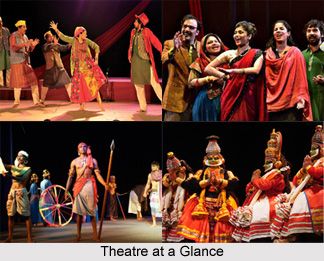
 India, as a colony of the British Empire used theatre as an art form in illustrating the crude realities of life. Theatre was then rather a structured art form in manifesting and reflecting the socio political as well as the economic set up of India during the 200 years of British Raj. Indian culture, heritage, ethnicity and tradition all gained a colossal maturity in the form of Indian theatre right from the time of the independence in India. Indian theatre which was then just the weapon of revolting against the British imperialism became rather a rationalized form of expression in independent India. Theatre gradually broke the barriers of "roopaka", Mudraas", "Rasalilas" and eposes and became the voice of the common people. Daily existence, the colours of everyday life, the sufferings of the poor became the central theme of Indian drama after independence. The renowned personalities in Indian theatre after independence further reshaped the haphazard form of Indian "natya" and made it rather contemporary. The seed of modern drama was sown during the time of the British rule and therefore quite ideally the typical theatre form, right after the independence became lot more modish to befit the existing political and economic scenario of independent India.
 The classical interpretation of the age old epic dramas were no more there; even the aura of the typical representation of the British exploitation also faded away. Theater after the Indian independence therefore became more realistic and naturalistic. Different personalities in Indian theatre after Independence added that colour to Indian theater whilst enhancing its overall qualities. Personalities like Utpal Dutta, Girish Kannad, Safdar Hashmi, K.V. Subbana, B.V. Karnath, Shambhu Mitra,Vijay Tendulkar, and K.V. Akshara further added that post colonial maturity in Indian theatre history, making it whole lot modern and jazzy.
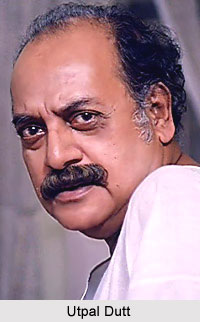
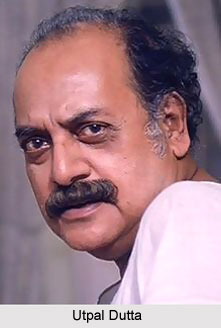
Utpal Dutta
Modern theatre in the hands of Utpal Dutta gained that exceptional dimension during and after the independence of India. Dutta was the one to write and direct the "epic theatre", the term which he borrowed from Brecht while discussing the change in the political scenario of Bangladesh. His famous plays like "Tiner Talowar", "Manusher Odhikare" are the classical representation of his views on human rights and democracy. One of the eminent director, playwright and actor Utpal Dutta and one of the great personalities in Indian theatre after independence did streamline his theatre career into two distinct parts namely the "little theatre group" and the "peoples little theatre". "Fariry Fauj", "Titas Ekti Nodir Naam", "Kollol", "Din Bodoler Pala", Leniner Daak" are some of his creations which clearly illustrated his Marxist views and his creative ideas for "Free-speech". Utpal Dutta is a story teller of his own rank. The common people and their sufferings, the struggle of humanity, the fight for existence therefore ideally finds an articulate diction in his philosophy and ideology which were again so much a part of his dramas and plays.
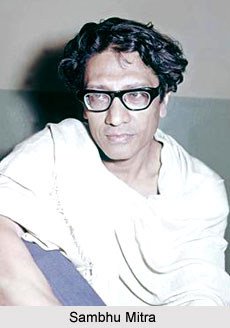
Shambhu Mitra
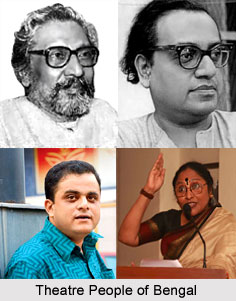
 With the emergence of Shambhu Mitra, another name was added. Another milestone was created in the rich timeline of the Indian theatre with the immense success of Shambhu Mitra as a playwright. Shambhu Mitra offered that class and spectrum in Indian theatre which later carried Indian drama to a million steps further. Indian drama especially the Bengali plays after independence became lot more innovative with the introduction of the "Indian Peoples Theatre Association". Shambhu Mitra`s theatre career and at the same time, the fate of the Bengali theatre all arrived at a concrete shape with the formation of this "Indian Peoples Theatre Association". The year was 1948. Shambhu Mitra formed the theatre group "Bahurupee" and staged the three remarkable plays like the "Nobanno", "Ulukhagra" and "Pothik". The concept of "free-speech" which was once introduced by the renowned playwright Utpal Dutta, was further carried forward by Shambhu Mitra whilst making theatre a true representation of the "unedited realities" of the daily life. A typical western influence in his plays especially in his one of the most famous play "Swapno O Neel" marked that contemporary in Indian theatre after independence.
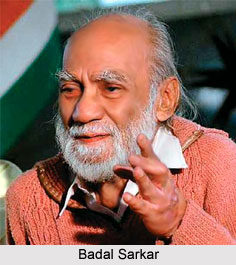
Badal Sarkar
One of the illustrious personalities in Indian theatre after independence, "Badal Sarkar", made farce and comedy his weapon to illustrate the social scenario of Independent India. Practically it is in his hands Bengali farcical comedies and satirical plays acquired that maturity to compete with the whole world. "boro pishima", "Ram Shyam Jadu", "Ebong Indrajit" are some of his creations which whispers the truth of the absurd philosophy that "nothingness that is man, that was man, that will be man thereafter".
 K. V. Akshara
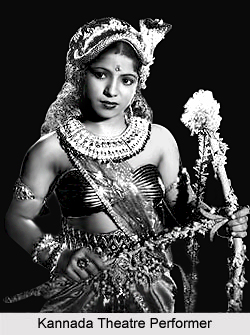
Indian theatre particularly Kannada theatre gained the final contour in the hands of K.V. Akshara, one of the prominent name in Kannada art form. One of his class presentation Brecht`s " Three Penny Opera" later delineated the fate of Indian theatre whilst carrying it a million steps forward.
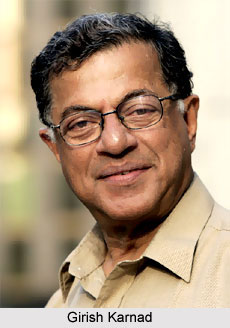
Girish Kannad
One of the most famous playwrights, Girish Kannad has redefined the very term "modern Indian theatre" amidst his realistic attribute. Kannada literature witnessed a whole new dimension with his naturalistic view towards society and economy and Girish Kannada further offered Kannada literature that aura of western renaissance which restructured the whole of traits of the modern drama. His first play "Yayati" thus stands out as a unique creation where he ridicules life through the characters in Mahabharata. "Tughlaq", another of his creation, established Kannada as one of the prominent personalities in Indian theatre after independence.
Shankar Nag:
Another important name in the history of Indian theatre, Shankar Nag restructured and altered the technique of Kannada theatre to give the chic look of the present time. He is one of the most eminent personalities in Indian theatre after independence who later envisioned a whole new platform for theatre and performing arts.
Safdar Hashmi
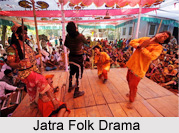
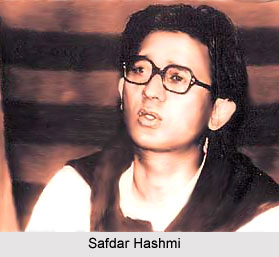 Street theatre in independent India became the form of expression of the common people. Theatre after independence gradually broke the barriers of galleries, pits, lights and stage and suddenly reached the common people in the most unexpected places like behind the vegetable market, at the taxi stand or right at the doorstep of the industrial areas. The objective was mainly to bring out the ailments of the society whilst making people aware. Safdar Hashmi, one of the most celebrated names amongst the personalities in Indian theatre after independence was chiefly associated with Street theatre in India. He was the founder member of "Jana Natya Mancha" ("Janam" in short). His two plays like "Enemies adapted on Maxim Gorky`s play and the other Moteram ka Satyagraha became the symbolization of the ethnic resistance against authoritarianism in India.
Indian theatre which was just a form of entertainment gradually became an artistic form of expression. Indians were always comfortable in illustrating their feelings amidst this art form and therefore Indian theatre gradually became the centre stage of Indian culture. Theatre personalities from the ancient age to the modern times did contribute in crafting Indian theatre as a typical art form where mime, poetry, music, philosophy, literature and ideology all finds an unambiguous enunciation.