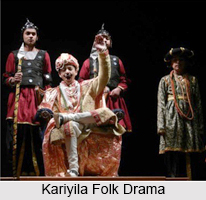
Indian People’s Theatre Association
PTA as an "apex body" aided in changing the age old concepts of Indian theatre.

Share this Article:

About Indian People’s Theatre Association

Indian People`s Theatre AssociationIndian People`s Theatre Association or the IPTA was established in the year 1942. It was founded by a group of people who thought on the similar line that theatre has more roles to play than just being a medium of entertainment. The people from the Indian People`s Theatre Association conceived theatre as an applied art that has the prowess to build up social consciousness and national integration. The birthplace of Indian People`s Theatre Association or the IPTA was Kolkata.

A short peep into the history of Indian People`s Theatre Association will lead one to a group of people who actually took the lead to form this theatre association. The list of such eminent personalities includes Utpal Dutt, Prithviraj Kapoor, Jagdish Faryadi, S. Tera Singh Chan, Bijon Bhattacharya, Salil Chowdhury, Khalili Faryadi, Niranjan Singh Maan, Ritwik Ghatak and others. As far as the political and social scenario is concerned, India was facing repression from the British.

IPTA is considered one of the oldest associations of performing art in India. in fact, over the last five to six decades notable artists, musicians, writers, dancers, singers and directors have been a part of the Indian People`s Theatre Association. Personalities like Amar Shaikh, Majrooh Sultanpuri, Homi Bhabha, Sombhu Mitra, Kaifi Azmi, Shanti Bardhan, Krishanchander, Sahir Ludhianvi, Balraj Sahni, Mohan Segal, Harindranath Chattopadhyay were all a part of this IPTA. This made IPTA to be at the forefront of the Indian Theatre movement.

As far as its performances are concerned, IPTA has staged dramas in various languages: Hindi, Bengali, Gujarati, Kannada, Marathi, Telugu and English. With changing times, the elements of drama have definitely changed but the spirit is still the same. The primary objective of Indian People`s Theatre Association was to mirror the contemporary issues of British India. This thought influenced not only the theatre but Indian film industry as well. A number of personalities associated with films were also a part of the Indian People`s Theatre Association.

One of the most significant dramas staged by Indian People`s Theatre Association was Nabanna, a Bengali drama. The word literally refers to harvest and is a Bengali folk festival thet celebrated good yield of crops. The drama was penned down by Bijon Bhattacharya and directed by Sombhu Mitra. The Bengal of 1943 was bogged down by infamous famine. The play portrayed the predicament of the masses and indifference of the British government to the plight of the people. Other dramas that were staged by the IPTA include Nava Jiboner Gaan (Bengali) by Jyotirindra Moitra, Desha Sathi in Marathi, Prarambham in Telugu and Zubeida directed by Balraj Sahni. All these plays, in one way or the other, mirrored the sufferance of the common people due to the then economic and socio-political conditions.

After duration of around 5 years, Indian People`s Theatre Association dispersed in 1947. Though the main group broke, several offshoots came into existence which were largely influenced by the dogmas of the Indian People`s Theatre Association. One such theatre group was by the Late Utpal Dutta. The other was the IPTA, Mumbai. The latter is till going strong and produces plays. Other offshoots of the Indian People`s Theatre Association also exist in various regions of India. Contemporary Bengali theatre groups like Spandan and Nandikar at times stage dramas that reflect the ideologies of the IPTA.

In both Kolkata and Mumbai, the Indian People`s Theatre Association has been revived by the theatre lovers. In West Bengal, IPTA includes several personalities, like, Sisir Sen, Ashim Bandyopadhay, Hiren Bhattacharya, Sankar Mukherjee, Pijus Sarkar, Basudeb Dasgupta, Subhendu Maity, Ratna Bhattacharjee and others. This organisation has been in existence since 1967 and several plays have been written and staged.
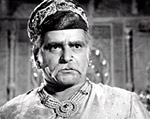
Prithviraj KapoorAs far as Mumbai IPTA is concerned, the year 1984 saw the formation of IPTA Balmanch, a children`s theatre wing, which staged plays with young artistes from different socio-economic backgrounds. In 1972 Indian People`s Theatre Association started its Inter Collegiate Drama Competition in memory of Prithviraj Kapoor. This competition that recognises budding talent on stage is regarded as one of the most prestigious drama competitions in Mumbai. It has given many artistes not only to the Hindi stage, but also to Marathi and Gujarati theatre.

In recognition of IPTA`s contribution to Indian culture, the postal department released a commemorative philatelic stamp on 25th May 1994 in Mumbai. Arjun Singh graced the occasion as the chief guest.

Apart from staging Hindi plays in India and abroad, IPTA also organises an Annual Theatre Festival annually in the month of May. They are also engaged in activities like performing music choirs, arranging workshops and seminars on performing arts, theatre activities for children and others. All activities of the Indian People`s Theatre Association in Mumbai are conducted on a non-profit basis and the members participate in such activities voluntarily.
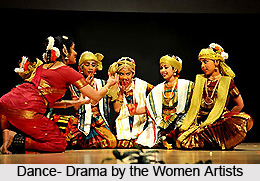
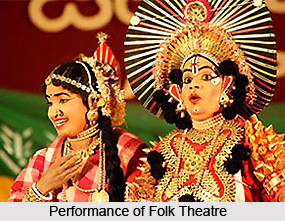
History of Indian People’s Theatre Association

History of IPTA goes back to 25th May 1943 when the Indian People`s Theatre Association from which it emerged as an all-India organization in Mumbai, where at the same time the first congress of the Communist Party of India was going on. But even before the founding of the organization, activities which anticipated it and were beginning to assume the character of a theatre movement manifested themselves in different parts of the country.

An anti-fascist people`s war line was adopted after much debate by the Communist Party of India by the end of 1941. This left the British Government with no option but to lift the ban on the party in 1942; although police vigilance and harassment continued, the opportunity of working in the open helped it grow. The CPI`s non-participation in the August movement of 1942 gave it further breathing space.

The success of the Communist Party in rallying middle-class intellectuals around it can be gauged from the success of organizations like the Friends of the Soviet Union and the Antifascist Writers and Artists Association in Bengal. Most of the well-known intellectuals and writers of the time took a more or less active role in these organizations and their influence on the urban middle class helped to strengthen the anti-fascist nationalist line.

In Bengal, before IPTA was formed, Benoy Roy, singer and organizer, took a leading role in utilizing the influence of Communist Party in peasant and working-class areas to recruit local talent and form cultural squads. Benoy Roy had already toured 13 centres in ten districts and taught people`s war songs to about 90 activists. Squads had been formed in places. At the provincial conference of the Communist Party, the district committees sent one squad from each front.

Around the same time, in the Surma valley in Assam, talented singers from Sylhet like Nirmalendu Choudhuri, Gopal Nandi, Prasun Roy, and Khaled Choudhury were going around in the district towns and villages singing songs about the anti-fascist war, about anti-colonialism, and about the Bengal famine. IPTA, as an organization, was not formally founded in the Indian state of Assam until 1947; but from the touring squad in Sylhet the Surma Valley Cultural Squad was born in 1945 and it went on a tour of Barak valley and Brahmaputra Valley in June-July 1946, again preparing the ground for the organization.

It would not perhaps be always correct to say that the formation of local squads reflected the organizational effect of the tours. It is likely that in many areas even after the tours no new cultural activities were visible. Sometimes, the purpose of the touring squad was to perform rather than prepare the soil for more performances. Sometimes, short-lived local groups may have been formed.


Principle of Indian People’s Theatre Association

Principle of Indian Peoples Theatre Association has been laid out in order to make sure the organization works towards reaching out to the people. The points or principles that were laid out

1. (a) The basis of developing IPTA will be on linguistic states, according to their cultural traditions, forms and objective conditions prevailing. Associated shall accept the present existing state boundaries for all practical purposes till the just demands of the people for the creation of linguistic states are met with.

(b) Branches in the disputed areas have to settle their position through mutual discussion among the members concerned, keeping in view the objective of unification and healthy development of their Branches, taking care not to apply it mechanically.

(c) The Squad or Unit among the minority section in a State will function under that particular state branch with a full right and guarantee of its working in its own language and cultural language branch for dramas, etc. through the Centre or direct.

2. All-India Executive:
(a) The functions of the All-India Executive Committee will be:
(i) To co-ordinate different branches

(ii) To exchange discussions, problems, achievements, reports and creative materials

(iii) To organise inter-State exchange of cultural troupes or individual artists

(iv) To initiate movements on all-India or world significant issues arising at different times

(v) To guide on common problems arising out of the movement in different states

(vi) To take the lead in building and developing branches of Indian Peoples Theatre Association where they do not exist or where they are weak with the help of the neighbouring branch

(vii) To keep contact with the progressive cultural movements in the other parts of the world

(viii) To run Unity the official organ and to bring out publications if necessary (mainly history of IPTA)

(ix) To call All-India Executive meetings at least thrice in two years and an All-India Conference once in two years

(x) To place audited All-India accounts at the Conference

(b) The Central Executive will consist of the following office-bearers:
(i) One President, five or less Vice-Presidents, one General Secretary, four Joint Secretaries to function as the All-India Organisers for four zones and one Treasurer. All the above office-bearers to be elected by the delegates present at the Conference. The All-India Executive will further consist of a maximum of two members from each State Branch elected by the delegates from that particular State, present at the Conference.

(ii) The All-India Secretariat consisting of President, Vice-President (if possible), General Secretary, Joint Secretaries and Treasurer should meet twice a year to check up and implement the All-India Executive`s decisions.

(iii) The Office Secretariat, consisting of General Secretary, Office Secretary (elected by the Executive Committee) and all members on the All-India body from the place where the office will be situated should carry forward day-to-day work.

3. Broad tasks and principles for State Branches:
(a) (i) Units are to be built up primarily on the basis of localities urban and rural, drawing members, organizations and affiliating cultural organisations primarily from that particular locality. These local Branches will have within their fold a number of squads either on different art forms or among different sections. The minimum number for the membership of the Squads and minimum number of squads for a Branch in a locality are to be fixed up by the State Branches according to the objective conditions there.

(ii) These primary Units will form higher Branches from City, District, Sub-division up to the State Branch, having the respective committees elected at General Body meetings and Conferences as the case may be to carry forward the principles of the IPTA movement.

(iii) A central troupe on State or even on district plane (if possible) should be formed to expand, popularise and raise the artistic level.

(b) (i) To stress on the federal character of the organization, guaranteeing sufficient rights to the affiliated organization, so that confidence is created in the affiliated bodies.

(ii) Any cultural organization willing to affiliate should do so with the nearest IPTA Branch. But any organization in a State, where no IPTA Branch unit exists should directly affiliate with the all-India body,

(iii) To organize simultaneously joint shows, discussions, etc. with those organizations which are not yet ready to affiliate with IPTA to create a favourable atmosphere dispelling any misunderstanding or distrust in the process. This part of the constitution of the State Branches must be formulated after thorough discussion so that the federal character part of the organization can play its role.

(c) (i) To call Conventions in those areas immediately where a Central Organisation does not exist, co-ordinating and consolidating the disintegrated groups.

(ii) Before holding the State Conferences, Music conferences, Drama festivals, Dance festivals of cultural organizations and individual artistes (IPTA and others) from rural and urban areas must be held in every State under the initiative of IPTA. These festivals must reflect the classical, modern and folk forms.

(iii) To avoid shoddy productions and to stage well-rehearsed and polished productions.

(iv) To revive and revitalize the traditions of the Indian stage, (especially rural) developing those in the modern light.

(d) (i) To conduct classes, training camps, etc. to educate members on IPTA ideology, organization and artistic creation and to develop and encourage healthy and constructive criticism,

(ii) To take the initiative to launch united movements on different demands of the cultural workers,

(iii) To ensure complete democratic functioning in taking day-to-day decisions, in running the committees and in selecting dramas and songs, etc.

(iv) To produce audited accounts by the State Branches annually.


Development of Indian People’s Theatre Association

Development of Indian people`s theatre association took place during 1942-1946 due to the influence of Communist Party of India. After the victory of the allied forces in 1945, the anti-imperialist struggle not only became more intense, but acquired an unprecedented mass character with the workers, peasants and the urban petty bourgeoisie taking a more and more active role. Many erstwhile Indian Peoples Theatre Association (IPTA) activists, when asked today about the formal experimentations undertaken in the 1940s, express surprise or even a slight degree of irritation.

They point out that they were not interested in experiments but in communicating a message and for this they were willing to take the help of whatever forms were available. Again, many professional artists who were at one time connected with IPTA assert that the tendency of IPTA was to forsake formal excellence for propaganda. These two polarities of opinion in fact supplement each other and arise from the same theoretical preconception that politicization and formal experimentation in art are opposed to each other. The development of this preconception within IPTA was one of the manifestations of the theoretical crisis it came to face.

The unprecedented success of the work done by the Bengal Squad had encouraged the decision of forming a central team of artists. This referred to the cultural squad which, sponsored by the People`s Relief Committee, had gone to Punjab in November 1943 to bring aid to famine-stricken Bengal. This was followed by a second squad with a fuller programme called Voice of Bengal, visiting Mumbai, Gujarat and Maharashtra in April 1944. In the course of these two trips, not only had two and a quarter lakhs of rupees been raised for the Relief Committee, but a wave of sympathy and fellow feeling for Bengal had been created among large audiences in urban and rural areas. The squads included some highly talented singers and dancers, but few of them were trained.

The Central Squad which included many artists from the earlier teams, apart from new ones, was expected to rouse the same kind of enthusiastic response by presenting the rich heritage of Indian culture to varied and broad-based audiences. The presentation was seldom overtly political, but the anti-imperialist theme ran as an undercurrent in most programmes. Also, adaptations of various folk entertainments like the Lambadi dance from Andhra Pradesh, Ramlila and Holi from the United Provinces, and Gajan from Bengal were included.


Share this Article:

Related Articles

More Articles in Indian Drama & Theatre


Gondhal Dance
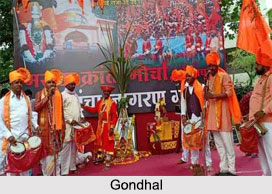
Gondhal is a religious folk dance of Maharashtra. It is performed on special days like when there is a newborn in a family or marriage. Dedicated to goddesses like Renuka and Bhavani, it combines music, storytelling, dance, and devotion.
Tamasha Folk Dance
Tamasha is a folk art, which includes the love songs, which are traditional lavanis and dance along with the music.
History of Indian Theatre
The history of Indian theater is therefore the saga of changing tradition and the account of changing ritualism.
Indian Dramatist
Indian dramatists maintained Indian drama as a distinct art form.
Sringara Rasa
Sringara Rasa is mentioned in Natyashastra as one of the important rasas. The Sthayi bhava in Sringara rasa is Rati or love.
History of Indian Drama
History of Indian Drama is rich with Vedas and Indian epics and has gradually changed with time and remains unaffected by any foreign influence.
Navarasas - Natyashastra
Nine rasas or navarasas, described in Natyashastra contours the structure of Indian drama.
History of Kannada Theatre
History of Kannada theatre brings forth the richness in the Kannada culture. Theatre of Karnataka has been greatly inspired from various other forms of regional theatre in India.
Powada - Marathi Ballad
Powada is a Marathi ballad describing heroic deeds of valour by great warriors and kings.
Jatra - Bengali Folk Drama
Jatra is a form of folk drama from West Bengal, which includes acting, songs, music and dance by travelling troops
Kuvempu
Kuvempu is a literary acronym of Kuppali Venkatappa Puttappa - a popular Kannada actor-playwright.
Natyashastra
Natyashastra by Bharata muni is the most detail and elaborate of all treatises on dramatic criticism and acting ever written in any language and is regarded as the oldest surviving text on stagecraft in the world.
History of Bengali Theatre
Blessed with its rich heritage the history of Bengali theatre is the saga of the journey of Bengali Theatre
Bhavai - Folk Theatre of Gujarat
Bhavai is a popular folk theatre form of Gujarat that belongs to the tradition of theatre of entertainment.
Theatre In Ancient India
Theatre in ancient India in a systematic manner was introduced by Bharat Muni who prefaced the term "roopaka".
Bidesiya - Folk Theatre Dance
Bidesiya is one of the most popular folk theatre dance forms of Bihar which is said to have originated in the 20th century.
Regional Theatre in India
Regional theatre in India, in different Indian languages and regions, developed as an important element of Indian culture and tradition.
Koodiyattam
Koodiyattam is the oldest existing classical theatre form of the world. It has been recognised by UNESCO as a Human Heritage Art.
Indian Theatre Festivals
Indian theatre festivals help to bridge the gap between the various regions of the country. It also helps to bridge the gap among people and participants!
Kariyila Folk Dance
Kariyila is one of the most appealing and popular folk drama forms of Himachal Pradesh, portraying social satire with the accompaniment of folk dance and music.
Bengali Theatre
Bengali theatre had developed as a prominent form of protest movement during the colonial period. But with time it has made a niche for itself.