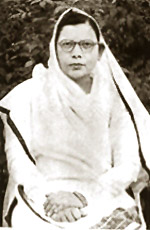
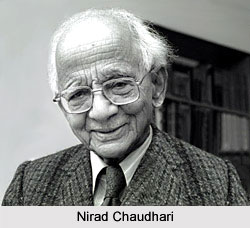
 Nirad Choudhury, born on 23rd November, 1897 in Kishoreganj now Bangladesh, he was educated both in his birth place and Calcutta (now Kolkata). Amiya Chaudhuri, a well known writer in her own right married Nirad C. Chaudhuri in 1932 and they had three sons. His second son Kirti Narayan Chaudhuri is an acclaimed historian at the University of London. He died on 1st August, 1999 at the age of 101.
Early Life of Nirad Choudhury
Nirad C. Chaudhuri, with famous Bengali author- the great Bibhutibhushan Bandopadhyay, attended the Ripon College for his school leaving course. To study history at undergraduate level he was admitted to Scottish Church College, Calcutta and topped at University of Calcutta in the merit list. After that he enrolled for M.A at University of Calcutta but did not earn the degree. When he was in the Accounting department of the Indian Army started contributing his writings to popular magazines. His first article on the famous poet of the 18th century "Bharat Chandra" was published in the most prestigious English magazine "Modern Review". Nirad C. Chaudhuri started his new career as journalist and editor with well Known English and Bengali magazines "Modern Review", "Probasi" and "Sonobarer Chithi".
Career of Nirad Choudhury
The famous political leader Sarat Chandra Bose during the independence movement of India in 1938 appointed Nirad C. Chaudhuri as his Secretary. It resulted in the interaction with notable political leaders like Mahatma Gandhi, Jawaharlal Nehru and Subhas Chandra Bose. This helped him to be disillusioned political commentator for All India Radio, Calcutta Branch. In 1941 he moved to Delhi for All India Radio, Delhi branch and never returned to Calcutta.
"The Autobiography of an Unknown Indian" put him on the list of great Indian English writers. The autobiography was published in 1951. The book relates his mental and intellectual development, his life and growth at Calcutta, his observations of Vanishing Landmarks, the connotation of this is dual -- changing Indian situation and historical forces that was making exit of British from India an imminent affair. With his prolific writing he actually mocked the imperial system of India. That annoyed many political and bureaucratic Indians. As a result Nirad C. Chaudhuri was thrown out of government service and blacklisted as a writer in India. His autobiography, with free and forthright views, was an excellent attempt at the subaltern view of Indian History though it was not esteemed by the political establishment of India. He was forced to live a life of destitute as he was deprived of his pension from All India radio, the government organization. His friend the editor, historian and novelist Khushwant Singh commented as "The wogs took the bait and having read only dedication sent up howls of protest".
Nirad C. Chaudhuri, in 1955, was asked to contribute lectures on British life on BBC. It was British council and BBC who jointly made the arrangement to take him to England. These lectures later on are collected in the "Passage to England". It was reviewed by E.M Foster in "The Times Literary Supplement" and became largest selling book till date. "The Continent of Circe" in 1965, contains Analysis of Indian society in the early 20th century from historical, sociological and cultural perspective, earned him the "Duff Cooper Memorial Award". Nirad C. Chaudhuri was the first and still the only Indian to receive such rare honour. The famous novelist V.S Naipal was in the board to appreciate Chaudhuri`s work.
In 1972 Nirad C. Chaudhuri became the subject of a 54-minute colour documentary "Adventures of a Brown Man in Search of Civilization" directed by James Ivory. Chaudhuri expounds his views on culture, history, religion and society from a comparative perspective. Merchant Ivory Production produced the documentary. Queen Elizabeth II honoured Nirad C. Chaudhury with the title of "Commander of Order of the British Empire" in 1992.
"Thy Hand, Great Anarch!" is an autobiographical sequel to Indian essayist Nirad C. Chaudhuri`s "The Autobiography of an Unknown Indian". The book is the comparative historical, cultural and sociological analysis of India and Britain. It was published in 1988. Some of his other writings include "The Intellectual in India" (1967), "To Live or Not to Live" (1971), "Scholar Extraordinary, The Life of Professor the Right Honourable Friedrich Max Muller, P.C." (1974), "Culture in the Vanity Bag" (1976), "Clive of India" (1975), "Hinduism: A Religion to Live by" (1979), "Three Horsemen of the New Apocalypse" (1997), "The East is East and West is West" (Collection of pre-published essays), "From the Archives of a Centenarian" (Collection of pre-published essays), "Why I Mourn for England" (Collection of pre-published essays). He wrote valuable books in Bengali also - "Bangali Jibane Ramani" (Role of the Lady in Bengali Life), "Atmaghati Bangali" (Suicidal Bengalee), "Atmaghati Rabindranath" (Suicidal Rabindranath), "Amar Debottar Sampatti" (My Bequeathed Property), "Nirbachita Prabandha" (Selected Essays), "Aji Hote Satabarsha Age" (Before a Hundred Years) (A Hundred years ago). This self-professed Anglophile`s work was intended for a highly sophisticated and culturally literate readership. For his prose work in Bengali, he used a very high Sanskritized and stylistic version of Bengali language. He was more sympathetic to the right wing Hindu nationalist movement in India, though he was highly critical of the post-independence Congress party establishment. Nirad C. Chaudhuri refused to criticise the destruction of "Babri Masjid" as he commented - "I say the Muslims do not have the slightest right to complain the desecration of one mosque. From 1000 AD every Hindu temple from Kathiawar to Bihar, from the Himalayas to Vindhyas had been sacked and defiled."
Awards Received by Nirad Chaudhuri
* Sahitya Akademi award in 1975
* DLitt from Oxford University in 1990
Books Written by Nirad Chaudhuri
English Books:
* The Autobiography of an Unknown Indian (1951)
* A Passage to England (1959)
* The Continent of Circe (1965)
* The Intellectual in India (1967)
* To Live or Not to Live (1971)
* Scholar Extraordinary, The Life of Professor the Right Honourable Friedrich Max Muller, P.C. (1974)
* Culture in the Vanity Bag (1976)
* Clive of India (1975)
* Hinduism: A Religion to Live by (1979)
* Thy Hand, Great Anarch! (1987)
* Three Horsemen of the New Apocalypse (1997)
* The East is East and West is West (collection of pre-published essays)
* From the Archives of a Centenarian (collection of pre-published essays)
* Why I Mourn for England (collection of pre-published essays)
Bengali Books:
* Bangali Jibane Ramani (Role of Woman in Bengali Life)
* Atmaghati Bangali (Suicidal Bengalee)
* Atmaghati Rabindranath (Suicidal Rabindranath)
* Amar Debottar Sampatti (My Bequeathed Property)
* Nirbachita Prabandha (Selected Essays)
* Aji Hote Satabarsha Age (Before a Hundred Years) (A Hundred years ago)