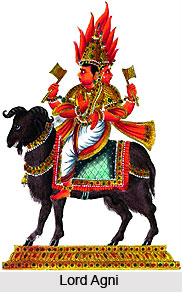
 One of the chapters or adhyayas in Agni Purana has discussed the installation of the images of god in a palace. The Fire God in his description of Murti Staphna says that The image of the god Vasudeva, shall be placed in the centre of a chamber of that peculiar structure, which is known as Panchayatan, while those of Baman, Nrisinha, Hayacirsa, and the image of the Boar incarnation of Vishnu shall be respectively located in the south-eastern, south-western, north-western, and the north-eastern, corners of the same.
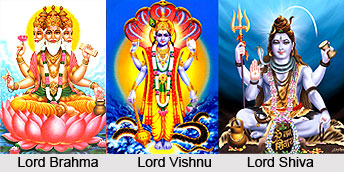
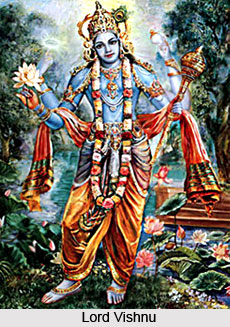
The next step of Murti Staphna involves invoking Narayana in the centre, Ambika in the south-east, the sun in the south-west, Lord Brahma in the north-west, and the Linga or Rudra in the north-east. Vasudeva says the lord shall be located in the centre. At the same time it is recommended in the Purana that Lord Vishnu should be recommended in the centre, Goddess Lasksmi and Vaisrabana in the east, Matris in the south, and Skanda, Ganesha, Ishan, the Sun and other planets in the west. On the other hand the ten incarnations of Vishnu like the Matsya Avatar should be placed in the north, goddess Chandika in the south-east and the Goddess Saraswati in the north- west corner. Similarly goddess Padma is located in the in the north-east, god Naryana is located at the centre Kesava and other manifestations of the god Vishnu, in the four quarters beginning with the east and the god Hari himself is placed in all the other corners of the room.
Lord Agni narrates that the images are generally made up of seven different substances, such as, clay, wool, iron gems, stone, sandal and flowers which being worshipped at the time has the power to grant and fulfil all desires.
In the Purana the Fire God has given a detailed description of the installation of the image of Lord Vishnu. He says the stone is to be dug out of the Earth, those of red, brown, black or yellow colours being regarded as the most auspicious. Then a sacrificial ceremony is to be performed on the stone with the help of Mantras. In the next step a man must go to the wood for an image, and there he shall excavate and raise the sacrificial shed Mandap, which being made smooth and plastered over, shall be the place where the God Hari is to be worshipped on the occasion of the Banajag ceremony. The Tankas being the instruments to work with, are to be worshipped, and the sacrifice shall be offered to them, and the Homa ceremony is to be performed unto them, and after that the stone is to be bathed with rice water. The stone is to be worshipped with the Nrisinha Mantra and it is to be worshiped with the principal Mantra. After the Homa ceremony, the final oblation is offered to the lord and the Guru is allowed to take charge of the entire ceremony. In this part of the Purana, Lord Vishnu is considered the presiding deity of all dreams. The Fire God states that oblation should be offered to the stone in the morning and the implements should be worshipped with the help of astraka Mantra. The spades and chisels shall be edged with honey and clarified butter, the priest shall deem himself the god Vishnu, and shall look upon the sculptor as Vishwakarma. According to the custom the sculptor, who has put all his passions under curb and rein is supposed to take the chisel in his hand, and cut out the stone into a square block and a smaller one for the purpose of making the Pindika or Pedestal, which must be made a little less in size. The said blocks shall be brought in a car to the house of the sculptor, covered over with a piece of cloth, and he shall make the image out of the same after having worshipped it in due form.