Introduction
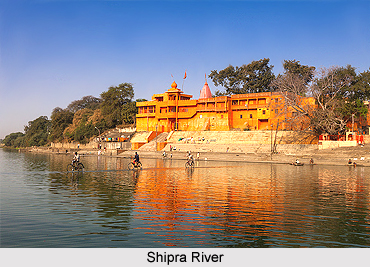 Indore district is one of the well-known districts in the state of Madhya Pradesh in India. This district is located on the Malwa plateau at an altitude of 553 meters above sea level, on the banks of two small rivulets; the Sarasvati River and the Khan River. They unite at the centre of the city where a small 18th Century temple of Sangamnath or Indreshwar exists. The name "Indore" is due to this deity. Indore is the headquarters of this district in the Madhya Pradesh state in central India. The Indore district is having 4 blocks which are Sanwer, Indore, Depalpur and Mhow. The 5 tehsils of this district are Indore, Sanwer, Mhow, Depalpur and Hatod. The district of Indore has 335 panchayats, 677 revenue villages in 5 tehsils, 649 development villages in 4 blocks and 36 police stations.
History of Indore District
 History of Indore district deals with the rule of the kings of the Holkar dynasty. The district of Indore is situated on one of India`s most primitive pilgrimage routes from Mahakaal at Ujjain on Shipra River to Omkareshwar on the Narmada River and onwards to Rameshwaram. It was on the way of the Marathas of Deccan to North India. These Maratha guerrilla warriors were in constant battle with the rulers of Mughal Dynasty. Their army transit camps at Indore attracted the local Zamindars who, drawn by the promise of lucrative trade, settled in the villages on the confluence of the Khan and Sarasvati rivers, thereby laying the foundation of this commercial centre in 1715. In 1741, Indreshwar temple was erected in the town, from which the district derives its name, Indore.
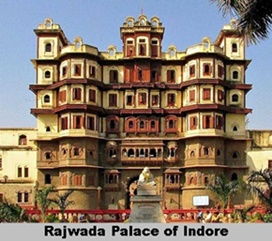
The trade centre grew rapidly under the Holkar dynasty (1733-1818). The remains of their two-century-old palace still stand in the main square called Rajwada. The city became the capital of the princely state of Indore in 1818 after the British forces under Sir John Malcolm defeated the Holkars led by Rani Krishnabai Holkar at Mahidpur. She signed the treaty of Mandsaur by which the control of Indore went into the hand of the British East India Company. Between 1948 and 1956, Indore served as the summer capital of the former Madhya Bharat state.
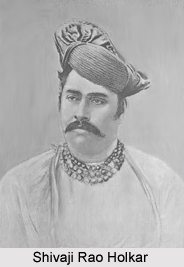
Holkar, the family name of the Maratha rulers of Indore, was adopted as a dynastic title. The family was of peasant origin and of shepherd caste. It is said that they migrated from the Mathura district of Uttar Pradesh to the village of Hol about 65 kilometres from Pune in Maharashtra. The name of this village coupled with the Maratha terminal Kar, provided a surname used by all members of the family. In the year 1818, Holkars became a part of British Empire in India, when the British East India Company annexed the princely state of Indore. Then Indore became the official capital of the Holkar kingdom with a British Resident stationed at Indore. Indore was a participant in the Sepoy Mutiny 1857. At eight o`clock on 1st July 1857, the mutiny began. Thirty-nine English military men were killed and the Chief Resident managed to escape. The British retook Indore after a few months and Saadat Khan, who led the mutiny, was tried and sentenced to death. The last four Holkar rulers are often called the makers of modern Indore and they include Tukoji Rao II, Shivaji Rao Holkar, Tukoji Rao III and Yeshwant Rao Holkar.
Till 1947, when India became independent, Indore was a princely state. After independence, Indore state joined the dominion of India along with hundreds of other princely states. The Holkar Dynasty, as rulers of Indore formally ended when former Prime Minister Indira Gandhi abolished the state pension of all the ex-ruler families. Even now, the Holika (firewood burnt on the eve of Holi) in front of "Rajbada" is lit by members of Holkar family in the district of Indore in Madhya Pradesh.
Princely State of Indore
The Princely State of Indore, also known as Indaur, was amongst main states during the rule of the British Empire in India. During the early 19th century, the region was appointed as one of the princely states of India under the indirect rule of the British administration. Presently Indore is the headquarters and the biggest city of the district of Indore in Madhya Pradesh state, India. It is situated around 190 km towards the west Bhopal, which is the capital of the state. The princely state of Indore covered a total area of 9,934.18 sq m and comprised of a total population of 1,513,966 in the year 1941. The state was under the administrative control of the Indore Agency, which was incorporated as a part of the Central India Agency. Indore state was administered by the native rulers, also identified as Indian Princes by the British, who were under the indirect control of the British authorities. The ruler of the state held the title of Maharaja Holkar.
The Princely State of Indore was honoured as one of the salute states of India with a gun salute of 19 guns. The courts of the princely state implemented full civil and criminal jurisdiction. The native Holkar rulers took charge of the administration of the state and were supported by a Council of Ministers. The legislative council of Indore state had a majority of elected members as of 1940. The original currency of the state was replaced by the British tender in the year 1902.
Location of Princely State of Indore
The princely state of Indore was reigned over by the Holkar of Indore, which included around 80 distinctive blocks of areas and were spread throughout the western region of the Central India Agency. The state was also intertwined with the territories of other Rajput and Maratha princes. In 1947, Indore state consisted of 2 territorial divisions, namely Nimar and Malwa. The territory of Nimar was segregated into the districts of Nemawar and Nimar; whereas Malwa incorporated the districts of Ramapura Bhanpura, Mahidpur and Indore. Eventually these 5 districts are further subdivided into 25 mahals.
The princely state of Indore was bordered by princely state of Gwalior in the north; by the states of Dewas, Bhopal and the British Central Provinces in the east; by the British district of Khandesh in the south; and by the princely states of Dhar, Barwani and Gwalior in the west. Indore or Indaur state included around 3,710 villages and 14 towns in the year 1941.
History of Princely State of Indore
The founders of the state of Indore were the ancestors of the zamindars of the territory that was scattered along the banks of Narmada River to the boundaries of Rajputana. Their headquarters was located at the village of Kampel. During the Mughal era, the ruling members of the family were granted the title of Chaudhari and consequently they established their assertion on the region. Later the Holkars bestowed the title of Rao Raja upon the family. The Maratha Maharajas of the Holkar dynasty reigned over the territory of Indore state. Malhar Rao Holkar, the founder of the dynasty, was conferred the control of Malwa Maratha armies in the year 1724; and later in 1733, he was appointed as the Maratha governor of the entire region.
Malhar Rao Holkar III ascended the royal throne of the princely state of Indore on 2nd November 1818. As he was still a minor at the time, he ruled under the guidance of Tantia Jog who was appointed as his Diwan. In the same year, the Holkar rulers were were defeated by the British forces in the Third Anglo Maratha War and the region came under the dominion and control of the British East India Company. After the defeat in the Battle of Mahidpur, the Cantonment town of Mhow was taken over by the British authorities through the signing of the treaty of Mandsaur. The treaty also ordered that the capital of the state of Holkar would be relocated to Indore from Maheshwar.
Martand Rao succeeded Malhar Rao Holkar III and officially ascended the royal throne of the state on 17 January 1834. He was replaced by the nephew of Yashwant Rao, named Hari Rao Holkar, who ascended to the throne on 17 April 1834. After his death, Khanderao Holkar, his adopted son, was officially installed as the monarch of the state on 13 November 1843. He was succeeded by Tukojirao Holkar II on 27 June 1844. During the great revolt of 1857, Tukojirao supported the British East India Company. He appointed T. Madhava Rao as the Diwan of Indore in the year 1872. Tukojirao Holkar II was succeeded by Shivaji Rao, his eldest son, after his death on 17th June 1886.
Yashwant Rao Holkar II reigned over the princely state of Indore from the year 1926 to 1948, briefly after the independence of the country in 1947. After the withdrawal of the British on 15th August 1947, the native ruler acceded his state to the newly formed Union of India, also known as the Dominion of India. Later the Indore state, along with several other adjacent Indian princely states, was incorporated as a district of the Indian state of Madhya Bharat. Indore was appointed the summer capital of the newly formed state. On 1st November 1956, Madhya Bharat was merged into Madhya Pradesh state and Bhopal became its capital.
Rulers of Princely State of Indore
The following list mentions the chronology of the Holkar Maharajas of Indore-
* Malhar Rao Holkar I (2 November 1731- 19 May 1766)
* Malerao Holkar (23 August 1766 - 5 April 1767)
* Ahilyabai Holkar (27 March 1767- 13 August 1795)
* Tukojirao Holkar I (13 August 1795- 29 January 1797)
* Kashirao Holkar (29 January 1797- 1798)
* Yeshwantrao Holkar I (1798- 27 October 1811)
* Malharrao Holkar III (27 October 1811- 27 October 1833)
* Martandrao Holkar (17 January 1834- 2 February 1834)
* Harirao Holkar (17 April 1834- 24 October 1843)
* Khanderao Holkar III (13 November 1843- 17 February 1844)
* Tukojirao Holkar II (27 June 184 - 17 June 1886)
* Shivajirao Holkar (17 June 1886- 31 January 1903)
* Tukojirao Holkar III (31 January 1903- 26 February 1926)
* Yeshwantrao Holkar II (26 February 1926- 1948)
Diwans of Princely State of Indore
Bala Ram Seth (1808 – 1811)
Ganpal Rao (181 –1817)
Tantia Jog (1818 –1826)
Raoji Trimbak (1826 – 1827)
Daji Bakhshi (1827)
Appa Rao Krishna (1827–1829)
Madhav Rao Phadnis (1829 –1834)
Sardar Revaji Rao Phanse (1834 –1836)
Abbaji Ballal (1836–1839)
Bhao Rao Phanse (1839 –1840-1st time)
Narayan Rao Palshikar (1840 –1841)
The ruler (1841–1842)
Bhao Rao Phanse (1842– 1848- 2nd time)
Ram Rao Palshikar (1848 – 1849)
Bhawani Singh Dube (1852 – 1872)
Sir T. Madhava Rao (1872 – 1875)
R. Raghunatha Rao (1875–1881-1st time)
Shahamat Ali (1881 – 1884)
Nana Moroji Trilokekar (1884 – 1886)
R. Raghunatha Rao (1886 – 1888 - 2nd time)
Balkrishna Atmaram Gupte (1890s)
Sir Shri Rai Bhadhur Nanak Chand Ji Airen (1890–1913 as First Prime Minister of State)
Narayan Ganesh Chandravarkar (1913 –1914)
The ruler (1914 – 1916)
Ram Prasad Dube (1916 – 1921- 1st time)
Chettur Sankaran Nair (1921 – 1923)
Ram Prasad Dube (1923 – 1926- 2nd time)
Prime Ministers Princely State of Indore
Sir Shri Rai Bhadhur Nanak Chand Ji Airen (1890–1913)
Siremal Bapna (1926–1939)
Sardar Dina Nath (1939–1942)
Raja Gyannath Madan (1942–1947)
R.G. Horton (1947)
E.P. Menon (1947–1948)
N.C. Mehta (1948)
M.V. Bhide (1948–1948)
Geography of Indore District
The total geographical area of the district of Indore is spread over 3,898 square kilometres. Due to its location in Central India, far from the sea, Indore district experiences an extreme climate. In winter, which is from November to February, the night low temperature is around 10 degrees Celsius. At the peak of winter, it can be as low as low as 2 degrees to 3 degrees Celsius. The record low is 1.5 degrees Celsius. During summer, which is from April to June, the days are hot at about 35 to 40 degrees Celsius with the peak summer day temperature sometimes touching 45 degrees Celsius, which falls in the month of May. However, unlike other places in central India, the summer nights in Indore district are something special. Due to its location on the southern edge of the Malwa Plateau, however hot it may be during the day, in the late evening, cool breeze starts, which makes the evenings quite pleasant, referred to as Shab-e-Malwa. The district of Indore gets moderate rainfall of 30 to 35 inches during July-September due to the South-West Monsoon.
Demography of Indore District
According to the Population Census in 2011, Indore District had population of 3,272,335. Out of which the male and female were 1,700,483 and 1,571,852 respectively. Indore District population constituted 4.51 percent of total population of Madhya Pradesh. The population density of Indore district is 839 people per sq. km. Indore district administers 3,898 square kilometres of areas. The average literacy rate of Indore District was 82.32 percent. According to the gender, the male and female literacy rates were 89.22 and 74.89 percent respectively. The total literates in Indore District were 2,358,338. Out of which the males and females were 1,324,967 and 1,033,371 respectively.
Culture of Indore District
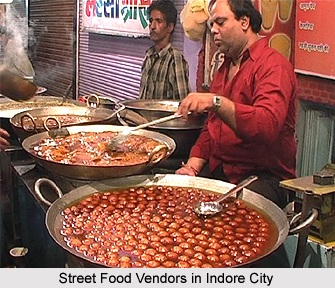 Culture of Indore district is evident from its varied food habits from south Indian dishes to the Chinese cuisines. Over the years, the district of Indore has welcomed people from different castes, creed and colour. People from different corners of the country particularly from Kerala have migrated and settled in the heart of Madhya Pradesh for their livelihood, education or just for its peaceful culture.
The people of this district are highly social and progressive. All cultures from south, north, east and west have mingled in the life of the people of Indore. The district of Indore reflects the true spirit of unity in great diversity. The mixed culture can be very well seen in the typical food habits ranging from South Indian `Idli-Dosa`, `Vada-Sambhar` to `Dal-Bafla` and other typical Malwa Food. This district is known for its wide variety of `Namkeens`, Gujarati and Chinese food restaurants, Bengali sweets, and many more.
The life in the district of Indore starts early with the sip of `Chay` or tea with `garam garam poha and Jalebi` followed by delicious lunch which invariably includes popular `besan preparations`. Later in the day one can easily find snacks like `Khaman`, `Kachori - aaloo kachori, dal kachori etc` , `samosa`, `bhel puri`, `petis`, `baked samosa`, `mathri`, `pani puri`, etc. Several shops of sweets have enjoyed nice business in Indore.
Some of the delicacies of the district of Indore are Moong ka Halua, Ras-Malai, Rabri Gulab Jamoon, Gajar ka Halua, Rasgulla, all Bengali sweets, Dhania-Chivda, Son Papdi, Dal Moth, Khaman, Kachori-Samosa, Gathiya, Petis, Aalo Tikiya, Garadu, Bhel-Puri, Saboodana Khijadi, Pani-Puri, Dahi Bara , Bhutte ka Kis, Pakoda, etc. Some of the other items available in this district are Lassi, Hot Boiled Milk with Malai and dry fruits and Keshar, Cold Milk, Jal-Jira, Nimboo Shikanji, Shakes, Fruit Juice, Ice cream Soda, Santrola, etc.
The people in the district of Indore enjoy all the festivals with equal ease and comfort. The national festivals of Nagpanchami, Holi, Rakhi, Ahilya Utsav, Rang Panchmi, Lord Ganesha Utsav, Annat Chaudas, Garba (Navratri Utsav), Diwali, Dussehra, New Year`s Eve, etc are celebrated in a grand way.
Temples of Indore District
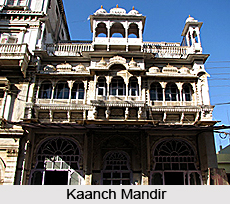
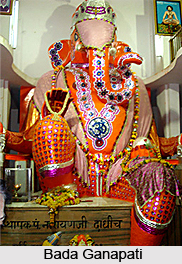 Temples of Indore district are among the most prominent centres of pilgrimage in the state of Madhya Pradesh. One of the most famous temples in the district of Indore is the Kaanch Mandir. The Kaanch Mandir or Glass temple, which is a Jain temple, is a marvel in glass. This temple was constructed by the `Cotton King` Sir Hukamchand Seth in the early 20th century. The ceiling, walls, floor, doors and pillars are entirely inlaid with glass. The mirror work of this temple reflects minute detailing. There are paintings done in coloured glass which depict stories from the Jain scriptures. At the top, there is a special glass chamber which multiplies the three statues of Lord Mahavira installed there, into an infinite number.
Bada Ganapati, better known for its size than antiquity, this temple houses perhaps the largest Ganesh idol in the world, measuring 25 feet from crown to foot. Created as a result of a dream to an Avantika (Ujjain) resident Shri Dadhich, it was erected in the year 1875. The idol has a most interesting configuration of ingredients; lime stone, bricks, masala made of methi dana, jaggery, soil collected from seven moksha puris including Ayodhya, Maya, Mathura, Kashi, Avantika, Kanchi and Dwarka and mud from stables of elephant, horse and cow, the powder of Pancharatna; panna, heera, moti, pukhraj and manek (emerald, diamond, pearl, topaz and ruby) and the holy water from all major places of pilgrimage. The metallic frame is of gold, copper, silver, brass and iron.
The Gopal Mandir is also one of the renowned religious places in the Indore district. This is a Krishna temple built by Krishna Bai Holkar in the year 1832. Situated on the right wing of the Rajwada, it has a big central hall with stupendous pillars possessing a massive roof which is elaborately decorated. Its system of lighting in the form of huge glass chandeliers is eye catching. Another notable temple in this district is the Annapurna Mandir. Inspired by the Meenakshi temple of Madurai, four life size elephants hold an ornately decorative gate in plaster. Inside the complex, apart from the main temple of Annapurna Devi, there are also the temples of Kal Bhairav, Lord Shiva and Lord Hanuman. There is also a Pravachan hall. The outer wall of the main temple is decorated with colourful reliefs from mythological stories.
 Bijasen Tekri is a small and beautiful hillock in the district of Indore. This hillock or tekri has a small temple of Bijasen Mata, constructed in the year 1920. Mela is held here during Navaratri. From this hill, one gets a magnificent view of the sunset and a breathtaking view of city at night. Perched on top of the hill was a guest house of the Holkars, now converted into a Border Security Force Arms Museum. The surrounding area is being developed into gardens with a small lake. Another major place of pilgrimage in the district of Indore is the Deoguradia village. In this village stands the monolithic rock temple built in the 7th Century and redone in the 18th Century by Ahilya Bai Holkar. Also known as Garuda Tirth, it has a water outlet in the shape of Gomukh from which water flows out almost as in `abhishek.` The original Shiva linga is 12 feet under water in a sunken temple above which the present temple is constructed. On every Shivaratri, a fair is held in honour of the deity, Shri Gutkeshwar Mahadeo.
Geeta Bhavan is a newly built structure which holds several statues of Gods of various religions. It is open to all, irrespective of caste, creed, religion etc., with provision for devotees to pray separately. Central hall is decorated with wall paintings from Puranas, Ramayana, Mahabharata, and is used for religious discourses or Pravachans. Book stores within the premises of Geeta Bhavan sell religious books.
Monuments Of Indore
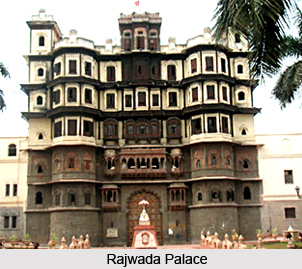 The monuments of Indore speak volumes of its rich cultural past. In fact the name of the city has been derived from one of the famous temples of the region known by the name "Indreshwar temple". Indore for long had been the seat of the Holkar dynasty. The monuments and museums of the town reflect the rich sense of art and tradition of the rulers of the Holkar dynasty. A famous piece of architecture in the town of Indore is the Rajwada Palace.
The Juna Rajawada or Old Palace, built by Maharaja Malhar Rao Holkar II, is a splendid range of buildings with a lofty, seven-storey gateway with canted bays on either side of a central archway. The palace is situated in the older part of the city near the Khajuri Bazaar. To the right, the Gopal temple has a large central hall with granite pillars supporting an elaborately decorated roof. It faces the main square. Within the palace is a temple of Malhari Martand which was the family deity of the Holkars. Opposite, across the square, is the Anna Chatra or alms-house for the poor. To the north is the New Palace and garden, built in a classical manner with a French style pavilion roof by Gopal Rao who was a local engineer. Within the palace there are several old heirlooms, furniture, four poster beds, and chandeliers which add to the glory of the palace. The palace can be called a perfect synchronization of the French, Mughal and Maratha styles of architecture.
 There are some excellent examples of local vernacular buildings with deep recessed verandas and carved corbels and columns. Near the bridge over the Khan is a statue of Sir Robert Hamilton, the local agent of the Governor-General prior to the Mutiny.
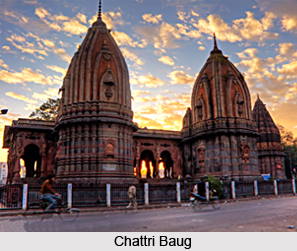
On the riverside are the chhatris of the ruling family. In the Chattri Baug, a large enclosure surrounded by a crenellated wall, are various cenotaphs; one of Malhar Rao Holkar I with ornamental sculpture and low relief work, a slightly smaller one to Ahalya Bai and another, a twelve-sided pavilion on a low plinth, to her son Male Rao Holkar. There is another similar enclosure beyond containing the Chatri of Maharaja Hari Rao Holkar IV. Other noteworthy in the city are at the Krishnapura Ghat on the River Khan and a beautiful monument with a towering dome on the right bank of the Khan commemorating Sardar Chimnaja Rao Appa Sahab Bolia.
The former King Edward Hall, opened in 1905 by the future King George V and now Mahatma Gandhi Hall, is known popularly as the Clock-tower. It is a splendid example of Indo-Saracenic architecture, designed by Charles Frederick Stevens of Bombay. Faced in white Seoni and red Patan stone, it has a central domed clock tower and two-storey wings terminated by domed towers. The ground floor is arcaded with a porte-cochere.
Inside is a spacious hall for over 2,000 people above which have a terraced roof, minarets and cupolas in Rajput style. Nearby the Courts of Justice are also very handsome, with four central domes designed in the style of Indo-Saracenic architecture.
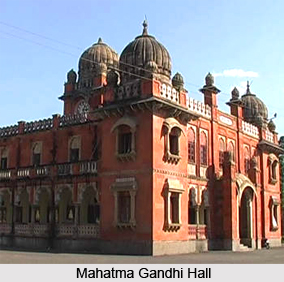 Outside the town arc numerous palaces. To the south-west the Lal Bagh Palace is a quaint three-storey range set in a luxuriant garden built by Maharaja Shivaji Rao Holkar. Architecturally, it is similar to the New Palace and was designed by Triggs of Kolkata.
The Hawa Bungalow is a charming classical building of considerable refinement in an ltalian style. On the edge of the Bhameri Tank, 7 miles from Indore, is the Sukhniwas Palace, the summer retreat of the family. The vast Duryao Mahal at Burhawa was the residence of Shivaji Rao Holkar from 1903, a huge pile of a building along the river front in white and yellow stucco linked by classical balustrades. The Nurbada Mahal is in the same vein as the Hawa Bungalow.
To the east of the city are the former British Residency and a treaty area, which was constructed in1931. The Residency is a handsome stone bungalow set in a fine park, through which the Khan flows. It has a predominated entrance and semicircular verandas to the wings. This district also contains the old European buildings: the Anglican and Roman Catholic Churches, post office, King Edward Hospital and Day College, an exclusive school in a fine marble building with a series of portraits by Herbert Olivier.
There are a number of interesting temples which fall outside the scope of this volume, including the Kanch Mandir, a Jain temple near the cloth market, with walls, roof and floor decorated with glass depicting sinners being tortured in the afterlife.
The city of Indore is known as the "Mini Mumbai" of the country. It is much developed in terms of commercialization but at the same time this town in Madhya Pradesh has held its traditions and heritage through its plethora of several monuments.
Tourist places around Indore
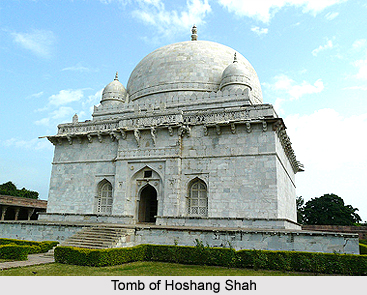 Tourism in Indore District in Madhya Pradesh helps this district to earn the revenue from both domestic and foreign tourists. Rich with variety of edifices and magnificent monuments these tourist spots depict the cultural heritage of the Holkars who ruled the area for more than a century. The city of Indore was supervised by Rani Ahilya Bai, the widow of Khande Rao and daughter in law of Mahal Rao. Indore and its surroundings are decorated with some of the exclusive monuments, which are not only important historical sights, but also prominent tourist spots of Madhya Pradesh. Among these, the most prominent are Mandu, Khajuraho Temples, Bagh Caves, Omkareshwar and Maheshwar Temple.
Mandu
Mandu is one of the most popular sights around Indore. This is mainly known for its natural beauty and legendary monuments, which define the history of the region. Mandu consists of a number of historical monuments like the Tomb of Hoshangh Shah, Jahaz Mahal (The Ship Mansion),Baz Bahadur`s Palace, Rani Roopmati`s Pavilions (Rani Roopmati of Malwa), Neelkantha Mahadev`s Temple and Rewakund which define the legend that exists in the place. Located at a height of 2000 feets, this place came into prominence during the 11th century under the rule of Parmara kings, which was later on taken over by the Holkars. Even during the 14th and 15th century, this place came under the rule of the Khilji Dynasty and the Lodhi Dynasty in India. This place also carries the legendary love story of Baz Bahadur and Rani Roopmati. With the pleasant atmosphere, this place is one of the attractive tourist spots around Indore.
Khajuraho Temple
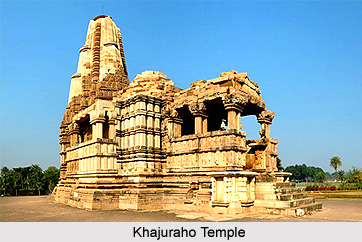 Khajuraho Temple is another most attractive tourist spot around Indore which is well known for the ancient temples dedicated to Hindu gods and goddesses. This place is well known for the ancient stone sculptures, which can be dated back to the period between 10th and 11th century. Surrounded with group of temples this defines the art and culture of ancient India through various sculptures. Among the major temples the Khajuraho group of temples include the temples of Chaunsath Yogini Temple, Kandariya Mahadeva Temple,Devi Jagadamba Temple, Chitragupta Temple, Viswanatha temple and Nandi Temples, Parvati Temple, Lakshmana Temple,Matangeswaraand Varaha Temples, Brahma Temple, Ghantai Temple, Parsvanath Temple and Archaeological Museum.
Bagh caves
Located at a distance of 153 kilometres from Indore this place is known for the man made caves. These were dug in the slopes of Vindhya mountain range. These caves can be dated back to the period between fifth and seventh century. It attracts large number of tourists. Originally, only five exist among nine caves. Among these, the most attractive are Cave no.4 and cave No.2 that are known as Rang Mahal and Gossain Cave. Once inhabited by the Buddhist hermits, these caves faced some damage with the use of fire. Outside the cave, there stands the colossal image of Yakshraj, a super natural king who presided over the area.
Tourist places around Indore also include some prominent sights like Omkareshwar, which is located at the confluence of Narmada River and Kaveri River. This temple is dedicated to Lord Shiva. Maheshwar is another sight near Indore that is located at the northern bank of Narmada River. Dedicated to Lord Shiva this place includes a number of temples which are mainly known for its art and architecture.
Visiting Information on Indore District
Devi Ahilyabai Holkar National Airport is a prominent airport in the Madhya Pradesh state of India. There are at least five airlines operating in Indore. Indore is also well linked to all major Indian cities like Mumbai, Pune, Nagpur, Delhi, Jaipur, Agra, Ahmedabad, Vadodara, Howrah, Bhopal, Ujjain, Gwalior State, Bhind District, Jabalpur District, Bilaspur District, Khandwa District, Lucknow, Varanasi, Patna, Jammu, Dehradun and Thiruvananthapuram. Khandwa and Ratlam are two main railway junctions that are connected through meter gauge. Indore Railway Station is located in city. The National Highway NH 3 (Mumbai -Agra Road) and NH 59 (Indore-Ahmedabad Road) passes through Indore and there are daily bus services from Indore to Mumbai, Jaipur, Gwalior, Bhopal etc.