


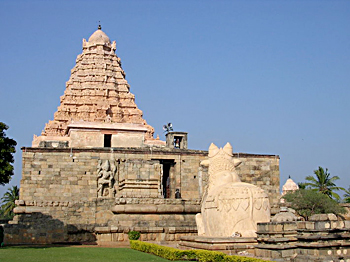
 Hindu Architecture had received a lot of patronage from Kumara Gupta just as Buddhism had received resurgence under the reign of Ashoka. Kumara presided over the maturity of one of the greatest phases in Indian cultural history - painting, sculpture, music and literature were brought to a degree of excellence which set the standard for later ages. The dynasty was Hindu and Hinduism flourished under it on both the intellectual and popular levels. Some of the southern rulers of India like the Chalukyas and the Pallavas had also influenced Hindu Architecture to a large extent. Hindu Architecture had received a lot of patronage from Kumara Gupta just as Buddhism had received resurgence under the reign of Ashoka. Kumara presided over the maturity of one of the greatest phases in Indian cultural history - painting, sculpture, music and literature were brought to a degree of excellence which set the standard for later ages. The dynasty was Hindu and Hinduism flourished under it on both the intellectual and popular levels. Some of the southern rulers of India like the Chalukyas and the Pallavas had also influenced Hindu Architecture to a large extent.
The Rashtrakutas, the Pratiharas and the Solankis also had major contributions towards Hindu Art and Architecture. The Nayaks of Madurai had also largely contributed to Hindu forms of art and architecture. Especially Tirumalai Nayak had contributed profusely in the field of art and architecture. It is believed that under his patronage some of the finest pieces of art and architecture had sprung up in the Indian subcontinent. In fact the Madurai style of architecture had begun from the times of the Nayaks. It is true that the Hindu style of architecture is more common in the religious buildings but there are several instances where Hindu Architecture was predominant in the non-religious buildings as well. Such buildings were also constructed under the influence of Hindu kings like the Marathas, the Rajputs and likewise. It can be said that before India had come under the reign of Muslim and British rule it was predominantly a Hindu nation with the ruling of the Pandyas, the Pallavas, the Chalukyas, the Cholas, the Yadavas and a lot more and as a result there are ample instances of Hindu influence which was found in the architectural features of the country. It can be said that most of the stone temples of India were result of royal patronage. Though the temples were constructed for the mass but the main purpose of such temples was the expression of devotion of the king. It was believed by the kings that by constructing a temple they will be blesses with wealth and prosperity. Sometimes a temple was constructed by a king also to commemorate important events. For example, Chola king Rajendra had built a Shiva temple at Gangaikondacholapuram to celebrate his victory in the north. The royal powers of the country encouraged the temples all the more by donating wealth in the form of donations and jewels. This tradition has continued till this day because lot of people carry on the tradition of donating gifts to the temples. Thus it can be concluded saying that Hindu Architecture had received patronage from Hindu rulers and such patronage was witnessed in the construction of temples. |
| |||



Home > Art & Culture > Indian Monuments > Arts in India > Indian Architecture > Religious Influences on Indian Architecture > Hindu Architecture > Development of Hindu Architecture
Development of Hindu Architecture
| Development of Hindu Architecture was mainly due to the patronage of Hindu rulers and it started with the reign of Kumara. |
| ||||||||||||||||||||||||||||

