
Dadu was born in Ahmedabad but his place of Sadhana was in Jodhpur. It was Dadu who had given birth to the Dadu Sampradaya in Rajasthan. Like other saints, the ultimate object of Dadu was to know the self and to attain jiwan-mukti. Many of his sakhis and padas depict his deep love and pangs of separation, together with mystic experiences. Like a Sagun bhakt, his longing for only Bhakti instead of mukti, is also noticed in a few padas. But the main element of his Bhakti is the upasana of the Nirgun Brahma. His expression is pleasing and lucid throughout. His language is mainly Rajasthani with occasional tinge of the Western Hindi, Gujarati and Punjabi.
At the age of about thirty, he founded the Brahma Sampradaya in Sambhar which was later named Dadu Panth, after him. In course of time, this Sampradaya was divided into four branches based on differences in modes of living, settlement at different places, local reasons and apparel. These are Khalasa, Naga, Uttaradha and Virakta. However, there was no difference of basic ideology among them.
Bakhnaji of Narayana, said to be a Musalman by birth, was a disciple of Dadu. The sakhis written by him were classified into 40 `angas`, and padas. Dedication to God, Nam smaran, and realisation of the absolute Truth through love, are the main notes of his Vani. The language is simple Rajasthani with a few colloquial Dhundhadi words.
Rajjabji was a Pathan of Sanganer. While proceeding to Amer for marriage, he heard two couplets of Dadu. He gave up the idea of marriage and became Dadu`s disciple. He wrote a large number of poems, which include sakhi, pad, savaiya, tribhangi, arill, kavitt and thirteen short poems, mainly in caupai metre. His perceptional and empirical knowledge and experience are profound and evident in his Vani. Many of his disciples, such as Caindas, Ramdas, Khemdas, and Kalyandas have expressed their admiration for his personality, sadhana, and poetic genius. Expression of deep love, Bhakti, intensity of emotion and the brilliant way of illustrating a point with lucidity are the characteristics of his poetry. The language is Rajasthani, with occasional words of other languages too.
Prayagdas Biyani of Didwana was a well-known saint and poet of Dadu Sampradaya. His poems depicted his deep devotion and experience in a lucid way.
The vani of Santdas Barah Hazari was known by the name Alam Ganj. He was a great Nirgun poet of the age. Alam Ganj is voluminous, extensive and scholarly. The treatment is lucid, communicative and effective. The language is mostly popular Rajasthani. The poems of Bhikhjanji included profundity of emotion, lucidity of style. His inclination towards the Sagun bhakti is also noticeable. The language is mainly fluent Rajasthani and Rajasthani mixed Braj.
Vajind of Dadu Sampradaya had universal appeal and effectiveness of expression. The poems are often devotional but at the same time they prescribed precepts, taking examples from real life. The object is to improve human life in a practical way. It was also a tradition with poets of Dadu Sampradayaas to write the life-sketches of bhaktas or about their attributes. This was another notable aspect of the Sant Poetry. Garibdas, Kalyanji, Cainji, Khemji and Madhau Das are some of the many notable poets of Dadu Sampradaya.
Dadu Sampradayaa
Dadu Sampradayaa focussed mainly on the attainment of liberation of the mind and the Sampradaya gave a lot of importance to Nirgun Brahma.
Recently updated articles in Indian Literature
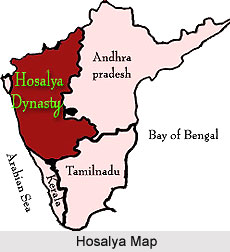
Gadyakarnamrita
Gadyakarnamrita is a 13th-century Sanskrit literary work written mainly in prose. It describes the ninety-day battle at Srirangam between the Hoysala...
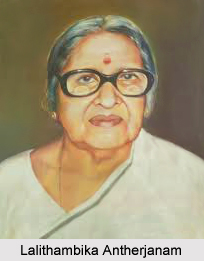
Women Writers in Malayalam Literature
Women writers in Malayalam literature have worked incessantly to make a place for their literary works. In the earlier periods, they were completely o...
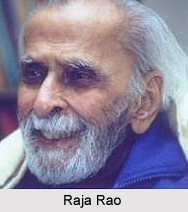
Comrade Kirillov, Novel by Raja Rao
Comrade Kirillov, a distinctive creation of Raja Rao, is presented as a brief yet incisive novelette that offers an ironic portrayal of the self-contr...
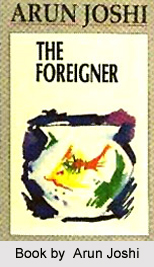
The Foreigner, Novel by Arun Joshi
“The Foreigner” is a book authored by Arun Joshi and published by Vision. It is an illustrious creation in the entire career of Arun Joshi, the famous...
Short Story in Telugu Literature
Short Story in twentieth century Telugu Literature was extremely popular and growing in and developing in a major way. Their popularity was greatly fa...
Related articles in Indian Literature
Mythological Themes in Indian Literature
Mythological themes in Indian literature have been integral to every ancient and contemporary writer and their path to f
Literature During Gupta Age
It is during the Gupta Age literature in the form of poetry, epos and drama gained a colossal importance.
Literature of Aravidu Dynasty
Sanskrit and Telugu were the popular literary medium of communication during Aravidu dynasty.
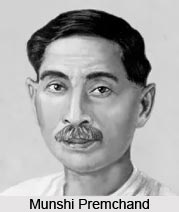
Munshi Premchand
Munshi Premchand was a legendary Indian writer notable for his modern Hindustani literature. A writer of a very high caliber, Premchand`s writings hav...
Sanskrit Poets
The names of some of the Sanskrit Poets are Bharavi, Devarshi Ramanath Shastri, Jayadeva and Srinivas Rath.