 Mauryan society was divided into seven categories namely the philosophers, farmers, soldiers, herdsman, artisans, magistrates and councilors. These divisions were referred as castes because the members of a particular division were not allowed to marry outside their group and were also not allowed to change their professions. The seven divisions of the society were not identical with each other and differed in terms of rules and regulations. The category of philosophers that were present in the society was further divided into two categories. They were the Brahmans and Shramanas. The Shramanas in turn included the Buddhists, Jains, Ajivikas and others. The category of the Shramanas was big enough to constitute a separate group. During the time of the Mauryans the philosophers were exempted from any kind of taxation.
The farmers included the cultivators and labourers who worked on the lands and the land owners were excluded from the category of farmers. The farmers were the largest group in the Mauryan society and they were considered the central nerve of agriculture in the society. They also were the military and civil infrastructure of the Maurya Empire. The cultivators were kept unarmed in order to keep away any possibilities of peasant revolution.
The soldiers of the Maurya Empire served as the armed force of the kingdom and they were maintained at the royal cost. During the times of peace the soldiers spent their time in idleness, drinking and merry making. In fact it can be said that during times of peace the huge army of the Maurya Dynasty was an economic liability for the state.
The herdsmen or the pastoralists of the Maurya dynasty generally included the tribes who still adhered to clan identities. They herdsmen generally constituted of hunter-gatherers, shifting cultivators and horticulturists.
The status of artisans in the Mauryan dynasty depended on the art works which they performed. Metalworkers who made armours and other expensive items were given a higher status as compared to weavers and potters. On the other hand the itinerant smiths, who catered to the needs of the household, were accorded the lowest status in the society among artisans.
The caste system was strongly prevalent in the Mauryan society. The twice-born that is the Brahmans and the kshatriyas enjoyed a special privilege in the society because of their status of being twice born. The Vaisyas though theoretically were twice born but they were not able to enjoy a privileged position similar to the Brahmans and the kshatriyas.
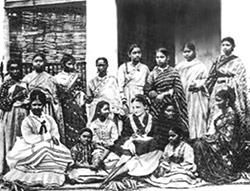
A variety of activities have been related to women during the Maurya Empire. Women were employed as archers, royal body guards, spies and performers. Sometimes women who were impoverished like the widows and the ageing prostitutes were given the work of spinning the yarn. It is true that women had the opportunity to get employed in the state but several texts have given strong evidences that most women during the Mauryan society were dominated by the male figures of the household.
Thus it can be concluded that during the reign of the Mauryas the society followed a strict division based on profession and taking cue from profession further division of caste was followed in the society.