|
 The bony fishes known as Dipnoi, or Dipneusti or the lung-fishes, are the real air-breathing fishes. Another group which is customarily called air-breathing fishes has accessory respiratory organs in addition to the usual gills of the modern bony fishes and since they utilize atmospheric air for oxygenation of their blood with the help of modified vascular structures in their body, they are also called air-breathing fishes. The bony fishes known as Dipnoi, or Dipneusti or the lung-fishes, are the real air-breathing fishes. Another group which is customarily called air-breathing fishes has accessory respiratory organs in addition to the usual gills of the modern bony fishes and since they utilize atmospheric air for oxygenation of their blood with the help of modified vascular structures in their body, they are also called air-breathing fishes.
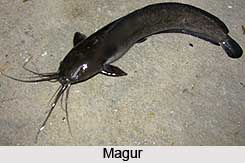
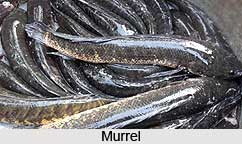
The first group (Dipnoi) is represented by the Australian lung-fish Neoceratodus, the African species Proto-pterus and the South American Lepidosiren. The second group is one which has developed special modifications, known as the accessory respiratory organs, as adaptations to tide over the difficult conditions of life when water becomes deficient in oxygen and the gills are unable to obtain sufficient dissolved oxygen from the water. Prominent among such fishes are the climbing perch (Anabas testudineus), mud-skippers (Boleophthalmus sp. and Periophthalmus sp.), murrel (Channa sp.), shingi {Heteropnesteus fossffis), magur (Clarias) and cuchia (Amphinous). In these fishes, some cavities in the throat and gill chamber region are covered by flat tissue (epithelium) which is richly supplied with blood and are connected to minute blood capillaries. These fishes occasionally come to the surface of the water and gulp a small quantity of air. The intake of oxygen and release of carbon dioxide takes place in these cavities, in addition to the normal gill respiration which is considerably reduced in these forms. Acquisition of such accessory respiratory organs enables these fishes to remain out of water for a long time.Murrel and Shingi are reported to live out of water even for 24 hours if kept in moist and cool places.
 In magur {Clarias sp.), a well known catfish of northeastern India, a leafy structure is developed in a cavity above the gills. In cuchia, a small eel-like fish occurring in the perennial ponds of Bihar and West Bengal, a pair of elongated sacs grows from the wall of the throat above the gills and these, with the help of their inner vascular lining (blood-supplied epithelium), perform the function of an accessory respiratory organ. Another interesting example of accessory respiratory method is reported in the case of loaches (Cobitidae), a group of small slender freshwater fishes, with tiny barbels. These are generally found in ricefields and shallow tanks on the west coast of India and some hill streams in other parts of the country.
In another common riverine fish chital (Netopterus chitala) the air-bladder is divided and subdivided into smaller lobes and their inner wall is supplied with blood capillaries, through the thin walls of which oxygenation of blood takes place. In Megalops cyprinoides, a cousin of the American tarpon, locally known around Mumbai as vadas, strands of blood capillaries projecting on the inner walls of the air-bladder serve as accessory respiratory organs.
Most fishes having, accessory respiratory organs are so accustomed to depend on these structures for their respiration that their normal gills are reduced in size and function. Consequently, if these fishes are prevented from coming to the surface of water to gulp air, i.e. they are made to depend on their gills only, and then they become asphyxiated.
|





