


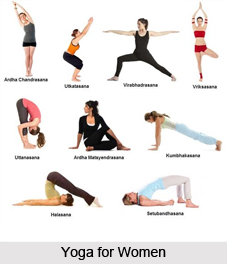
 Yoga for Women is the natural solution to the physical and mental difficulties faced by women. All Yogic asanas are not recommended for women as they have certain limitations, owing to the diverse physiological structure between men and women. Stress, hormonal changes and self-development are some reasons for which women practice Yoga. ‘Yoga’ is an ancient science that has helped women to cope with their health issues and help them develop the perfect state of their body and mind. Yoga can help ease the pain that goes with Menstruation, stress, fatigue and ensure an easier child delivery among other benefits. Yoga for Women is the natural solution to the physical and mental difficulties faced by women. All Yogic asanas are not recommended for women as they have certain limitations, owing to the diverse physiological structure between men and women. Stress, hormonal changes and self-development are some reasons for which women practice Yoga. ‘Yoga’ is an ancient science that has helped women to cope with their health issues and help them develop the perfect state of their body and mind. Yoga can help ease the pain that goes with Menstruation, stress, fatigue and ensure an easier child delivery among other benefits.
Yoga for Women during Pregnancy Pregnancy is the period from conception to birth, a total time period of 40 weeks or 280 days. Standing Yoga Poses are advised as this helps to strengthen the legs, promote circulation, generate energy and may reduce leg cramps. It is also suitable to do some stretching such as the hamstrings stretch to avoid backache. Later on, one may reduce the time spent for practicing the yoga asanas to prevent fatigue and overwork. It is also not advised to practice from the 10th to 14th week of pregnancy since these are crucial times. Supine poses, backbends and twisting can also be done with certain adaptations if the body lies on a slant. Poses that put pressure on the abdomen and other difficult poses should not be done during advance stages of Pregnancy. The "would-be-mothers" should avoid doing inversion poses. There are certain Yoga asanas that can help one in dealing with the symptoms of pregnancy, ensuring smoother and easier delivery, and faster recovery after childbirth. It is always advised that pregnant women should execute any asana under the proper guidance of an expert. Some of the Yoga asanas that are recommended for women during pregnancy are as follows: 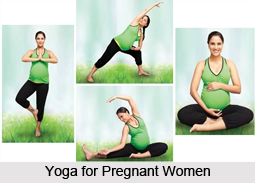
Yoga for Women during Menopause Menopause is one of the crucial stages of a woman’s life. Menopause is indicated by the permanent stopping of menstruation and it does not really require medical treatment since it is a natural biological process. Exercising, proper diet, not smoking and reduction of stress are effective ways to make menopause more bearable and can also facilitate in preventing any chronic ailments that can occur in the post-menopausal years. Yoga asanas like Kapalbhati, Tadasana are best in such cases. Yoga Asanas for Other Health Problems of Women However, Yoga asanas again offer solutions to this problem through ‘Tadasana Urdhva Hastasana’ or the Mountain pose with arms stretched up and ‘Uttanasana’ or the intense forward stretch. The former asana should not be practised if the person has stress-related headaches; migraine, eye strain, low blood pressure, osteoarthritis of the knees, bulimia, diarrhoea, insomnia or leucorrhoea. The latter asana should be avoided if the women have osteoarthritis of the knees, diarrhoea and rheumatoid arthritis. Mood swings, abdominal cramping, fatigue and bloating are common yet uncomfortable symptoms that disturb the daily activities of women. Besides yoga, proper diet is also to be followed in order to make the asanas effective. Related Articles Yoga Female Diseases Yoga Asanas Yoga and Disease Properties of Yoga Yoga and Human Body Types of Yoga Asanas Benefits of Yoga Asanas Practice of Yoga Asanas Yoga Institutes in India |
| |||



Yoga for Women
| Yoga for Women deals with all the health problems confronted by women in a natural process. |
| ||||||||||||||||||||||||||||

